South Korean Ambassador: Elevating relations with Kuwait to a partnership encompassing artificial intelligence, defense, and health
&cropxunits=450&cropyunits=300&w=770)
Osama Diab
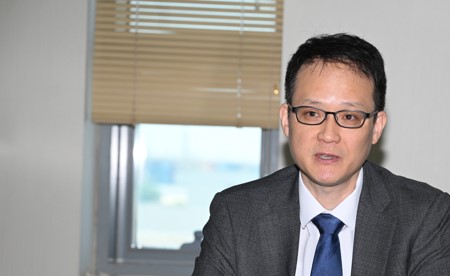
Kim Jang-hyun, Ambassador of the Republic of Korea to the State of Kuwait, affirmed his country’s commitment to elevating Kuwaiti-Korean relations to a new stage of sustainable partnership. This partnership is based on enhancing mutual investments and expanding cooperation in fields such as artificial intelligence, digital transformation, defense, health, and culture, in addition to traditional cooperation in the energy and infrastructure sectors.
Speaking during a meeting with media representatives, Kim stated that the gathering was held within the framework of official introductions and discussions on various issues related to bilateral relations in a friendly atmosphere. He expressed his honor in presenting his credentials to His Highness Sheikh Meshal Al-Ahmad Al-Sabah, the Amir of Kuwait, describing it as one of the most memorable days in his life.
Kim added that this was his first meeting with His Highness, expressing his deep appreciation for the noble and amiable personality he perceived, as well as the warm reception and hospitality extended to him and the accompanying delegation. He emphasized that Kuwait and Korea share a clear desire to strengthen and develop political and economic relations, including expanding mutual investments.
He noted that Kuwait and Korea have cooperated for many years in the energy and infrastructure sectors, which remain important for both sides. However, the upcoming phase requires developing these relations and transitioning them from individual transactions of goods and services to a continuous partnership based on mutual commitment, long-term trust, and investment in the economies of both countries.
Ambassador Kim confirmed that among his priorities during his tenure as Ambassador to Kuwait is strengthening traditional cooperation between the two countries in infrastructure and energy, while expanding the scope of cooperation to include areas such as artificial intelligence, digital transformation, and knowledge exchange.
He stated that his country looks forward to integrating modern Korean expertise and technologies into traditional sectors, so that cooperation extends beyond the construction of infrastructure and energy projects to their development and operation using smart technologies and artificial intelligence. He added that Korean companies and institutions can transfer their expertise and knowledge in artificial intelligence, smart offices, and facility management to airport operations, helping to build a smart airport system. This, in turn, contributes to improving operational efficiency, enhancing service levels, and increasing passenger satisfaction.
In the field of defense cooperation, Ambassador Kim affirmed that there are promising opportunities for Kuwait and Korea to develop their relations. He pointed out that recent security developments and challenges in the region have highlighted the importance of strengthening air defense systems and protecting vital facilities.
He expressed his admiration for the Kuwaiti people, who did not succumb to panic and continued their daily lives calmly despite difficult circumstances, attributing this to the spirit of resilience possessed by the people and the rapid efforts of the Kuwaiti government to recover and maintain order and stability.
Kim noted that air defense systems played a crucial role in intercepting drones and missiles during the attacks witnessed in the region. He clarified that the United Arab Emirates adopted the Korean medium-range air defense system, “Chungung-2.”
He stated that media reports indicated that the interception rate of the Korean system reached approximately 96%, placing it on par with some global defense systems. He added that the system also offers cost-effectiveness compared to similar systems provided by other major companies, noting that Korean companies are capable of providing it within a shorter timeframe.
In response to a question about the possibility of new defense deals, Ambassador Kim mentioned that negotiations are still in their early stages and that it is premature to confirm outcomes or announce specific agreements.
He emphasized that another key strength of Korean defense equipment lies in its high level of interoperability with systems from other major providers, allowing it to operate alongside existing equipment without difficulty.
Oil Supplies
Regarding Kuwaiti oil supplies to Korea, Ambassador Kim stated that his country’s imports of Kuwaiti crude oil decreased during the spring season, according to official Korean government trade statistics. He added that imports began to rise again starting from June, clarifying that they have not yet returned to previous levels but have begun to recover gradually. He noted that the Kuwaiti government and relevant companies are making significant efforts to maintain the flow of Kuwaiti crude oil to external markets.
Concerning the number of Korean companies operating in Kuwait, he said there are more than ten Korean companies, several of which maintain offices and employees in the country and implement projects in various sectors. He explained that Kuwait is considered the fourth largest market for Korean companies in infrastructure projects, noting that the average annual value of projects won and executed by Korean companies in Kuwait between 2000 and 2025 was approximately $1.7 billion.
He added that the highest annual value recorded for Korean projects was approximately $7.7 billion in 2014, which marked the peak of Korean corporate activity in the Kuwaiti market. However, he pointed out that the performance of these companies in Kuwait has declined in recent years.
He affirmed that revitalizing the participation of Korean companies in Kuwait will be one of his top priorities as Ambassador, aiming to encourage them to compete for future projects.
Regarding the recent visit by Sheikh Jeraf Al-Jaber, Minister of State for Foreign Affairs, to Korea, Ambassador Kim indicated that discussions on various issues and agreements are still ongoing between the two sides. He described the visit as important and noteworthy, expressing his hope that the Korean Minister of Foreign Affairs could visit Kuwait in the near future. He added that the two countries are also working to hold a new round of political consultations, which are intended to be held periodically. He clarified that a Korean delegation was scheduled to visit Kuwait earlier, but the visit was postponed due to regional circumstances, and efforts are currently underway to reschedule it.
Kuwaiti Investments
Regarding Kuwaiti investments in Korea, Ambassador Kim noted that this topic received significant attention and extensive coverage in Korean media following the visit of the Kuwaiti Minister of Foreign Affairs.
He added that the performance of the Korean stock market and the opportunities offered by major companies attract foreign investment, noting that these investments benefit both sides by generating returns for investors while enabling Korean companies to provide better products and services through enhanced research, development, and innovation.
On tourism, the Ambassador confirmed that South Korea always welcomes Kuwaiti visitors and tourists, noting that Kuwaiti citizens can enter the country for tourism or business meetings without a visa and stay for up to 90 days.
Medical Cooperation and Training Programs
In the field of medical cooperation, Ambassador Kim explained that Korea is a leader in treating cancer, heart disease, and liver disease, as well as performing complex surgeries. He pointed out that Korean hospitals host Kuwaiti doctors and provide them with training and qualification programs in Korea, noting that these doctors return to Kuwait to apply the skills and expertise they acquired in treating patients. He added that Korean doctors who train their Kuwaiti counterparts visit Kuwait from time to time to hold follow-up sessions. He stated that this model aligns with Kuwait’s efforts to enhance healthcare services within the country.
He noted that a number of Kuwaiti doctors are seeking fellowship and training programs in South Korea, and that the relationships established between them and Korean hospitals and doctors help bring Korean medical expertise to Kuwait for performing difficult surgeries and training local personnel.
Growing Interest in Korean Culture
Ambassador Kim Jang-hyun affirmed the growing interest among Kuwaitis, especially the youth, in Korean culture, skincare products, films, series, and music, noting that some children and young people have acquired Korean words by following artistic works.
He also explained that the embassy is working to expand opportunities for learning the Korean language in Kuwait.
He added that the community or “Han-Kut Diwaniya,” which includes students and enthusiasts from both countries, remains active and organizes cultural and social activities. He noted that the embassy held a diwaniya-style gathering last year with the participation of several individuals interested in relations between the two peoples.
