Syrian People's Council Approves Energy Ministry's Request to Postpone Minister's Hearing Until Sunday
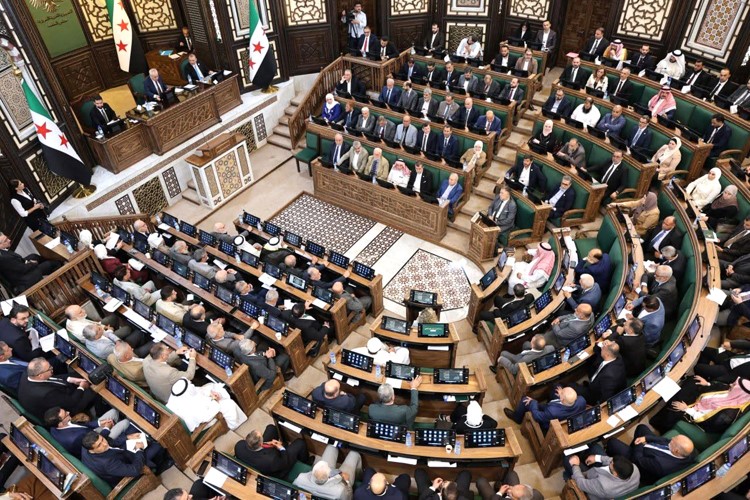
The Syrian People’s Council announced yesterday the postponement of the hearing with Energy Minister Mohammed Al-Bashir, which was scheduled for today, Thursday, to next Sunday, the 20th, at the request of the Ministry of Energy, citing the need to “complete its files.”
The Council’s office had previously approved holding a hearing for the minister, following a request by Iqbal Mohammed Mansour, head of the Energy Committee, to discuss the increase in prices of petroleum derivatives issued by the ministry a few days ago, which sparked a wave of condemnation and protests in several areas.
The Council clarified via its official accounts that the request for the hearing came after the Energy Committee’s meeting held two days ago, and in accordance with Article 30 of the Constitutional Declaration and the provisions of Article 168 of the People’s Council’s Internal Regulations.
The hearing aims to hear clarifications from the Ministry of Energy regarding the reasons for the rise in petroleum derivative prices, as well as the circumstances and considerations accompanying the issuance of the price bulletin.
The Ministry of Energy had previously announced a significant increase in fuel prices, justifying the move by citing an exceptional rise in the global cost of securing these derivatives, coinciding with the maintenance of the Baniyas refinery. It noted that the adjustment is temporary and aims to ensure the continuity of supplies and the availability of fuel in the local market.
On another front, the People’s Council unanimously approved a draft law abolishing the Terrorism Court and nullifying its effects during its third session of the first extraordinary session yesterday.
Nour Arabo, a member of the People’s Council, told the Syrian Arab News Agency (SANA) that the draft law provides for the formation of specialized judicial committees by the Higher Judicial Council, tasked with nullifying unjust rulings issued by the court, including the return of confiscated properties and the suspension or referral of pending cases to the competent judicial authority, depending on the circumstances.
Arabo added that the draft law stipulates that decisions issued by the Higher Judicial Council, formed after the liberation for this purpose, prior to the enforcement of the law, are considered legally valid and enforceable.
She clarified that the draft law exempts individuals whose confiscated assets are returned to them under judicial rulings issued by the Terrorism Courts, military courts, and field courts, from March 15, 2011, to December 8, 2024, from all taxes, fees, and costs associated with the transfer of ownership back to them.
Arabo pointed out that the court had issued thousands of rulings, in addition to confiscating money and properties, without sufficient guarantees to ensure fair trial conditions, relying on security investigations and confessions extracted from detainees under torture.
