The 35th Abu Dhabi International Book Fair Recaptured Al-Sharq's Experience with the 'Sakhr' Digital System
&cropxunits=450&cropyunits=323&w=600)
Mufarrah Al-Shammari
The 35th edition of the Abu Dhabi International Book Fair revived the pioneering legacy of the late Kuwaiti computing visionary, Muhammad Abdulrahman Al-Sharq, during a cultural symposium held yesterday titled “Al-Sharq When He Mastered Arabic in the Computer.” Part of the fair’s cultural program, the event highlighted an early Kuwaiti contribution that paved the way for the Arabic language’s presence in the world of computing.
The symposium featured Riad Al-Sharq, novelist Saud Al-Sanousi, writer and publisher Samuel Shimon, and researcher Dr. Abdullah Al-Madani, and was moderated by Abeer Al-Balushi. Participants explored multiple dimensions of Al-Sharq’s journey, which extended beyond developing Arabic software to encompass content, knowledge, and the preservation of cultural memory.
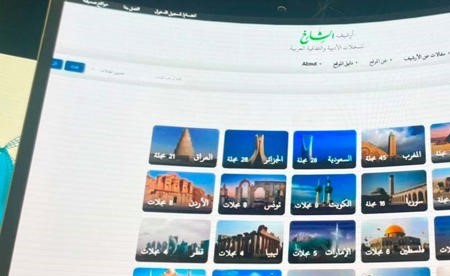
Riad Al-Sharq traced the trajectory of the “Sakhr” system for Arabic software and technologies from its launch in 1983 until 2004. He presented a practical demonstration of Al-Sharq’s archive and the “Sahhali” platform, reviving a technical path that marked a significant milestone in the history of Arabic computing.
The “Sakhr” initiative emerged during a period when the Arabic language faced major technical challenges in interfacing with computers, at a time when global technology was expanding at a rapid pace. The late Muhammad Al-Sharq recognized this early on, understanding that the Arab world’s entry into the computer age would be incomplete unless Arabic became an integral part of this ecosystem.
Consequently, his project transcended the mere localization of hardware and software, evolving into a broader effort to empower Arabic users to interact with technology in their own language, and to develop tools and software that enabled Arabic to have an active presence in the digital environment.
From “Sakhr” to archives and digital platforms, the contours of the project become clearer: first, enabling Arabic within the computer, and then creating a wider space for Arabic content in the digital world. This underscores the importance of reviving the legacy of the late Muhammad Al-Sharq, “Bou Fahad,” today, especially amid the rapid transformations in technology and artificial intelligence.
The symposium shed renewed light on an early Kuwaiti contribution to the history of Arab technology, and on a journey that did not separate technology from language and culture, but rather unified them into a single project whose impact has endured for decades. May God have mercy on you, Bou Fahad.
