Brain Implant Gives Paralyzed Patients a Voice and a Digital Face
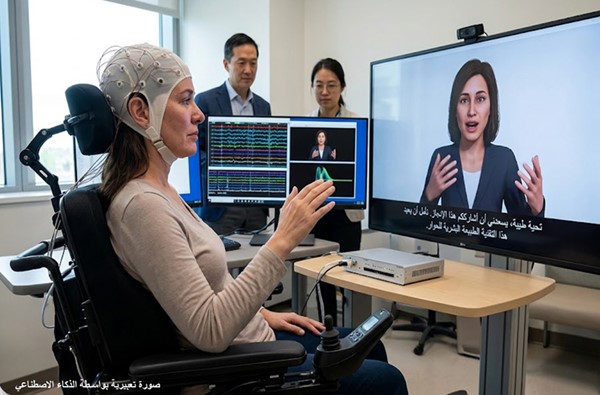
Researchers have developed a brain-computer interface that can convert neural signals in people with paralysis into words and movements performed by a virtual avatar, in a step aimed at restoring a dimension of human communication that goes beyond mere sound production. The new experimental system differs from previous technologies in its ability to decode speech and associated gestures simultaneously, using a single implant that records brain activity. Machine-learning algorithms then use these signals to animate the face and body of a digital representation of the user. The initial study involved a team from the University of California, San Francisco, and two participants. The system enabled recognition of ten communicative gestures for one participant and four for the other. The gestures included nodding, shaking the head to indicate refusal, waving, shrugging, and giving a thumbs-up, along with words that the participants attempted to speak. Gestures are significant because they add meaning, emotion, and context to speech, and can sometimes replace it. Researchers hope to move from interfaces that restore a single function to a unified system that gives users multiple means of expression. This technology could eventually help people who have lost the ability to speak due to strokes, amyotrophic lateral sclerosis (ALS), and other neurological conditions, with the possibility of broader long-term application for cases involving severe apraxia. However, the results do not mean the technology is ready for everyday use. The implant requires brain surgery, and the system was designed individually for each participant; models trained on one person’s brain signals do not easily transfer to another. The vocabulary and the number of movements the system can interpret remain limited. The team is now working to expand the word and gesture vocabulary and to achieve a more continuous and natural representation of body movement. If these efforts succeed, the “digital face” could evolve from a mere technical tool into a means that restores a patient’s presence and gestures, not just their voice.
