Lebanese Prime Minister: Direct cost of the recent war ranges between $3 and $4 billion
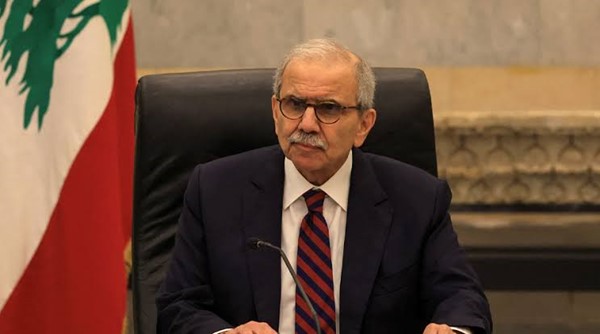
Lebanese Prime Minister Nawaf Salam confirmed on Tuesday that the direct cost of the recent war on his country ranges between $3 and $4 billion in an initial estimate by the World Bank, while the total cost of the two wars (October 2023 and March 2026) may exceed $27 billion.
This statement came during Salam’s address at a session of the Parliament, adding that the toll of the two wars has reached 9,000 killed, more than 30,000 wounded, over one million displaced persons, and tens of thousands of destroyed homes.
He noted that the recent war led to the total or partial destruction of 91,000 housing units, adding to approximately 230,000 units damaged during the previous war, stating that “reconstruction and recovery require, alongside state resources, significant Arab and international support and substantial external financing.”
In this regard, he stressed that “the government’s goal is not limited to managing displacement or keeping residents in shelters, but rather returning them to their towns and villages, restoring basic services, and securing the essentials for life, work, and resilience.”
He clarified that “there is no sustainable reconstruction without financing, no financing without trust, and no trust without a capable state,” affirming that “achieving a capable state necessarily requires reform.”
Salam said the government has worked on “stabilizing Lebanon’s position on the regional map,” noting that it “succeeded in reconnecting the Lebanese economy with its Arab depth, particularly with the Kingdom of Saudi Arabia and other Gulf Cooperation Council countries.”
The Lebanese President affirmed that “there is no sustainable stability without extending state authority over its entire territory using its own forces alone, and restricting the decision on war and peace to the state exclusively.”
He also renewed the government’s commitment to “completing financial and banking reforms and reaching an agreement with the International Monetary Fund,” considering the agreement a “key lever for restoring international confidence in Lebanon.”
He stated that “our choice in the 2027 budget project will be based on maintaining stability instead of running deficits, protecting the most vulnerable groups without undermining fiscal sustainability, investing in growth without uncontrolled spending, continuing reforms instead of postponing them, and mobilizing revenues through tax and customs compliance rather than increasing burdens on the economy and citizens.”
Regarding negotiations with the Israeli occupation, Salam said that direct negotiations with the occupation are not easy and, like any negotiations, do not yield results at the pace some expect, while simultaneously affirming Lebanon’s steadfastness regarding its sovereignty over all its territories.
He added that sovereignty requires the occupation’s withdrawal from all Lebanese lands, as well as the extension of state control using its own forces and working to monopolize weapons in its hands.
