Decree regulating the use of drones, light sport aircraft, and air sports
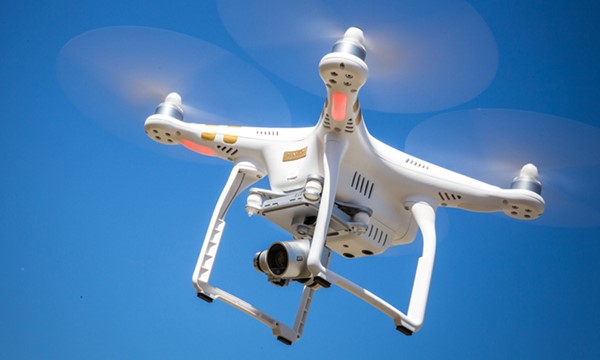
Decree-Law No. 89 of 2026 issued to regulate the use of drones and air sports in Kuwait
Translated by Qiyas from الأنباء — Original source
Decree-Law No. 89 of 2026 Concerning the Regulation of the Use of Unmanned Aircraft, Light Sport Aircraft, Air Sports, and Related Activities was issued in the Official Gazette “Kuwait Today.” Its provisions are as follows:
Chapter One: General Provisions
Article (1): For the purposes of applying the provisions of this Decree-Law, the following words and expressions shall bear the meanings indicated alongside each of them:
The Competent Minister: The Minister concerned with civil aviation.
The Authority: The Public Authority for Civil Aviation.
Aircraft: Unmanned aircraft or light sport aircraft.
Unmanned Aircraft: An aircraft or flight system operated without a pilot on board, including all elements, equipment, and systems associated with its operation and control, whether operated or guided remotely via radio waves or other communication means and electronic technologies, or operated autonomously according to software or automated operating systems, in accordance with the classifications, controls, and standards approved in the field of civil aviation.
Light Sport Aircraft: An aircraft or flight system with a maximum weight not exceeding 600 kg, or 650 kg for amphibious aircraft, in which the pilot uses an engine, sail, or wing for flight, for purposes of entertainment, recreation, or commercial use.
Air Sports: An activity involving flying or piloting a machine, wing, parachute, or hot air balloon for the purpose of enjoyment, competition, or air display.
Airport: A defined area on land or water, including any buildings and structures thereon, dedicated wholly or partly to the use of aircraft for takeoff, landing, or movement.
Aircraft Operator: The natural or legal person licensed to operate the aircraft.
Pilot in Command: The person responsible for controlling the aircraft from the beginning to the end of the flight period.
Registration: An administrative procedure by which the aircraft is registered with the Authority, and the aircraft has a unique registration marking displayed prominently, verifying its data, ownership, and operation.
Airworthiness Certificate: A certificate confirming compliance with airworthiness requirements according to the systems approved by the State of Registration.
Prohibited Area: A defined airspace, above the land territories and territorial waters of the State, in which aircraft flight is prohibited.
Restricted Area: A defined airspace, above the land territories and territorial waters of the State, in which aircraft flight is restricted according to specific and defined conditions.
Airport Zones: The areas surrounding airports, which include aviation easement rights as determined by the Authority in accordance with Article 20 of the aforementioned Civil Aviation Law, concerning aviation easement rights.
Visual Line of Sight (VLOS): An operation conducted by the unmanned aircraft system operating crew to maintain direct visual contact with the unmanned aircraft system to manage its flight, separation responsibilities, and collision avoidance.
Extended Visual Line of Sight (EVLOS): An operation conducted by the unmanned aircraft system operating crew to maintain indirect visual contact with the unmanned aircraft system using the aircraft’s screen to manage its flight, separation responsibilities, and collision avoidance.
Operating Activities: All activities related to the use and operation of the aircraft, including takeoff, control, landing, and associated activities.
Operations Manual: A manual containing the procedures, instructions, and guidelines that aircraft operating personnel must follow.
Article (2): This Decree-Law aims to regulate the use of unmanned aerial vehicles, light sport aircraft, air sports, and related activities within the State of Kuwait, in order to preserve the security and safety of the airspace.
Chapter Two
The Public Authority for Civil Aviation
Article (3): The Authority shall supervise the implementation of the provisions of this Decree-Law, and for this purpose, it shall have the following powers:
* Taking the necessary measures and precautions for the security and safety of operational activities.
* Supervising and inspecting licensees and permit holders to verify compliance with their obligations.
* Issuing the necessary guidelines to implement the provisions of this Decree-Law.
* Specifying and regulating special activities related to unmanned aerial vehicles, light sport aircraft, and air sports, including design, manufacturing, assembly, modification, inspection, maintenance, development of simulation systems, training, qualification, establishment of infrastructure, and other related activities, after coordination with the relevant government entities.
Article (4): The Authority shall classify aircraft types and determine the qualification requirements that operators must meet.
Article (5): The Authority shall determine altitude limits for flight for each type of aircraft.
Article (6): The Authority, in coordination with the concerned government entities, shall establish the measures to be taken when using aircraft.
Article (7): The Authority shall establish standard rules regarding aircraft noise.
Article (8): The Authority shall approve the operations manual submitted by the aircraft operator for operation.
Chapter Three
Registration, Licenses, and Permits
First: Registration
Article (9): The Authority shall establish a registry in which it records all information pertaining to the aircraft and any rights associated with it. The aircraft owner must register the aircraft with the Authority and obtain an airworthiness certificate before using it within the State of Kuwait. The Authority shall determine the specifications of aircraft that must be registered for use within the State of Kuwait. The Executive Regulations of this Decree-Law shall specify the conditions, procedures, and fees for registration, as well as the circumstances for cancellation. The owner must notify the Authority of any changes to the registered information within a period not exceeding seven working days from the date of such change, as specified in the Executive Regulations of this Decree-Law.
Second: Licenses
Article (10):
No aircraft may be operated within the State of Kuwait without obtaining an operation license. It is prohibited for any person to pilot or assist in piloting such an aircraft without obtaining a license to do so. The Authority shall issue the aforementioned licenses in accordance with Kuwaiti aviation safety rules and regulations, after obtaining approval from the Ministry of Interior. The Executive Regulations of this Decree-Law shall specify the conditions, procedures, and fees for issuing and renewing the aforementioned licenses.
Article (11):
No activity related to air sports may be conducted without obtaining a license from the Authority. The Executive Regulations of this Decree-Law shall specify the conditions, procedures, and fees for issuing and renewing the aforementioned license.
Third: Permits
Article (12):
The import, manufacture, assembly, programming, or systems of the aircraft, or any parts or components thereof, shall not be permitted unless a permit is obtained from the Authority and approval is granted by the Ministry of Interior. Furthermore, no natural or legal person may engage in any commercial activity related to the import, export, manufacture, assembly, sale, lease, or programming of unmanned aerial vehicles (UAVs), light sport aircraft, their systems, parts, or associated equipment, nor may they engage in any commercial activity related to air sports and activities associated therewith, unless a commercial license is obtained from the Ministry of Commerce, approval is granted by the Ministry of Interior, and a permit is issued by the Authority.
The executive regulations of this Law Decree shall specify the conditions, procedures, and fees for issuing and renewing the aforementioned permits.
Article (13)
Government entities may, after obtaining the licenses and permits stipulated by the Authority, use unmanned aerial vehicles or light sport aircraft for:
* Relief and emergency operations, or any other medical services.
* Scientific and research activities.
* Government activities and services as specified in the executive regulations of this Law Decree.
The Ministry of Defense is exempt from obtaining the necessary licenses and permits for the use of unmanned aerial vehicles, provided that it notifies the Authority of operations or activities that do not fall under the scope of military or security secrecy.
Article (14)
Applications for any of the licenses or permits referred to in this Law Decree, or for their renewal, shall be submitted on forms issued by decision of the Authority.
The Authority shall rule on the aforementioned application or its renewal within a period not exceeding ninety days from the date of completion of all required data, documents, conditions, and procedures; otherwise, the application shall be deemed rejected.
Article (15)
Licenses and permits issued in accordance with the provisions of this Law Decree shall include, in particular, the following:
* Details of the licensee or permit holder.
* Subject matter of the issued license or permit.
* Duration of the license or permit.
* Paid insurance.
* Measures to be observed.
* Obligations of the licensee or permit holder.
* Any other details specified in the executive regulations of this Law Decree.
Chapter Four
Obligations, Prohibitions, and Measures
First: Obligations
Article (16)
The licensee or permit holder shall, in accordance with the provisions of this Law Decree, comply with the terms of the issued license or permit, as well as the rules and regulations of Kuwaiti aviation safety.
Article (17)
Unmanned aerial vehicles must bear markings indicating identity and registration, and light sport aircraft must bear markings indicating identity, registration, and the national flag, as determined by the Authority.
Article (18)
Operators of unmanned aerial vehicles and light sport aircraft must:
1. Ensure that their crew members are adequately aware and conscious of their responsibilities, are in good health, are not suffering from fatigue, and are not under the influence of alcohol, narcotics, or psychotropic substances.
2. Comply with landing orders issued by the relevant authorities within the Authority during flight over the territory of the State of Kuwait.
3. Adhere to altitude limits for flight.
4. Comply with standard rules regarding aircraft noise.
Additionally, operators and pilots of light sport aircraft must ensure that at least one pilot is present in the flight area to support the pilot in command.
Article 19 The unmanned aircraft pilot shall be responsible for: 1. Ensuring that the aircraft remains within visual line of sight or extended visual line of sight, as applicable, in accordance with the operational mode specified in the license. 2. Conducting safe flight operations and avoiding collisions with persons, private property, and other manned and unmanned aircraft. The pilot of a light recreational aircraft shall be responsible for: 1. Ensuring that each flight is conducted in accordance with the provisions set forth in the Authority-approved Operations Manual and the legislation in force in the State of Kuwait. 2. Verifying that all flight safety instruments, equipment, navigation devices, and safety tools are available, adequately maintained, and airworthy throughout all phases of the flight under normal, abnormal, and emergency conditions. 3. Conducting safe flight operations and avoiding collisions with persons, property, and other manned and unmanned aircraft.
Article 20 The unmanned aircraft operator shall be responsible for: 1. Ensuring that each flight is conducted in accordance with the provisions set forth in the Authority-approved Operations Manual and the legislation in force in the State of Kuwait. 2. Verifying that all equipment and tools required for safe operation, as well as safety devices, are available, adequately maintained, and airworthy throughout all phases of the flight under normal conditions and in emergencies.
Article 21 In the event of loss of control of the aircraft or an accident involving it, both the operator and the pilot must immediately notify the Authority by any appropriate means.
Article 22 Manufacturers, importers, and operators must comply with the technical standards and restrictions specified by the Public Authority for Communications and Information Technology (PACIT) to ensure no interference with frequencies allocated for air navigation or other communication networks. Radio frequencies used in aircraft operation and control systems must fall within the bands allocated and permitted by PACIT.
Second: Prohibitions
Article 23 The use of the aircraft is prohibited prior to obtaining approval from the Ministry of Interior.
Article 24 The licensee or permit holder may not transfer the license or permit issued to them under the provisions of this Law-Decree except with the approval of the Authority and in accordance with the provisions set forth in the Executive Regulations of this Law-Decree.
Article 25 Flying the aircraft within the vicinity of airports or takeoff and landing sites is prohibited. The Authority shall issue a decision defining such areas. Flying the aircraft over restricted or prohibited areas designated by the Authority in coordination with relevant state authorities is also prohibited. If the aircraft enters the aforementioned areas, its operator and pilot must comply with orders issued by the relevant authorities of the Authority.
Article 26 Flying the aircraft at night, between sunset and sunrise, or under poor or unsuitable weather conditions as reported by the Meteorology Administration, is prohibited unless a special permit is obtained from the Authority.
Article 27 The number of passengers in each light recreational aircraft must not exceed the number stated in the aircraft’s registration certificate.
Article 28 Taking photographs or recording video of persons, private property, or public facilities specified in the Executive Regulations of this Law-Decree using the aircraft is prohibited before fulfilling the conditions stipulated in those Regulations.
Third: Measures
Article (29) The Authority may, either on its own initiative or upon request from the Ministry of Interior, suspend for a specified period not exceeding ninety days, or revoke, the licenses or permits granted in accordance with the provisions of this Decree-Law, in the following cases:
- If public interest, necessity, or security considerations so require.
- If the licensee or permit holder loses any of the conditions required for the license or permit.
- If the licensee or permit holder violates any provision of this Decree-Law, its Executive Regulations, or the implementing decisions thereto.
- If the licensee or permit holder violates any provision of the license or permit issued to him.
The Executive Regulations of this Decree-Law shall specify the procedures for suspending, temporarily halting, or revoking the license or permit, their durations, and the mechanism for appealing such decisions.
Article (30) The authorities competent within the Authority, in coordination with security and military bodies and to the extent necessary to avert danger and protect the security and safety of the airspace, may take all necessary technical and operational measures, including the use of electronic jamming means, disabling remote control systems, taking control of the aircraft, or intercepting it, in the event of non-compliance or failure to respond to orders issued by those authorities.
Article (31) Security and military authorities may take all necessary technical and operational measures to detect, intercept, disable, take control of, or shoot down any aircraft flying over prohibited or restricted areas, or in the vicinity of military and security installations and sites, if it poses a threat to the security of the State or the safety of individuals and property. No legal or civil liability shall attach to those authorities or their personnel as a result of any damage that may be inflicted on the aircraft or its systems due to the exercise of these powers.
Chapter Five
Penalties
Article (32) Without prejudice to any harsher penalty stipulated in any other law, the crimes stipulated in the following articles shall be punished with the penalties prescribed therein. The Public Prosecution alone, and no other authority, shall have jurisdiction to investigate, prosecute, and bring charges for all crimes stipulated in this Decree-Law.
Article (33) Whoever violates the provisions of Articles 9 (paragraphs two and three), 16, 17, 21, 24, and 26 of this Decree-Law shall be punished with imprisonment for a term not exceeding six months and a fine not less than 300 Kuwaiti Dinars (K.D.) and not exceeding 700 Kuwaiti Dinars (K.D.), or with one of these two penalties.
Article (34) Whoever violates the provisions of Articles 10, 18, 19, 20, 23, and 28 of this Decree-Law shall be punished with imprisonment for a term not exceeding two years and a fine not less than 1,000 Kuwaiti Dinars (K.D.) and not exceeding 2,000 Kuwaiti Dinars (K.D.), or with one of these two penalties.
Article (35) Whoever violates the provisions of Articles 11, 12, 25, and 27 of this Decree-Law shall be punished with imprisonment for a term not exceeding three years and a fine not less than 3,000 Kuwaiti Dinars (K.D.) and not exceeding 5,000 Kuwaiti Dinars (K.D.), or with one of these two penalties.
Article (36) If the accused has previously been finally convicted of committing one of the crimes stipulated in this Decree-Law, and it is proven that he committed one of those crimes within five years from the date of the aforementioned judgment, the court may sentence him to a penalty exceeding the maximum statutory limit, provided that such penalty does not exceed that limit by more than half. The penalty shall be doubled in the event that an accident occurs as a result of committing any act in violation of the provisions of this Decree-Law.
Article 37 In addition to the penalty prescribed for the offense, the Court may, when issuing a conviction, order, as appropriate, one or more of the following penalties: * Revocation or suspension of the license or permit for a period not exceeding one year. * Closure of the facility for a period not exceeding one year. * Confiscation of the unmanned aerial vehicle (drone) and the items seized, which were obtained as a result of the offense, or used in its commission, or could have been used in its commission, without prejudice to the rights of bona fide third parties.
Article 38 Without prejudice to the personal criminal liability of the perpetrator of the offense, the legal representative of a private legal entity shall be subject to the same financial penalties prescribed for acts committed in violation of the provisions of this Decree-Law, if it is established that their failure to fulfill their official duties contributed to the commission of the offense, with knowledge thereof. The private legal entity shall be liable for any financial penalties or compensation imposed if the offense was committed on its behalf, in its name, or for its benefit.
Article 39 The penalties stipulated in this Decree-Law shall not prejudice the right of the aggrieved party to claim compensation for any violation of the provisions of this Decree-Law.
Chapter Six Final Provisions
Article 40 Officials of the Authority designated by a decision of the competent Minister shall have the status of judicial police officers for the purpose of establishing offenses committed in violation of the provisions of this Decree-Law, its Executive Regulation, and the implementing decisions. For this purpose, they may enter all places where such offenses occur, request relevant information, inspect licenses, permits, and any other documents, and obtain copies thereof. They may also enlist the assistance of police force members if necessary.
Article 41 The Authority may offer, or accept, a settlement from any person who committed one of the offenses stipulated in this Decree-Law, either before initiating criminal proceedings or at any stage thereof until a final judgment is rendered, in exchange for paying a financial amount not less than the minimum fine prescribed and not exceeding the maximum fine. In the event a settlement is concluded, the criminal proceedings shall be terminated upon their initiation, provided that it is not established that the intent behind committing any of the offenses stipulated in this Decree-Law was to harm the security and interests of the State. The Executive Regulation of this Decree-Law shall specify the rules and procedures for settlement.
Article 42 The owner of each aircraft must regularize their status in accordance with the provisions of this Decree-Law, its Executive Regulation, and the implementing decisions, within one year from the date of entry into force of this Decree-Law.
Article 43 The competent Minister shall issue the Executive Regulation for this Decree-Law, after coordination with the relevant authorities, no later than December 31, 2026. This Regulation shall specify the coordination procedures between the Authority and the competent authorities regarding the implementation of the provisions of this Decree-Law.
Article 44 The Prime Minister and the Ministers shall each, within their respective competencies, implement this Decree-Law, which shall enter into force upon its publication in the Official Gazette.
