Decree amending allowances and bonuses for Kuwaiti teaching staff in "Education" and "Islamic Affairs"
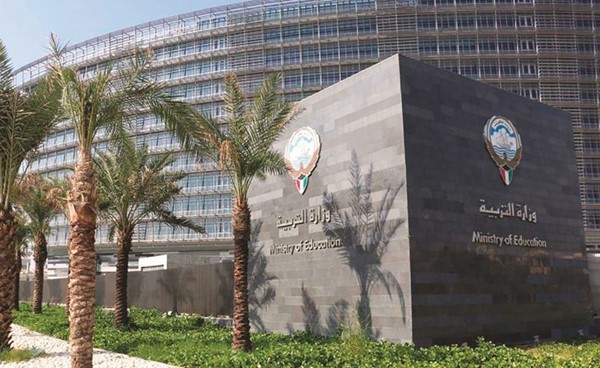
Law Decree No. 86 of 2026 issued to amend allowances and bonuses for teachers at the Ministry of Education and Ministry of Islamic Affairs.
Translated by Qiyas from الأنباء — Original source
Today, Decree-Law No. 86 of 2026 was published in the Official Gazette of Kuwait, replacing Table No. (1) attached to Law No. 28 of 2011 concerning the granting of allowances and bonuses to Kuwaiti members of the teaching staff at the Ministry of Education and the Ministry of Islamic Affairs. Its provisions are as follows:
Article 1: Without prejudice to acquired rights, Table No. (1) attached to the aforementioned Law No. 28/2011 is hereby replaced by the table attached to this Decree-Law.
Article 2: Any provision conflicting with the provisions of the table attached to this Decree-Law is repealed.
Article 3: The ministers shall each, within their respective competencies, implement this Decree-Law, which shall enter into force from the date of its publication in the Official Gazette.
The explanatory memorandum accompanying the Decree-Law states as follows:
The Ministry of Education seeks to support teachers and provide all means to enable them to fulfill their noble mission, recognizing their role in advancing academic and cultural standards. Education is undergoing rapid changes that have imposed new roles on teachers, extending beyond the traditional framework of classroom instruction. The contemporary educational reality necessitates the development of tools and methods aligned with modern technologies.
Accordingly, the Ministry of Education is committed to investing in the development of teachers’ skills by providing advanced training programs and workshops that keep pace with recent developments. This aims to enhance the educational process and adapt to modern advancements, with the goal of building a contemporary educational system based on the latest international standards.
Whereas Law No. 28 of 2011 concerning the granting of allowances and bonuses to members of the teaching staff, as amended by Law No. 26 of 2016, included in its provisions and as stated in its explanatory memorandum, that it was intended to modify the existing system to achieve stability for members of the teaching staff, thereby creating a professional reality for the teaching profession that makes it attractive to qualified candidates and the required cohorts for this profession, encourages constructive competition among its employees, and primarily rewards excellence in promotion. This motivation led to the approval of certain material benefits for teaching staff in both the Ministry of Education and the Ministry of Islamic Affairs.
Table No. (1) attached to this law detailed the job levels covered, ranging from the level of Teacher (C) up to the level of Specialist Teacher (A). Each job level was associated with the required conditions for holding it, which were limited to specifying the academic qualification required for each level, and determining the value of the job-level bonus, the incentive bonus, the teaching allowance, and the rare-specialty allowance granted according to each job level. Subsequently, Law No. 86 of 2017 amended Law No. 28 of 2011, replacing the aforementioned tables with another table.
Since Article 1 of the Decree issued on April 4, 1979, concerning the Civil Service System, specified the general conditions for holding civil service positions, and Article 1, Paragraph (4) thereof stipulated that candidates for public positions must meet the conditions and qualifications required for the position, and added in its final paragraph that the government entity may add other conditions after obtaining the opinion of the Civil Service Bureau.
Article 4 of the aforementioned decree stipulates that “appointment to the general jobs group requires obtaining an academic qualification commensurate with the nature of the position. The Civil Service Council shall determine the academic qualification levels necessary for appointment to this group. However, individuals lacking the requisite qualifications but possessing experience or having completed training courses may be appointed to positions within the aforementioned group, in accordance with the rules and conditions approved by the Civil Service Council upon the proposal of the Civil Service Bureau.”
Given that the position of “teacher” possesses a special nature due to its importance and impact on shaping and forming learners’ minds, and further considering that it is a comprehensive educational and pedagogical mission rather than mere rote instruction, it requires a combination of academic and pedagogical skills, the ability to manage and modify behavioral issues, and the performance of diverse tasks such as planning and delivering curricula and evaluating student performance. Moreover, it necessitates that teachers possess the capacity for professional self-development to keep pace with developments, as they serve as role models for students in behavior and values, given their direct influence on shaping students’ personalities.
Consequently, considering the nature of these tasks, it is imperative that additional conditions be met by candidates for educational positions to ensure the effective fulfillment of job duties and to achieve the intended objectives.
Decision No. 2 of 1996 of the Civil Service Council, concerning the jobs, allowances, and bonuses of teaching staff members, stipulated in its Article 1 the definition of teaching staff members covered by the decision. Article 2 defined the job levels for teaching staff, ranging from Level E Teacher to Level A Specialist Teacher. This article referred to Table No. (1) attached to the decision, which specified the conditions for holding each of these job levels. The table included the required academic qualification and years of experience for each of the aforementioned job levels.
Regarding the first of these levels (Level E Teacher), the sole requirement for holding this position is a diploma qualification. For the next level, Level D Teacher, the requirement is either a university degree or a secondary diploma plus two years of experience. Notes attached to this table clarified that newly graduated holders of university degrees are appointed at Level D, while diploma holders are appointed at Level E. These notes also stated that the Ministry of Education may add other conditions to those listed in the table, such as passing training courses or examinations, in coordination with the Civil Service Bureau.
As for Law No. 28 of 2011, its explanatory memorandum indicates that it was enacted solely to amend the existing system. It is therefore evident that the additional conditions stipulated in Civil Service Council Decision No. 2 of 1996, which were not included in Law No. 28 of 2011 and do not conflict with its provisions, remain in force and effective. This is particularly true since all conditions mentioned in the aforementioned law regarding the appointment to the position of teacher, as set forth in Table No. (1) attached to the law, pertained exclusively to the conditions for holding the progressive job levels, without addressing the conditions for initial appointment to the position of teacher. Regarding the first level for initial appointment, the law stipulated that for Level E Teacher, a commercial diploma is required, and for Level D Teacher, a pedagogical university degree or its equivalent plus one year of experience, or a pedagogical diploma or its equivalent plus three years of experience.
Subsequently, Law No. (86) of 2017 was enacted, replacing the aforementioned schedule. The amendment modified the requirements for the Teacher (D) level to require either a university-level educational qualification or its equivalent (excluding the years-of-experience requirement), or a teaching diploma or its equivalent plus two years of experience.
Consequently, the initial appointment conditions for the teacher position did not differ from the general conditions prescribed for any other position, except for the educational qualification requirement. No conditions were stipulated regarding the ability to perform the teaching duties, which constitute the core of the teacher’s role, despite the significant responsibilities assigned to holders of this position. These responsibilities necessarily require additional conditions to achieve the desired objectives.
In practice, it became evident that the initial conditions for appointing recent graduates as teachers were insufficient to ensure the proper performance of the duties associated with this role, particularly the skills necessary for its execution. Furthermore, the academic qualification alone (whether a university-level educational degree or a teaching diploma) was inadequate as a standalone condition for initial appointment. This is especially true given the varying levels of graduate performance and graduation rates, which sometimes indicate weaknesses in these outputs that are inconsistent with the requirement that those holding this position must possess the highest level of competence. Such competence is not necessarily reflected merely by graduation and obtaining an academic qualification, nor do previous years in the profession necessarily indicate genuine, practical experience that benefits the educational institution.
Given the need to study and understand the developments affecting the educational sector, which necessitate updating the appointment procedures for teaching staff to ensure that only highly competent individuals join this workforce, the objective is to select the best candidates for the position and determine eligibility based on objective conditions rooted in the nature of the job. This ensures equality of opportunity and legal equality, guaranteeing that only those who meet the general conditions and possess the specific attributes and capabilities required to perform the role to the fullest extent are appointed, thereby ensuring the smooth operation of the educational institution.
To reconcile the right of recent graduates from the College of Education at Kuwait University and the Basic Education College at the Public Authority for Applied Education and Training to work in teaching positions based on their academic qualifications, with the Ministry of Education’s right to select the best candidates to achieve optimal results that reflect positively on the efficiency of the education system and the educational institution as a whole, the matter was presented to the Educational, Health, and Youth Committee in the Cabinet and the Civil Service Commission. They approved the reorganization of appointment conditions for teachers for Kuwaiti nationals, stipulating that initial appointments would be for a one-year period in a newly created job title called “Trainee Teacher.” During this period, the trainee teacher would perform teaching duties while undergoing a one-year training program comprising theoretical study and practical training. The appointee would receive a salary according to the financial grade of the appointment, without receiving any allowances or bonuses specific to the teaching staff related to teaching.
If the trainee teacher fails to pass this training program, he shall be transferred to an administrative position within the Ministry of Education, provided he holds a university teaching qualification from the College of Education at Kuwait University or from the Basic Education College of the Public Authority for Applied Education and Training. If he does not hold the aforementioned university qualification and fails to pass the training program, his file shall be referred to the Civil Service Bureau for assignment to another government entity in a job title appropriate to his qualification.
If the trainee teacher passes the training program, he shall be promoted to the next functional level among the functional levels of teaching staff members, subject to the conditions set forth in Table No. (1) attached to the Law and the allowances specified for each level in that table, as well as any additional conditions determined by the Civil Service Council and the Ministry of Education regarding the progressive technical promotion of functional levels.
In light of the foregoing, and given that the Emiri Decree issued on 2 Dhu al-Qi'dah 1445 AH (corresponding to 10 May 2024) stipulated in Article (4) that laws shall be issued by legislative decrees, the aforementioned draft Legislative Decree has been prepared. It consists of three articles, including the replacement of Table No. (1) attached to Law No. 28 of 2011 concerning the granting of allowances and bonuses to Kuwaiti teaching staff members at the Ministry of Education and the Ministry of Islamic Affairs.
