Manal Al-Asfour: Implementing Smart City Concepts within the Urban Transformation Pathway and Leveraging the Digital Environment and Information and Communications Technology
&cropxunits=450&cropyunits=300&w=770)
Kuwait Municipality Director General Eng. Manal Al-Asfour praised the Sultanate of Oman’s experience in implementing smart city models and urban projects based on innovation and sustainability, which consolidate quality of life for individuals and improve resource efficiency and service delivery.
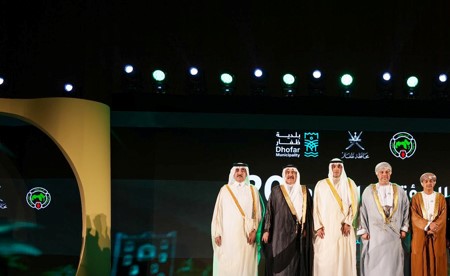
This came in a statement Al-Asfour gave to KUNA following her participation in the 64th Executive Council session of the Arab Cities Organization and its 20th General Conference, alongside city and municipal leaders from 22 Arab countries. The event was hosted by Salalah city in the Dhofar Governorate of Oman over two days.
Al-Asfour emphasized Kuwait Municipality’s commitment to applying smart city concepts within the framework of urban transformation, leveraging the digital environment and information and communications technology in line with the requirements of the modern era. She stated that participation in this Arab gathering enhances Kuwait Municipality’s plans and initiatives toward digital transformation and the mechanization of services in various sectors, such as transport and energy, to support operational efficiency.
She added that the event also offers an opportunity to exchange expertise on smart city concepts and design future models, explore ways to implement them, and discuss the main challenges facing them, particularly those related to advanced digital infrastructure.
Al-Asfour expressed her gratitude and appreciation to the Sultanate of Oman, its leadership, government, and people for hosting the event, as well as to Dhofar Municipality Chairman Dr. Ahmed Al-Ghasseen and his staff for their excellent organization. She expressed hope that the conference would yield results and recommendations that contribute to the development of Arab cities and shape their future, while enabling municipalities to keep pace with the rapid changes cities are experiencing.
For his part, Arab Cities Organization Secretary-General Badr Al-Ajeel emphasized the importance of coordinating Arab efforts and working jointly to keep pace with the rapid changes the world is witnessing, in pursuit of building more innovative and sustainable Arab cities.
Al-Ajeel stressed in a speech delivered at the conference that joint efforts enhance the organization’s status and place Arab cities at the center of attention “in an era where urbanization has become one of the most prominent issues of the future.” He noted that “previous generations carried the organization’s objectives, consolidated its status, and preserved its mission; today, the responsibility lies in safeguarding this legacy and building upon it.”
Al-Ajeel called on conference participants, including Arab city leaders, to keep pace with the knowledge and technological boom that crystallized during the first quarter of the 21st century, commending the efforts made by member cities of the organization and local and Arab bodies supporting the conference’s work. He expressed full confidence that the 20th General Conference would mark the beginning of a new chapter and a qualitative leap in joint work, looking forward to the conference’s discussions yielding effective decisions that enhance the organization’s progress and serve Arab cities.
He noted that holding the conference under the slogan “More Innovative and Sustainable Cities” carries special significance, commending the success of Oman’s Dhofar Governorate in presenting a distinguished model of utilizing natural assets and environmental richness to serve local development and stimulate tourism.
He expressed gratitude and appreciation to the Sultanate of Oman, its leadership, government, and people for hosting the conference and for their “sincere support” for everything that unites Arab cities and harmonizes their efforts, praising the generous patronage of Dhofar Governorate’s Governor, Mr. Marwan Al-Sa’id, for the conference’s proceedings. He also commended the efforts of Dhofar Municipality Chairman and current session president Dr. Ahmed Al-Ghasseen and all its staff in ensuring the success of this forum, as well as the efforts of the previous session’s president, Riyadh Region Deputy Ammir Prince Faisal bin Abdulaziz bin Ayaf.
For his part, Oman’s Dhofar Municipality Chairman and current session president of the 20th General Conference of the Arab Cities Organization, Dr. Ahmed Al-Ghasseen, emphasized the importance of smart city models and services revolving around “human beings,” thereby contributing to achieving quality of life and comprehensive sustainable economic development.
Al-Ghasseen said in his speech at the conference, which began its work yesterday Tuesday in Salalah city, Dhofar Governorate, that his country’s hosting of the conference reflects the depth of Arab relations and the commitment to enhancing cooperation and exchanging experiences and practices among Arab cities, highlighting the main challenges facing Arab cities and the future of urban development.
He stressed the necessity of building more resilient and sustainable cities capable of keeping pace with rapid transformations, with a focus on human beings and quality of life, utilizing modern planning tools, and enhancing partnership and integration. He also emphasized the importance of knowledge, data, and digital transformation in modern city management, considering accurate data as the foundation for planning, decision-making, performance measurement, resource efficiency enhancement, and transparency promotion. He called for investing in innovation and modern technologies to build smart and sustainable cities whose services revolve around human beings.
For his part, Riyadh Region Deputy Ammir and previous session president of the conference, Saleh Al-Madhoub, said that participation in the conference by Arab cities is an extension of a long history of joint cooperation, emphasizing that the acceleration of digital, urban, and environmental transformations makes enhancing partnerships and exchanging expertise even more important.
Al-Madhoub added that Riyadh hosted the previous session under the theme “Sustainable Cities… A Safe Future, Resilient and Inclusive Cities,” with the participation of 20 Arab countries. The session addressed issues of digital transformation, sustainability, and quality of life, emphasizing the construction of cities capable of adapting to changes and placing human beings at the heart of development.
In this regard, he confirmed that holding the current session in Dhofar represents a continuation of what began in Riyadh and an opportunity to showcase experiences, enhance cooperation, and prepare for the requirements of the coming stage, pointing to Dhofar’s natural, cultural, and urban assets and its experience, which will add to the progress of Arab cities.
The Arab Cities Organization, headquartered in Kuwait, in cooperation with Dhofar Municipality in the Sultanate of Oman, is organizing the 64th Executive Council meeting and the 20th General Conference under the slogan “More Innovative and Sustainable Cities,” with delegations from 22 Arab countries participating.
On the sidelines of the Executive Council meeting and the General Conference, workshops and scientific sessions were held on smart cities, cybersecurity, and the future of sustainable urban mobility in Arab cities, with the participation of academics and specialists.
Dialogue sessions were also held on enhancing the role of Arab Cities Organization institutions in empowering Arab cities and on reaching an Arab agenda for urban development, with the participation of officials from relevant Arab organizations and participating city leaders.
The 20th General Conference, organized by the Arab Cities Organization in cooperation with Dhofar Municipality and under the patronage of Dhofar Governorate’s Governor Marwan Al-Sa’id, discusses the most prominent issues and challenges facing Arab cities and explores ways to develop municipal work, enhance cooperation, and exchange experiences and practices.
The conference gains special importance amid the rapid changes cities are experiencing and the challenges they impose, including urban expansion, population growth, infrastructure development, service improvement, digital transformation, climate change, and environmental sustainability. These require developing urban management methods and leveraging innovation and modern technologies to build more efficient, resilient cities capable of facing the future.
It is worth noting that the Arab Cities Organization, headquartered in Kuwait City, was established in 1967 as an independent, non-governmental, non-profit regional Arab organization concerned with city and municipal affairs in Arab countries.
