Kuwait: Necessity of establishing institutional and legal frameworks to counter any cyber threats targeting smart city infrastructure
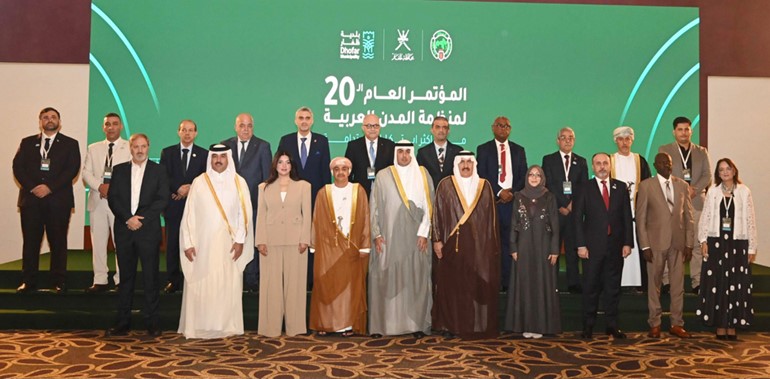
The Arab Cities Organization held its 64th Executive Meeting in the Sultanate of Oman, with delegations from Arab municipalities and cities, including the Kuwait Municipality, led by its Director General, Eng. Manal Al-Asfour, participating in the event in Salalah, Dhofar Governorate.
The meeting was chaired by Dr. Ahmed Al-Ghasani, Head of the Dhofar Municipality and President of the current session, alongside Badr Al-Ajeel, Secretary-General of the Arab Cities Organization. The gathering coincides with the organization’s 20th General Conference, scheduled for Tuesday under the theme “More Innovative and Sustainable Cities.”
The Executive Meeting, held annually, discussed topics related to the organization’s programs, activities, and trajectory in the coming phase, serving as a key organizational milestone in its work. The meeting is expected to enhance coordination among member cities and follow up on files and issues related to Arab municipal work and emerging challenges, such as urban planning, environment, climate change, transport, water, waste management, and urban development.
The Arab Cities Organization, headquartered in Kuwait, is organizing the 64th Executive Council Meeting and the 20th General Conference in cooperation with the Dhofar Municipality in Oman, with delegations from 22 Arab countries participating.
On the sidelines of the Executive Council Meeting and the General Conference, workshops and scientific sessions were held on smart cities, cybersecurity, and the future of sustainable urban mobility in Arab cities, with the participation of academics and specialists, including two members of the Hawalli Municipality Council: Dr. Faeq Bin Salama and Hadeel Ma’arifi.
The two council members emphasized the importance of addressing escalating cyber risks targeting the infrastructure of smart cities, including water, energy, transport, and monitoring systems, stressing the need to establish appropriate institutional and legal frameworks against potential threats. This was stated during a scientific session titled “Cybersecurity of Smart Cities: From Technical Risks to Legal and Institutional Response.”
Bin Salama presented technical risks and general cyber threats, while lawyer Hadeel addressed the legal aspects of the session, discussing national legislations and Arab and international frameworks for judicial cooperation in this field.
Speaking to KUNA about the importance of participating in this Arab forum, Bin Salama noted that it holds special significance as a genuine platform for unifying Arab perspectives on digital and urban transformation issues, and as an “opportunity” to highlight Kuwait’s experience in this file. She added that the presence of specialists and officials from Arab municipalities, governorates, and cities enhances the building of partnerships in the fields of innovation and urban sustainability.
Ben Salama expressed her hope that the General Conference of the Arab Cities Organization, scheduled to be held today, would yield practical and actionable recommendations, the most prominent of which include adopting unified Arab guideline frameworks for cybersecurity in smart cities and strengthening mechanisms for exchanging expertise and early warning systems among member cities. Regarding the role of Kuwaiti governorates in urban development, she noted that council members in the governorates play a pivotal role in monitoring infrastructure projects and local services, and working to align them with modern trends in innovation and sustainability, thereby enhancing citizens’ quality of life and keeping pace with the “Kuwait 2035” vision.
For her part, Ma’arafi told KUNA that participation in this Arab forum stems from a commitment to keeping abreast of shared urban issues among Arab countries and exchanging developmental experiences and practices to serve the improvement of municipal and local services.
In the context of her scientific paper, she called for the necessity of legal and institutional frameworks, along with a comprehensive package of legislation aimed at protecting digital infrastructure, ensuring privacy, and securing data flow in a manner that respects several key rights, most notably human rights.
It is worth noting that the Arab Cities Organization, headquartered in Kuwait City, was established in 1967 as an independent regional Arab organization with a non-governmental and non-profit character, concerned with urban and municipal affairs in Arab countries.
Under its umbrella are 22 Arab countries and more than 650 member cities, while seven affiliated institutions operate under its auspices: the Arab Cities Development Fund, the Arab Institute for Urban Development, the Arab Cities Award Foundation, the Arab Center for Environment and Cities, the Arab Forum for Smart Cities, the Arab Heritage and Historical Cities Foundation, and the Arab Working Group for Cultural Cities.
The organization works to develop urban governance, enhance integration among members, encourage the exchange of expertise and best practices, and propose scientific solutions that support sustainable urban development in the Arab world. Among its strategic pillars are “Heritage and Identity,” through which it seeks to preserve the architectural and civilizational character of cities and integrate it into contemporary development pathways; “Sustainability,” by achieving balanced growth that considers economic, social, and environmental dimensions; and “Urban Governance,” through updating administrative and digital systems and enhancing the efficiency of local governance.
Through these pillars, the organization aims to support the excellence of Arab cities by working on institution-building, preserving heritage, sustaining tourism, enhancing investment attractiveness, fostering sustainable growth, promoting cultural vitality, advancing digital governance, ensuring environmental sustainability, and implementing data-driven policies.
