Arab consensus on condemning Iranian attacks: They threaten the region's security and stability
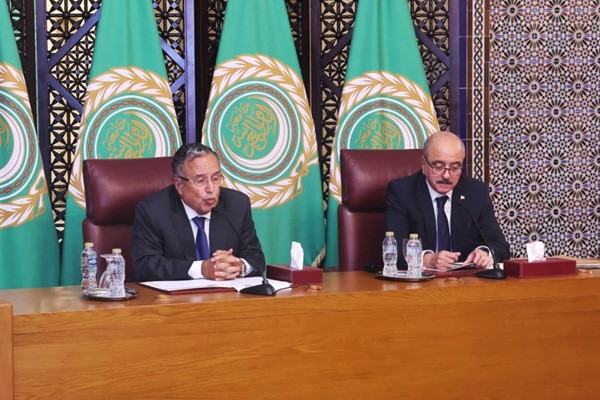
Tunisian Foreign Minister Mohamed Nafati affirmed that all Arab countries have condemned Iranian attacks targeting several sister nations, stressing that any aggression against an Arab state undermines the security and stability of the entire region.
In a joint press conference with Arab League Secretary-General Nabil Fahmy at the conclusion of his chairmanship of the 166th session of the Arab Foreign Ministers’ Council, Nafati added that the meeting emphasized that solidarity, coordination, and the unification of Arab positions are essential to enhancing the capacity of joint Arab action to withstand challenges, act effectively, and exert influence.
He clarified that Arab countries reaffirmed their reliance on negotiation and dialogue as the optimal means to resolve disputes and establish regional relations based on good neighborliness and mutual respect.
Nafati stressed that the Palestinian issue remains at the forefront of the Arab League’s and joint Arab institutions’ concerns, as it pertains to the dignity and human rights of a people. He emphasized that the suffering of the Palestinian people cannot become normalized or accepted by the international community.
“We agreed that bringing security and stability to the region and the world is impossible without ending the Israeli occupation, realizing the Palestinian people’s right to self-determination, and establishing an independent state with Jerusalem as its capital,” he said.
He underscored the significance of Jerusalem due to its profound symbolic importance to both the Arab and Islamic worlds, rejecting any attempts to alter its status or impose new realities. He firmly condemned all forms of displacement and efforts to change the demographic reality in Palestinian territories.
On another note, Nafati noted that deliberations confirmed the continuation of Arab and international efforts to address crises affecting several Arab countries, including Syria, Lebanon, Sudan, Somalia, and Yemen, in a manner that preserves their unity, sovereignty, and territorial integrity, supports their national institutions, and responds to the aspirations of their peoples.
He stressed that security and economic integration are fundamental factors in strengthening the Arab strategic position, calling for the conversion of available resources into projects that enhance Arab countries’ capacity to confront challenges and support development opportunities.
For his part, Nabil Fahmy affirmed that the 166th session meetings witnessed a “new spirit” and a serious desire to move from merely recording positions to taking practical steps. He stated that the meetings were marked by considerable seriousness amid current international conditions and attempts to reshape the region through the use of force, emphasizing that “the Arab world seeks peace based on justice and international law.”
He pointed out that ministers, during their consultative meeting, stressed that what is required is not merely words, but the recording of principles and positions followed by a transition to action, particularly concerning member states whose sovereignty and security have been violated.
Fahmy also revealed an Arab initiative to establish a fund and an observatory to document and disseminate Israeli violations and infractions to the international public.
