Sulaiman Artie: Arab experimentation begins from reality
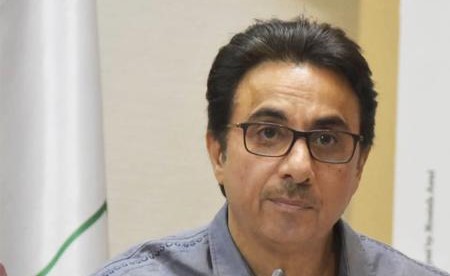&cropxunits=450&cropyunits=297&w=770)
Within the framework of the 33rd edition of the Cairo International Experimental Theatre Festival, the seminar “Experimental Theatre as Aesthetic Territories” opened a broad space for discussion on one of the fundamental issues preoccupying contemporary Arab theatre: the relationship between experimentation and modernity on the one hand, and cultural and environmental specificity on the other. The seminar sought to approach the concept of experimental theatre as an open space for searching for new forms and styles of expression, without necessarily implying a disconnection from the environment to which the theatre belongs or an abandonment of the cultural and social memory that constitutes part of its identity. From this perspective, the seminar evolved into a dialogue regarding the capacity of Arab theatre to open itself to theatrical modernity while simultaneously preserving its specificity and its ability to express its reality and local questions.
The seminar was moderated by Dr. Sami Al-Jumaan from Saudi Arabia, with the participation of Dr. Riyadh Al-Sukkar from Iraq, Dr. Mahmoud Saeed from Egypt, and Dr. Sulaiman Artie from Kuwait. Dr. Said Karimi from Morocco took on the role of commenting on the participants’ papers. The seminar brought together multiple Arab perspectives in an attempt to approach the concept of experimentation and its transformations, and to explore the aesthetic territories through which Arab theatre can operate while re-evaluating its tools, forms, and relationship to place.
Among the papers that raised questions related to the specificity of the Arab theatrical experience, Dr. Sulaiman Artie presented a paper titled “The Problem of Arab Experimental Theatre Between the Specificity of the Cultural Region and Its Openness to Theatrical Modernity.” The paper began with a central question concerning how Arab theatre can achieve renewal and modernity without falling into the trap of imitation or becoming merely an echo of theatrical experiences originating from other environments. According to this argument, experimentation should not be understood as a mechanical transition to pre-existing forms, nor as a rupture with place, memory, and specificity. Rather, it can be viewed as a tool for rediscovering the local environment and re-presenting it through a different theatrical language.
From this standpoint, the importance of the question raised by Artie regarding the relationship between modernity and identity emerged. Theatre can open itself to modern experiences and forms, yet it is simultaneously capable of reconfiguring this openness to align with the specificity of the cultural region to which it belongs. In this way, modernity does not become a goal separate from reality, but rather a means to re-examine this reality and discover its theatrical potential. Artie emphasized through his paper that experimentation does not mean leaving the place; rather, it can serve as a means of returning to it in a new way. The issues, memory, and details belonging to each environment can become fundamental components in constructing a theatrical performance, rather than being treated as obstacles to renewal.
To illustrate this idea, Artie cited three Arab theatrical experiences: “Qahwa Sada” directed by Khaled Jalal, “Silence” directed by Sulaiman Al-Bassam, and “The Runaways” directed by Loubna Al-Tabboubi. These works represented different models in how to deal with the environment, memory, and issues specific to each experience, transforming them into active elements within the theatrical structure. In Artie’s reading, these examples reveal that experimentation can start from reality itself, and that theatrical modernity does not necessarily conflict with the specificity of place. Each of the three experiments managed to benefit from elements linked to its environment, granting them a new theatrical presence through form, vision, and aesthetic tools.
Importing Modernity
Through the three models relied upon by Artie, the core idea that the paper sought to affirm becomes clear: Arab experimental theatre does not need to import modernity as a ready-made model, but can instead adapt it to its environment, memory, and specific questions. Opening up to modernity does not mean abandoning specificity, nor does preserving specificity imply closure or a rejection of renewal. Between these two poles, an Arab theatrical experience can be formed that seeks its own language and benefits from the potential of experimentation without becoming a copy of other experiences. In this context, theatrical modernity appears as a process amenable to adaptation and reconfiguration, entering into a dialogue with the environment, memory, and issues from which the performance originates. Consequently, experimentation becomes a continuous process of rediscovering the local through tools and methods capable of granting it a new presence.
A New Language
The seminar, through its diverse participation and perspectives, highlighted the importance of searching for a new theatrical language capable of expressing the transformations and questions experienced by Arab theatre. The discussion on experimentation was not detached from the question of identity; rather, it appeared that experimentation and specificity could converge within the theatrical experience itself. A theatrical work can start from the memory, details, and issues of a place, then reshape them through different aesthetic tools. In this way, openness to the world does not become a threat to specificity, nor does specificity become an obstacle to renewal.
Through Sulaiman Artie’s paper, the three cited experiences emerged as models illustrating the possibility of combining both belonging to the environment and openness to new forms of expression. In “Qahwa Sada,” details of reality are transformed into theatrical material; in “Silence,” tragedy and memory are transformed into visual and symbolic dimensions that transcend place; while “The Runaways” utilizes space, scenography, sound, and narrative fragmentation to express the state of fragmentation experienced by the characters.
These experiences led to a clear conclusion presented by Dr. Sulaiman Artie: Arab experimentation does not need to import modernity ready-made, but can reconfigure and adapt it to suit its environment, memory, and questions.
