Tariq Al-Roumi: Kuwait's production will remain at 2.676 million barrels per day
&cropxunits=300&cropyunits=450&w=150)
The seven countries participating in the additional voluntary production cuts within the OPEC+ alliance—Saudi Arabia, Russia, Iraq, Kuwait, Kazakhstan, Algeria, and Oman—announced they would maintain the production levels required for September 2026, applying them unchanged in October.
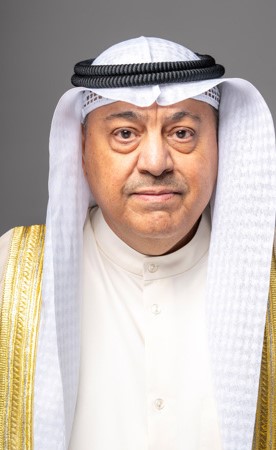
In this context, Oil Minister Tariq Al-Roumi affirmed on Sunday that the current phase requires maintaining a high level of flexibility to deal with any variables that may arise in the oil market. He noted that producing countries have the capacity to adjust their production levels in line with market developments once shipping traffic returns to normal.
This statement came in a press release from the Ministry of Oil following Minister Al-Roumi’s chairing of the Kuwaiti delegation participating in the meeting of the seven countries involved in the agreement to withdraw from voluntary cuts within the OPEC+ alliance, which was held via video conference.
Al-Roumi explained that the meeting is part of the monthly follow-up on global oil market developments and the assessment of supply and demand trends, alongside studying economic indicators that contribute to forming a clear vision of market conditions and needs in the coming period. He praised the decision by the seven participating countries to keep the “allocated production quotas for October 2026” at the same levels set for September 2026, clarifying that Kuwait’s production in October will continue at 2.676 million barrels per day.
He emphasized the importance of maintaining the security and sustainability of energy supplies and ensuring the smooth flow of tankers through strategic waterways, guaranteeing that supplies reach markets safely and regularly, thereby supporting the growth of industrial and economic activity globally. He highlighted the pivotal role played by OPEC and the OPEC+ alliance in enhancing energy security and supporting global oil market stability, noting Kuwait’s continued commitment to collective action and close coordination within the alliance to help achieve balance in global markets, serve the interests of producers and consumers, and support global economic growth.
The Kuwaiti delegation participating in the meeting included Kuwait’s Governor to the Organization of the Petroleum Exporting Countries (OPEC), Mohammed Al-Shatti, and the country’s National Representative to the organization, Sheikh Abdullah Sabah Salem Al-Hamad Al-Sabah.
In a related development, the seven countries stated in a press release following their video conference meeting that they had reviewed the state of the global oil market and its future prospects, reaffirming their collective commitment to full compliance with the Cooperation Declaration of the OPEC+ alliance. They reiterated their full collective commitment to achieving complete compliance with the Cooperation Declaration within the framework of the OPEC+ alliance.
The member countries also confirmed that they will continue to hold monthly meetings to monitor oil market developments and assess supply and demand conditions, with the next meeting scheduled for October 4, 2026.
This meeting comes at a time when the Iran war continues to disrupt oil exports through the Strait of Hormuz.
Oil Prices Rise
Over the past week, Brent crude rose by 7.6%, while US crude increased by approximately 10%, as supply routes in the Middle East continued to be affected by the war.
The gains came amid ongoing disruptions to shipping traffic through the Strait of Hormuz, with only four tankers passing through on Thursday, compared to an average of about 15 tankers over the past ten days.
Rising oil prices, coupled with sharper increases in fuel costs, have pushed inflation rates and government borrowing costs higher across the globe, alongside growing warnings that the global economy may slow down unless some relief is achieved.
Brent Crude Price Forecasts
Citigroup raised its forecast for the average Brent crude price in the third quarter from $80 to $86 per barrel, stating that reopening the strait is taking longer than previously expected.
Analysts at ING raised their short-term forecast for Brent crude to $95 per barrel, citing risks that could push prices higher further if the conflict in the Middle East escalates.
