Al-Sharida: Unprecedented developments in the treatment of tumors and blood diseases in children
&cropxunits=450&cropyunits=300&w=770)
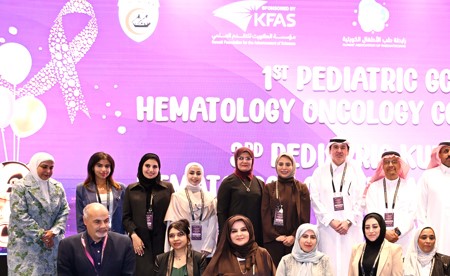
AbdulKarim Al-Abdullah: Dr. Sandous Al-Sharideh, President of the Kuwait Pediatric Society and Chair of the Conference, stated that pediatric hematology and oncology is experiencing rapid and unprecedented development, driven by the diversity of treatment options and advances in precise diagnostic techniques, targeted therapies, stem cell transplantation, immunotherapies, cellular therapies, and gene therapy.
This was said in her remarks on the sidelines of the opening of the Third Conference on Pediatric Hematology and Oncology, where she emphasized the organizers’ commitment to a diverse and comprehensive scientific agenda that reflects the child’s entire journey, from diagnosis through treatment and recovery, to long-term follow-up.
Dr. Al-Sharideh clarified that the scientific program covers several key topics, including benign and malignant blood disorders in children, bleeding and clotting disorders, leukemia and solid tumors, cellular and genetic therapies, blood transfusion and supportive care, as well as treatment-related complications and long-term care for cancer survivors.
She noted the conference’s emphasis on combining scientific lectures with practical training through a variety of workshops, including pain management in children, assessment and control of pain, bleeding and clotting disorders, hemophilia, physical therapy for hemophilia patients, training in peripherally inserted central catheters (PICC), and care of Port-A-Cath devices. She added that the workshops also cover safe handling of chemotherapy drugs and patient safety, intravenous nutrition, neonatal hemodynamics, clinical governance and health policies, simulation-based training, and management of various cases and emergencies.
Dr. Al-Sharideh stressed that the conference’s objective extends beyond merely treating the disease, aiming instead to provide holistic care for the child by alleviating pain, preserving mobility and growth, preventing complications, and maintaining quality of life throughout and after the treatment journey.
