The world's second-largest flower exporter encourages the utilization of their nutritional benefits
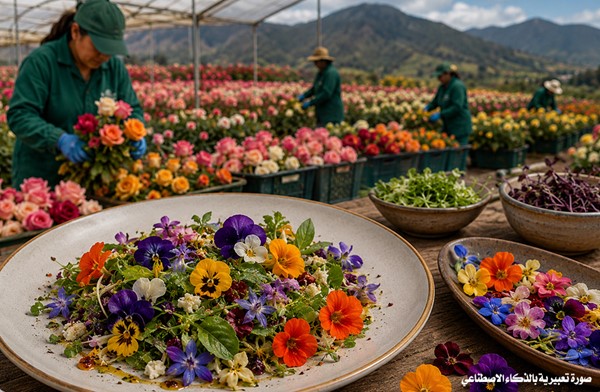
In a country that ships millions of flowers to more than 100 markets worldwide, the irony is striking: Colombia knows how to grow and sell flowers, but it still barely knows how to put them on the table.
According to a report published by the Spanish newspaper El País, local producers are trying to change this perception by cultivating edible flowers, including nasturtiums, violets, and borage, among others, which add unfamiliar flavors and textures to dishes.
Producers say the greatest challenge is not cultivation, but convincing consumers that flowers can be a food ingredient rather than mere decoration.
Colombia possesses one of the world’s strongest flower industries. The Ministry of Commerce confirms that it is the second-largest flower exporter globally, after the Netherlands, with sector exports exceeding $2.4 billion annually. In 2025 alone, the country exported approximately 340,000 tons of flowers.
However, the market for edible flowers remains small, due in part to the product’s short shelf life, distribution difficulties, high spoilage rates, and what specialists call “neophobia,” or people’s reluctance to try unfamiliar ingredients.
Ironically, eating flowers is not a new idea. Roses, violets, safflower, and other blossoms have been used in ancient, Asian, and indigenous cuisines for centuries, while modern Western culture has cemented the image of flowers as purely ornamental.
Today, Colombian farmers are trying to flip this narrative, ensuring that flowers reach the plate before they reach the vase.
