Will artificial intelligence make us think in the same way?
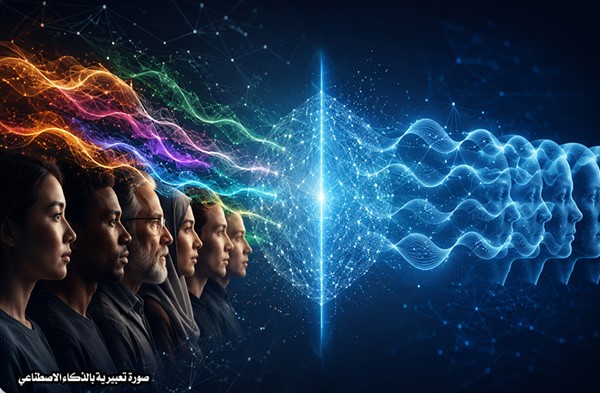
As the use of artificial intelligence tools in writing, research, and idea generation expands, researchers are raising a troubling question: Do these tools foster creativity, or are they gradually pushing us toward simil
Translated by Qiyas from الأنباء — Original source
As the use of artificial intelligence tools in writing, research, and idea generation expands, researchers are raising a troubling question: Do these tools foster creativity, or are they gradually pushing us toward similar ideas and approaches?
A report published in Nature highlights growing concerns that widespread reliance on generative AI could lead to cultural and cognitive homogenization, particularly when millions of people use the same models to perform identical tasks.
A computer science researcher notes that he often feels he has already read new scientific papers, as much of the work has become similar and lacks the individual traits that once distinguished each researcher’s style.
Part of the problem lies in the fact that AI models learn from vast quantities of existing texts and works, then generate responses based on the most common patterns within that data.
Consequently, their suggestions tend to favor safe and familiar solutions, avoiding rare or unexpected ideas.
While these tools may help an individual produce a story or idea that appears more creative than their initial attempt, when they offer similar suggestions to a large number of users, they may reduce the diversity of the collective output.
This does not necessarily mean that AI eliminates creativity. Some studies have found that it helps users generate new ideas, improve narratives, and solve problems, especially for those who lack significant expertise in the task at hand.
Experts recommend that individuals develop their own ideas before seeking assistance, ask the system to propose contradictory and unfamiliar directions, compare them, and rephrase them in their own voice and experience. Moreover, AI should not become a substitute for human thought.
