Minister of Education issues a decision to adopt a new curriculum system, "Tracks," in secondary education
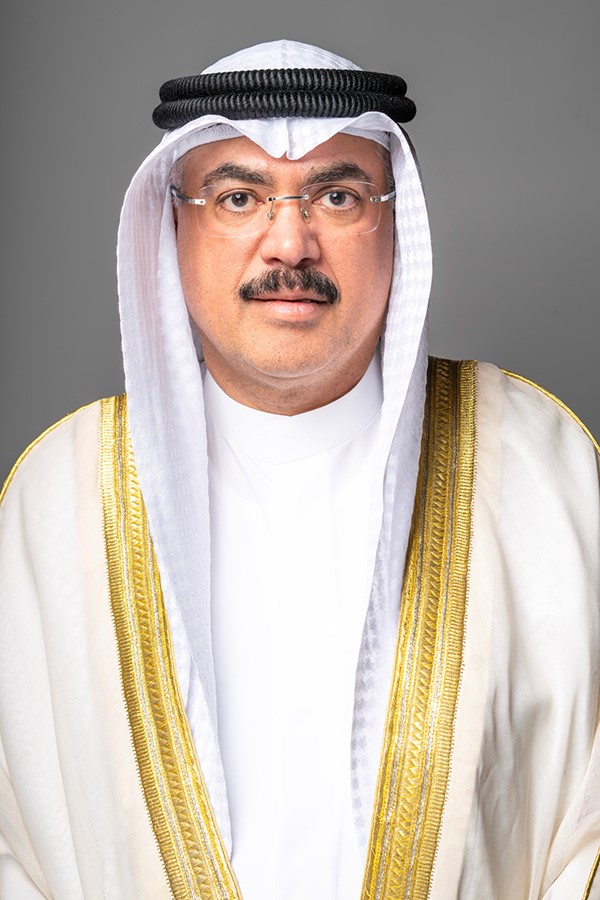
Minister of Education, Dr. Sayed Jalal Al-Tabatabai, has approved a new curriculum system (tracks) for the secondary stage, representing a developmental step toward building a more diverse educational experience aligned with university studies, development needs, and the labor market.
The Minister of Education, Dr. Sayed Jalal Al-Tabatabai, issued a ministerial decision mandating the implementation of the curriculum system (tracks) in Kuwaiti government secondary schools starting from the 2026/2027 academic year, applying to students enrolling in the tenth grade in schools designated for this purpose.
Article One of the decision stipulates the implementation of the curriculum system (tracks) in Kuwaiti secondary schools beginning in the 2026/2027 academic year, targeting tenth-grade students in schools selected for the system’s rollout.
The decision further stipulates that the Deputy Minister of Education shall oversee the preparatory measures for implementing the curriculum system (tracks), take necessary executive actions regarding it, and submit matters requiring the Minister’s approval. This will be achieved through coordination among the Ministry’s sectors, educational zones, and relevant authorities, ensuring the readiness of the educational and administrative systems for implementation based on clear and well-considered foundations.
The decision emphasized that its provisions apply only to students wishing to enroll in the curriculum system (tracks). The existing secondary education system will continue to apply to students not covered by the new system, ensuring that the decision does not result in any changes to their current study arrangements.
The decision also stipulated that it takes effect from the date of its issuance, requiring relevant authorities to implement it, and repealing all previous decisions that conflict with it. In this regard, the Ministry of Education clarified that the “tracks” system, previously known as the curriculum system, will begin a pilot implementation in the 2026/2027 academic year in 12 schools distributed across all educational zones—one boys’ school and one girls’ school per zone. This aims to test the new model practically and measure its effectiveness before transitioning to gradual expansion phases.
The Ministry explained that the approval of the system aligns with its strategy to develop secondary education by creating a more flexible model that places the learner at the center of the educational process, providing them with a genuine opportunity to discover their abilities and interests at an early stage, before deciding on the academic track that best suits their potential and future aspirations.
It noted that the curriculum system (tracks) spans three academic years divided into six semesters, totaling 54 credit units. The tenth grade serves as a common foundational year for all students, during which learners study a set of general courses alongside participating in “Exploration 1” and “Exploration 2” experiences, helping them gain a deeper understanding of their interests, abilities, and academic inclinations.
The Ministry of Education stated that the system offers students eight educational tracks: Languages, Law, Social Sciences, Commercial, Mathematics, Sciences, Industrial, and Technology and Artificial Intelligence. These provide diverse educational options that accommodate students’ varied abilities and interests while supporting their future directions.
The Ministry emphasized that track selection is not based solely on academic grades but relies on a comprehensive system of criteria including academic achievement, abilities, interests, and results from the exploration courses. This approach enhances the accuracy of selection and gives students the opportunity to join the track most suitable for their potential and aspirations.
She added that the system combines common courses studied by all students with specialized courses linked to the track the learner joins, thereby achieving a balance between building foundational knowledge and skills on the one hand, and specialization and developing abilities related to the chosen field on the other. Regarding the pilot implementation, the Ministry of Education clarified that the admissions process will ensure fair representation across different academic levels, enabling the formation of a balanced student sample through which the system can be objectively evaluated, its outcomes and outputs measured, and the pilot results utilized to refine the model before scaling up its implementation.
The Ministry also noted that the system includes a set of educational components designed to enhance learners’ practical skills, including a flexible course, a graduation project, community service, and field training totaling 120 hours. These elements contribute to developing students’ skills and connecting their learning to real-world contexts, society, and the work environment.
The Ministry of Education stated that the system allows students to take advantage of the summer semester and register for up to nine credit units, in accordance with approved regulations and available capacity. It also enables early graduation after five semesters for students who fulfill all prescribed academic requirements.
The Ministry pointed out that the “Masar” platform will provide comprehensive electronic services for students, including registration, academic monitoring, and official transcript documentation. These services aim to strengthen digital transformation in the management of educational tracks and equip learners and educational institutions with more effective tools for tracking academic progress.
The Ministry emphasized that the pilot implementation of the track system will undergo continuous monitoring, evaluation, and outcome assessment, with the goal of identifying strengths and areas for improvement. Insights and data derived from the pilot will be used to refine the system before transitioning to its gradual rollout across secondary schools.
The Ministry stressed that directives from Minister of Education M. Syed Jalal Al-Tabatabai underscore the importance of grounding educational development in scientific and well-considered foundations. Any development initiative should prioritize the learner’s best interests, enhance their capabilities, and better prepare them for subsequent educational stages and professional life. It is also crucial to measure the impact of any educational project and continuously evaluate its outcomes.
The Ministry explained that the track system represents a shift toward a more flexible, diverse, and future-oriented secondary education. By moving away from a uniform educational model, it offers learners greater space to discover their identities and abilities, allowing them to choose fields aligned with their interests and aspirations, while providing multiple academic, professional, and technical pathways.
Furthermore, the Ministry clarified that the project fundamentally aims to produce graduates who are more aware of their strengths and potential, better equipped to make informed educational and career decisions, and more integrated with the needs of higher education, national development, and the labor market. This alignment responds to rapid changes in knowledge, technology, and artificial intelligence.
The Ministry of Education affirmed that the launch of the pilot implementation marks the first step in a phased development process. Through this process, the Ministry will monitor, evaluate, and leverage the pilot’s outcomes to build a comprehensive secondary education model that achieves development objectives, meets learners’ needs, and supports the State of Kuwait’s vision of establishing an educational system capable of meeting future demands.
