Bader Al-Salman: Professional Engineering Companies Law Enhances Young Engineers' Entry into the Private Sector
&cropxunits=450&cropyunits=409&w=150)
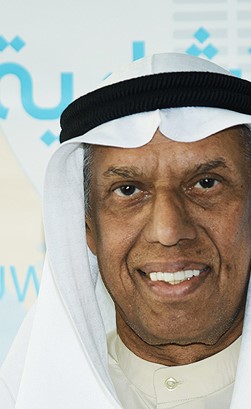
Badr Al-Salman, President of the Kuwait Union of Engineering Offices and Consultancies, announced the full and effective implementation of the Professional Engineering Companies Law and its executive regulations, reveali
Translated by Qiyas from الأنباء — Original source
Badr Al-Salman, President of the Kuwait Union of Engineering Offices and Consultancies, announced the full and effective implementation of the Professional Engineering Companies Law and its executive regulations, revealing the issuance of the first official licenses through a collaborative framework involving the Kuwait Municipality, the Ministry of Commerce and Industry, and the Ministry of Justice.
Expressing profound pride and honor in this historic achievement, Al-Salman extended his gratitude and appreciation to State Minister for Municipal Affairs and State Minister for Housing Abdul Latif Al-Mashari, Justice Minister and Advisor Nasser Al-Samit, and Kuwait Municipality Director General Manal Al-Asfour, as well as all the personnel and stakeholders in the Ministries of Justice, Commerce, and Municipal Affairs who contributed to turning this project into a tangible reality.
Al-Salman emphasized that the launch of the law and its executive regulations marks the beginning of a comprehensive and radical restructuring of the engineering work system in the State of Kuwait. This shift moves the sector from the traditional individual framework to the horizons of sustainable institutional work, aligning with the state’s developmental vision and enhancing the status of Kuwaiti engineering personnel and their pivotal role in building Kuwait’s future.
The Union President expressed his hope that the electronic linkage between the Ministry of Commerce and Industry, the Ministry of Justice, the Kuwait Municipality (represented by the Committee for Regulating the Practice of the Profession), and the Kuwait Union of Engineering Offices and Consultancies would yield an integrated electronic system via the Kuwait Business Center (the Single Window). This system would enable the establishment of professional engineering companies, the reservation of their trade names, and the issuance of practice licenses entirely digitally and instantly, without the need for paper transactions. This reflects advanced administrative thinking that supports the business environment and stimulates investment in the engineering consultancy sector.
Al-Salman clarified that the implementation of the law addresses a historical legal gap that Kuwaiti engineering offices and consultancies have suffered from for decades. Previously, the absence or death of an office owner inevitably led to the closure of the entity, resulting in the loss of employees’ and clients’ rights and the dissipation of expertise accumulated over many years.
Today, however, the law allows for transformation into professional companies (limited liability or closed joint-stock), ensuring the continuity of the engineering entity and the legal transfer and determination of shares. It also protects the personal financial liability of engineer partners by separating it from the company’s obligations, thereby granting offices legal security and sustainable financial and administrative stability.
He noted that the law opens broad horizons for the merger of existing offices and consultancies, and allows young engineers to join as partners under a single legal umbrella. He added that this transformation positions Kuwaiti professional companies to compete strongly for major state development projects, stand on equal footing with global consultancy firms, and even export Kuwaiti engineering services to regional and international markets, citing the expertise possessed by some Kuwaiti engineering offices and consultancies at both regional and international levels.
Al-Salman expressed his confidence that this law would serve as a national incubator contributing to providing a promising future for young engineers and creating an attractive and stable work environment for Kuwaiti personnel and recent graduates. He pointed out that implementing the law encourages them to engage in the private engineering sector and supports the state’s plans for job localization (Kuwaitization) and building successive generations of national engineering leadership.
