Iceberg Survives Collision With Another Island
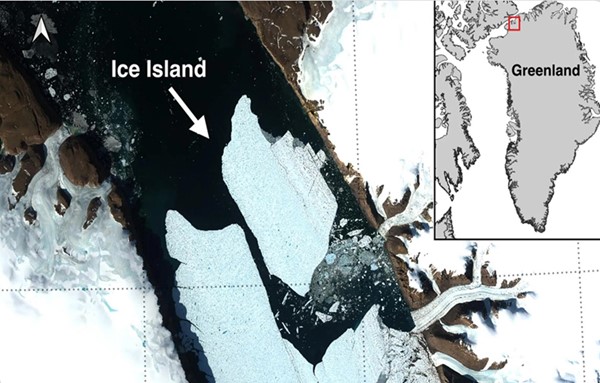
A massive ice block that broke off from Petermann Glacier in northwestern Greenland survived a collision with a rocky island before resuming its journey through Nares Strait, according to images captured by the Landsat 9 satellite. The mass, which scientists refer to as an “ice island,” covers more than 76 square kilometers and has a thickness of less than 150 meters. Its detachment in August marks the largest such event recorded from an Arctic glacier since 2020.
NASA satellite imagery monitoring showed the ice island moving through Petermann Strait at an average speed of about 3 kilometers per day until it collided with the rocky “Joe” Island located at the strait’s entrance. Researcher Adam Garbo from the University of Ottawa and his team were surprised by the ice island’s ability to survive the collision without further fracturing. However, its survival does not mean it will remain intact for long. Scientists expect that winds, currents, tides, and melting will gradually weaken and break it into smaller pieces as it continues moving southwest through Nares Strait.
Scientific teams are closely monitoring Petermann Glacier because it is one of Greenland’s largest outlet glaciers that flow into the sea, playing a crucial role in regulating the flow of ice from the interior ice sheet toward the ocean. Consequently, changes occurring in the glacier may provide important indicators regarding the stability of the ice sheet and sea-level rise. Additionally, ice islands and their fragments can travel long distances, posing a potential hazard to ships and marine infrastructure, while simultaneously transporting large volumes of freshwater into the ocean as they melt.
