Yemen's Foreign Minister: The historical balance of Yemeni-Kuwaiti relations is a solid foundation for expanding the partnership
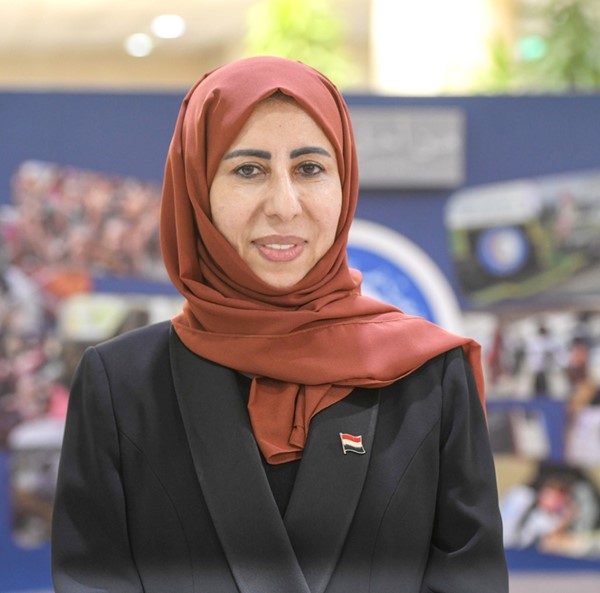
Yemen’s Minister of Foreign Affairs and Expatriates, Dr. Afrah Al-Zoubi, affirmed that the deep historical reservoir of Yemeni-Kuwaiti relations constitutes a solid foundation for building upon, expanding, and developing
Translated by Qiyas from الأنباء — Original source
Yemen’s Minister of Foreign Affairs and Expatriates, Dr. Afrah Al-Zoubi, affirmed that the deep historical reservoir of Yemeni-Kuwaiti relations constitutes a solid foundation for building upon, expanding, and developing the partnership between the two brotherly countries.
Speaking to KUNA, Al-Zoubi stated that her official visit to Kuwait represents an important milestone in the trajectory of Yemeni-Gulf relations. “We rely on the deep historical foundation of these relations to transition into a more regular and effective partnership in political, economic, and developmental fields,” she said.
She highlighted the message she carried from Yemen’s Presidential Leadership Council Chairman, Dr. Rashad Al-Alimi, to his brother, His Highness Amir Sheikh Meshal Al-Ahmad Al-Jaber Al-Sabah, noting that it reflects the special importance both countries’ leaderships attach to this relationship and their shared commitment to strengthening and developing it.
Al-Zoubi added that her talks with Foreign Minister Sheikh Jara Al-Jaber Al-Sabah focused on leveraging this political momentum to review existing agreements, memoranda of understanding, and cooperation frameworks, reactivating and enhancing them, while strengthening political consultations and economic, developmental, and capacity-building cooperation. This, she said, aims to transform the depth of historical relations into concrete work streams and tangible results that serve the two brotherly peoples.
She emphasized that Kuwait has been present in Yemen’s development memory for decades, adding, “Today, we look forward to jointly building a model of cooperation that links Yemen’s stability and development with the security and prosperity of its Gulf neighborhood.”
Praising Kuwait’s history of developmental work in Yemen, Al-Zoubi said, “Kuwait holds a special place in the memory of Yemenis. Its presence was not limited to the years of crisis and war; it preceded them by long decades and left a mark on the lives of generations through schools, hospitals, roads, and water, electricity, and infrastructure projects.”
Al-Zoubi noted that her discussions with the Kuwait Fund for Arab Economic Development reflected a shared aspiration to resume funding for priority projects and support the recovery and development phase. She added that the best way to honor this legacy is to build upon it, transitioning from managing the effects of the crisis to investing in Yemen’s capacity for recovery, restoring its institutions, services, and economy.
She clarified that her current Gulf tour is guided by a vision that considers Yemen an integral part of the geographical space of the Arabian Peninsula. She pointed to the deep understanding she observed during her meetings with senior officials regarding Yemen’s geopolitical importance and the close link between its stability and the security of the region.
She stated that Yemen, with its strategic location in the south of the Arabian Peninsula, its coastlines extending along the Red Sea, the Bab al-Mandab Strait, and the Gulf of Aden, and its endowed resources and qualified human capital, is well-positioned, under a stable state and effective institutions, to add value to the security, stability, and prosperity of the region. It should also reclaim its natural role as an active partner in the security and prosperity of its Gulf neighborhood.
The Yemeni Foreign Minister expressed her country’s appreciation for the leading role of the Kingdom of Saudi Arabia and the efforts of the coalition supporting legitimacy under its leadership, as well as the positions and support provided by Kuwait and its brothers to the Yemeni state and people.
She affirmed that enabling the Yemeni state to exercise its sovereign responsibilities over its territory, coastlines, and ports is not only a Yemeni interest but also a direct investment in the security of the Arabian Peninsula, freedom of navigation, and international trade.
Al-Zoubi said that recent regional developments, including the despicable Iranian attacks on Kuwait and the Houthi militia’s attacks and threats against Saudi Arabia and maritime navigation, confirm that the security of the region is interconnected and that threats within it cannot be addressed in isolation from one another.
She renewed Yemen’s full solidarity with Kuwait and its rejection of any infringement on its sovereignty, security, and territorial integrity, stating, “Just as we reject any Gulf state becoming a target for threats or aggression, Yemen will not accept its land, ports, or coastlines being turned into tools to threaten its neighbors or leverage in regional conflicts.”
