Afrah Al-Zoba: Solidarity with Kuwait and Gulf countries and rejection of any violation of its sovereignty
&cropxunits=380&cropyunits=450&w=770)
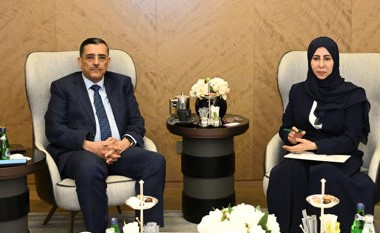
Osama Diab: Yemen’s Minister of Foreign Affairs and Expatriates, Dr. Afrah Abdulaziz Al-Zoba, affirmed that Kuwait represents a historical partner for Yemen, and that the relationship between the two countries is not lim
Translated by Qiyas from الأنباء — Original source
Osama Diab: Yemen’s Minister of Foreign Affairs and Expatriates, Dr. Afrah Abdulaziz Al-Zoba, affirmed that Kuwait represents a historical partner for Yemen, and that the relationship between the two countries is not limited to the context of war or aid. Rather, it is built on a cumulative record of political stances, mediation, developmental and humanitarian support, and cultural and popular ties, spanning more than six decades of official relations and preceded by older bonds between the two brotherly peoples.
In an extensive interview with media representatives in Kuwait, Al-Zoba stated that her visit aims to build upon this legacy and elevate it to a more regular and effective stage based on political consultation, the activation of agreements and cooperation frameworks, and the expansion of partnership in development, recovery, and capacity building. She emphasized that “the best way to honor the history of Yemeni-Kuwaiti relations is to add new results that people can see in action: a functioning service, a completed project, an institution regaining its capacity, and continued political cooperation beyond the duration of the visit.”
Al-Zoba noted that she had the honor of meeting with His Highness the Crown Prince, Sheikh Sabah Al-Khaled Al-Sabah, and delivering a written message from President Dr. Rashad Muhammad Al-Alimi, Chairman of the Presidential Leadership Council, to his brother, His Highness Prince Sheikh Meshal Al-Ahmad Al-Jaber Al-Sabah, concerning the fraternal relations between the two countries and ways to enhance and develop them across various fields.
She added that the meeting provided an opportunity to brief the Kuwaiti leadership on developments in Yemen and the efforts of the Presidential Leadership Council and the government to restore state institutions, continue economic and institutional reforms, and strengthen security and stability. It also allowed for discussions on how Yemeni-Kuwaiti relations can provide practical support for the state-building and recovery process.
She further indicated that her talks with Foreign Minister Sheikh Jaraah Al-Jaber covered bilateral relations, recent developments in Yemen and the region, and issues of mutual interest. Both sides stressed the importance of reviewing, updating, and reactivating existing agreements, memoranda of understanding, and cooperation frameworks, as well as enhancing political consultations and diplomatic, economic, developmental, and capacity-building cooperation, thereby transforming the depth of the historical relationship into actionable, follow-up-oriented pathways.
The Foreign Minister stated that Kuwait holds a special place in the Yemeni memory, not only for its political stances but also because its presence extended to the daily lives of generations of Yemenis through schools, hospitals, roads, and developmental projects, alongside a cultural and intellectual presence that left its mark through journalism, literature, and Kuwaiti culture.
She added, “Official relations between our two countries span more than six decades, but what unites Yemenis and Kuwaitis runs deeper than the lifespan of diplomatic representation.”
Al-Zoba praised what she described as the entrenched legacy of Kuwaiti diplomacy in supporting dialogue and de-escalation, noting that Kuwait’s involvement in the Yemen file predates the current crisis by decades, from mediation efforts between the two halves of Yemen in the 1970s to hosting the 2016 Yemeni political consultations.
She affirmed that Kuwait’s hosting of the 2016 consultations would remain a point of appreciation for Yemenis, given the serious space for dialogue it provided and the demonstrated commitment to unity of purpose, bridging differences, and supporting Yemen’s unity, security, and stability.
She stated that any political agreement requires, from the outset, clear implementation arrangements and state institutions capable of protecting agreed-upon outcomes and preventing a return to imposing facts on the ground by force.
She added, “Kuwait provided at that time the best that a host country could offer in terms of time, effort, and space for dialogue. Our responsibility today is to learn from this experience: peace does not survive on intentions and formulations alone; it requires implementers, capable institutions, and clear answers to questions regarding weapons, sovereign decision-making, access points, and revenues in the day following an agreement.”
Al-Zoba stressed that Yemen-Kuwait relations possess an institutional foundation that can be built upon, pointing to the memoranda of understanding signed in January 2025 regarding political consultations between the ministries of foreign affairs and cooperation between the Yemeni Diplomatic Institute and the Kuwaiti Saud Al-Nasser Al-Sabah Diplomatic Institute, as well as the financial arrangements agreement signed with the Kuwait Fund for Arab Economic Development in February of the same year, which paved the way for resuming funding and reactivating developmental projects.
She said, “These are existing tools. We aspire to regular political consultations, genuine cooperation between the institutes in training, negotiation, international law, economic diplomacy, and crisis management, and a clear technical pathway with the Kuwait Fund that identifies priorities and executable, follow-up projects.”
On the developmental front, the Foreign Minister affirmed that the Kuwait Fund for Arab Economic Development represents one of Yemen’s oldest and most important developmental partners. She noted that the value of its experience is measured not only by the volume of funding but also by the continuity of the relationship and its ability to adapt to the difficult conditions the country has endured.
She clarified that cooperation covers vital sectors such as energy, electricity, health, education, roads, water, and vocational training. The government looks to build on existing projects and rehabilitate suspended ones before expanding into new commitments, thereby achieving faster impact and protecting previous investments. She pointed out that maintaining the Marib Gas Station, supported by Kuwait, is an example of a strategic project whose impact can directly translate into improved services and state capacity.
Regarding Yemen’s needs and the cost of reconstruction, Al-Zoba stated that the priority in the current stage is not to release large figures before assessments are completed, but rather to restore political and security stability, strengthen state institutions, restore basic services, and create an environment that makes any new funding viable and sustainable.
She explained that sectors such as electricity, water, health, education, roads, infrastructure, capacity building, and job creation top the priorities, alongside the gradual transition from emergency response to recovery and development.
She added, “Yemen needs humanitarian aid, yes, but it also needs hospitals to regain their capacity, the electricity grid to function, schools and roads to improve, and government institutions to regain their ability to serve citizens.”
Yemen’s Stability Part of Gulf Security
Regarding the link between the Yemen file and Gulf security, Al-Zoba affirmed that the issue is no longer merely a political description but a reality imposed by geography and experience. Yemen forms the southern extension of the Gulf region, bordering the Red Sea, the Bab al-Mandab Strait, and the Gulf of Aden. She stated that the presence of a stable and capable Yemeni state, exercising its responsibilities over its land, coasts, ports, and territorial waters, transforms Yemeni geography into an asset for regional security. Conversely, weakening the state and leaving decision-making and weapons outside its institutions turns this same geography into a source of threat that transcends Yemen’s borders.
She added, “When we say that supporting the Yemeni state is an investment in Gulf security, we are not using a complimentary phrase. Securing maritime passages, combating smuggling networks, and preventing the use of missiles and drones against neighboring states all begin with the existence of a state capable of exercising its sovereignty. Yemen will not become a platform to threaten the Kingdom of Saudi Arabia, Kuwait, or any sister country, nor will we accept for our land, ports, or waters to be used as leverage in regional conflicts.”
The Decision of War and Peace is the Right of the State, Not the Faction
The Foreign Minister emphasized that restoring the state’s sovereign authority is not merely a domestic Yemeni issue, but a guarantee for neighboring countries and regional stability. She stated that it is unacceptable for an armed faction to have the right to drag an entire country into regional confrontations or to dictate its foreign relations outside of constitutional institutions. She added, “The state is responsible for all Yemenis. Foreign policy, decisions on war and peace, and the use of sovereign force must fall exclusively under the purview of state institutions. Political forces may differ, compete, and oppose one another, but a country cannot stabilize with two parallel military decisions or with one official foreign policy and another imposed by an armed group.”
**Houthi Escalation Transcends Internal Conflict**
In her assessment of the recent escalation, Al-Zubaidi stated that the actions of the so-called “Houthi terrorist militia” are an extension of the coup against state institutions and an attempt to impose a fait accompli by force. However, she noted that this has long since surpassed the boundaries of internal conflict, targeting cities, infrastructure, ports, and maritime navigation, while threatening neighboring countries and sea lanes.
She affirmed that Iranian military and technical support, along with smuggling networks, have contributed to developing the militia’s capabilities and raising the level of threat it poses. She stressed that addressing this threat requires a broader approach than merely protecting ships at sea, one that begins with supporting the Yemeni state in controlling its coasts, ports, and resources, and combating smuggling and illegal financing networks.
Regarding prospects for a political solution, Al-Zubaidi affirmed that the Yemeni government has responded positively to various efforts and initiatives aimed at ending the war and alleviating the suffering of the Yemeni people. She reiterated that the government remains committed to any serious path leading to a just and sustainable peace that ends the coup and restores state institutions. However, she clarified that experience from the past years has shown that the problem lies not in a lack of initiatives, but in the absence of commitment to implementation and the exploitation of de-escalation periods to reposition forces and enhance military capabilities.
On regional matters, the Foreign Minister renewed the Yemeni Republic’s condemnation of Iranian attacks targeting Kuwait and several Gulf Cooperation Council (GCC) countries. She affirmed Yemen’s full solidarity with its brothers and its rejection of any violation of the sovereignty of regional states or threats to their security and stability. She stated that Yemen’s position is based on clear principles: respect for state sovereignty, good neighborliness, non-interference in internal affairs, and the settlement of disputes through peaceful means. She emphasized that the security of Gulf states is interconnected, and that protecting regional stability requires comprehensive stances against direct aggression and against the use of armed groups to impose cross-border facts.
Responding to a question on whether pressure on Iran would automatically lead to a reduction in the Houthi militia’s capabilities, Al-Zubaidi said that external support is a fundamental element in developing the militia’s military capabilities, but reducing the problem to funding from abroad does not offer a complete solution.
**Yemeni Women Have Proven Their Capability**
Regarding her appointment as Foreign Minister as the first woman to hold this position in Yemen, Al-Zubaidi said she views the role primarily as a significant national responsibility during an exceptional period, not as a symbolic position. She affirmed that Yemeni women have proven their ability to bear responsibility in administration, development, and public service under the most difficult circumstances. She added that Yemen needs all its talents, both men and women, and that the criterion for success should be the ability to serve the state and its citizens and achieve results, so that the presence of women and qualified individuals in positions of responsibility becomes a norm based on competence and achievement.
**Community Affairs and Consular Cooperation within an Institutional Framework**
Regarding the situation of the Yemeni community, visas, and consular and educational files, Al-Zubaidi clarified that these issues receive the Ministry’s attention and are best addressed through institutional channels, specialized committees and departments, and the embassy, ensuring continuous follow-up of cases and files away from general promises. She affirmed that activating the joint committee and consultation frameworks between the two ministries could provide a broader umbrella for discussing consular, educational, and economic cooperation files, alongside political and developmental issues, in a regular and follow-up manner.
**Kuwaiti Capital Possesses Regional Expertise and Presence**
Regarding investment, the Minister affirmed that Yemen has significant opportunities in energy, water desalination, fisheries, transport, services, and other sectors, and that the government is working to develop partnerships with the private sector and improve regulatory frameworks for investment. She stated that Kuwaiti capital possesses regional expertise and presence that could play an important role in the recovery and reconstruction phase. However, she simultaneously stressed that serious discussions about investment must be accompanied by improved stability, governance, guarantees, and project clarity. She added, “The more the state regains its institutions, authority, and resources, the more capable the environment becomes at attracting and protecting investment.”
