Minister of Endowments Opens the Egyptian-Philippine Program for Religious Leaders on Dialogue, Coexistence, and Peacebuilding
&cropxunits=450&cropyunits=300&w=770)
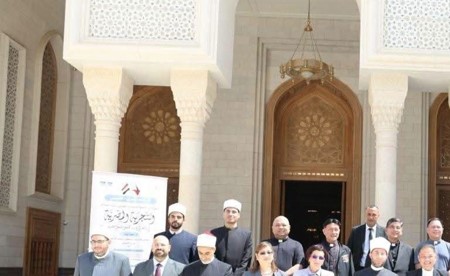
Cairo – Hanaa El-Sayed: Dr. Osama Al-Azhar, Minister of Endowments, inaugurated the Egyptian-Philippine Program for Religious Leaders on Dialogue, Coexistence, and Peacebuilding, under the theme: “The Egyptian Experience in Peaceful Coexistence and Building an Inclusive Society for All.” The event brought together a number of Filipino priests and took place from August 29 to September 6, 2026.
The inauguration was attended by Ambassador Aliaa Barhan, Deputy Assistant Minister of Foreign Affairs for International Cultural Relations; Gilbert Garcera, President of the Catholic Bishops’ Conference of the Philippines and Archbishop of Lipa; Ambassador Charmaine Avivikeyil, Philippine Ambassador to Egypt; Bishop Pachomius, the Patriarchal Vicar for the Patriarchal Eparchy of the Coptic Catholics and the official spokesperson for the Catholic Church in Egypt; Crystal Donovan, Philippine Consul in Cairo; Ms. Amirul Alonto, Attaché and Public Diplomacy Officer at the Philippine Embassy in Cairo; renowned writer Mariam Tawfiq; Dr. Sayed Abdel Bari, Head of the Religious Sector at the Ministry of Endowments; Dr. Abdullah Hassan, Assistant Minister of Endowments for Follow-up Affairs; Sheikh Mahmoud Abu Al-Azaim, Assistant Minister for Training Affairs; Dr. Osama Raslan, official spokesperson for the Ministry of Endowments; and Sheikh Mohamed Magdy, Director General of Training at the Ministry.
The Minister of Endowments welcomed the distinguished guests and participants, extending his sincere gratitude to Ambassador Nader Zaki, Egypt’s former Ambassador to the Republic of the Philippines, for his significant efforts in building bridges of friendship and brotherhood between the two countries.
Dr. Al-Azhar emphasized that the program is the result of intensive coordination spanning nearly two years, aimed at fostering dialogue, exchanging expertise, and advancing a message of peace. He noted that the initiative seeks to build safe and stable societies that move beyond conflict to reap the benefits of shared coexistence, success, work, production, and prosperity. He described the program as a vital opportunity for dialogue, consultation, joint reflection, and knowledge exchange, contributing to the security and stability of both Egypt and the Philippines.
He explained that the idea for the meeting originated during his first visit to the Philippines, when he met with the President of the Catholic Bishops’ Conference in Manila. Coordination continued during his second visit, culminating in the Egyptian Ministry of Endowments’ hosting of this distinguished delegation from the Philippine Catholic Bishops’ Conference.
The Minister highlighted that the program’s objectives include enhancing mutual understanding, correcting stereotypes, and creating broader spaces for dialogue among religious leaders. He stressed the importance of exchanging experiences and visions to reinforce values of coexistence and mutual respect, support peacebuilding efforts, and present a model worthy of two great nations and noble peoples to the world. Expressing his deep joy at the Philippine delegation’s visit, he hoped the trip would leave a lasting impression on the participants and that they would carry back to the Philippines a message that they have brothers in Egypt who love and care for them.
“I am a dutiful son to my country, Egypt, and each of you is a dutiful son to your country, the Philippines. But since I visited you and witnessed your generosity and hospitality, I have come to consider my mission not only as a guardian of Egypt, but as a guardian of both Egypt and the Philippines,” he affirmed. He added that the feelings of affection and brotherhood he experienced made him feel that “Egypt and the Philippines are one home, one homeland, and one family.”
The Minister reiterated that Egypt, under the leadership of President Abdel Fattah El-Sisi, with its esteemed Al-Azhar, its historic churches, and its great people, stands as a support and brother to the people of the Philippines. He prayed that God would protect Egypt, the Philippines, and all homelands, and grant everyone success in building bridges of dialogue, coexistence, and peace, thereby enhancing the security, stability, and prosperity of peoples everywhere.
On her part, the Deputy Assistant Minister of Foreign Affairs for International Cultural Relations expressed her happiness at participating in the program’s opening. She affirmed Egypt’s entrenched experience in coexistence and harmony among its citizens, noting that the nation embraces everyone and that the measure of respect is the service an individual provides to their country and society. She emphasized Egypt’s constant efforts to consolidate values of coexistence between Muslims and Christians and to strengthen the spirit of citizenship and shared belonging. She wished the participants fruitful discussions that would help achieve the program’s goals and enhance communication ties between the two countries.
In his speech, the President of the Catholic Bishops’ Conference of the Philippines and Archbishop of Lipa affirmed that his delegation came to Egypt to learn about the Egyptian experience in coexistence and peacebuilding. He pointed out that societies where Muslims and Christians live side by side require genuine mutual knowledge and understanding, rather than reliance on stereotypes or secondhand information. He stressed that Christians and Muslims in the Philippines have lived together for centuries in coexistence and peace, even if relations faced difficulties at certain stages of the country’s history.
He added that the Philippine delegation looks forward to benefiting from the program to enhance its ability to contribute more effectively to dialogue and peacebuilding upon returning home, particularly in communities where Muslims and Christians interact daily. He affirmed that increased knowledge leads to greater respect and friendship, culminating in peaceful coexistence and strengthened peace. He highlighted the significance of visiting mosques, churches, and sites associated with the Holy Family’s journey, noting Egypt’s special status in both Christian and Islamic history and its suitability as an environment for such programs that bring religious leaders together for dialogue and understanding.
For her part, the Philippine Ambassador to Egypt stressed the program’s importance in reviving values of coexistence and peace, asserting that there is no path but through dialogue, peaceful coexistence, and learning from others’ experiences. She affirmed that sincere and constructive dialogue among religious leaders serves as a foundation for enhancing trust, friendship, and understanding among peoples.
She emphasized Egypt’s unique standing due to its ancient civilizational history and rich experience in accommodating religious and cultural diversity. She expressed hope that the program’s discussions and workshops would yield stronger and more sustainable relations between religious leaders in Egypt and the Philippines, positively reflecting on the friendly peoples of both nations.
