Conclusion of Free School Summer Club Activities: Approximately 7,000 Student Participations Weekly and 280 Educational and Administrative Staff Supervised Their Programs
The Ministry of Education has concluded its activities for the free summer school clubs, as part of a comprehensive plan aimed at providing an integrated educational experience that combines learning, practice, sports, innovation, and meaningful recreation. The ministry emphasized that operating these summer clubs reflects its commitment to continuing support for students during the summer vacation, by providing a safe and stimulating educational environment that enables them to develop their abilities, hone their talents, and make positive use of their free time, thereby enhancing their readiness for the new academic year.
In a statement, the ministry noted that it operated 28 free summer school clubs distributed across various educational districts from July 5 to August 31, 2026. These clubs offered a diverse range of educational, academic, sports, scientific, technical, cultural, and scouting programs and activities.
The ministry revealed that the summer clubs recorded approximately 7,530 student participations weekly. This figure represents the total weekly attendance of students at the clubs, including both continuous participants and new joiners across various programs and activities, reflecting the high level of interest and benefit derived from the offered summer programs.
The programs were implemented under the supervision of relevant technical guidance departments, with the participation of 280 members of the teaching and administrative staff, who were responsible for organizing and managing the activities and programs to ensure they achieved their educational and academic objectives. The ministry pointed out that registration was available electronically via the Ministry of Education’s official website. The clubs welcomed students from general, private, religious, and special education sectors, covering primary, intermediate, and secondary stages, for both boys and girls, through programs supervised by specialized educational and pedagogical cadres.
The ministry further explained that this year’s summer club plan saw an expansion in the variety of programs offered, introducing scouting activities and practical studies for the first time, alongside the continuation of robotics, programming, debate, and sports activities. This provides students with diverse options to discover their interests and develop their abilities and talents.
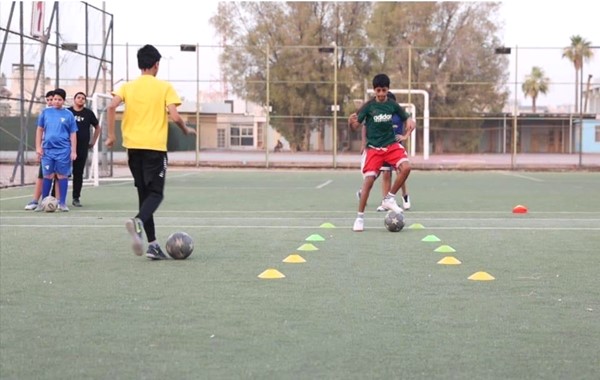
The summer club system included 16 sports clubs across different educational districts, offering activities such as football, basketball, handball, volleyball, and bowling. These activities contribute to developing students’ physical fitness and motor skills, reinforcing values of discipline and teamwork, and boosting self-confidence. Additionally, two specialized bowling clubs were included.
In cooperation with the Kuwait School Sports Federation and the Ministry of Higher Education, a seven-a-side football tournament for boys and girls was held, providing a stimulating competitive environment for students. The tournament helped identify promising student sports talents, supporting and encouraging them to continue developing their abilities.
On the scientific and technical front, two robotics clubs offered programs in robotics, programming, and engineering design, aimed at developing computational and logical thinking, problem-solving skills, creativity, and innovation. These programs introduced students to the STEAM methodology and enhanced research, experimentation, and teamwork skills.
The two debate clubs also provided specialized programs for participating students, focusing on developing critical thinking, analysis, dialogue, and Arabic language expression skills. Students were trained to present and discuss their ideas in an organized manner, speak in public, construct arguments, and respect differing opinions and viewpoints. At the conclusion of the club activities, students participated in training sessions and practical scenarios simulating actual debates, enabling them to apply their acquired skills practically. This contributed to enhancing their ability to express their opinions confidently and clearly, construct and present arguments, and engage in organized and effective dialogue and debate.
Regarding practical activities, two practical studies clubs offered students a variety of craft-based programs grounded in learning by doing and direct application. These included carpentry, electrical work, and student project implementation, contributing to the development of innovation and problem-solving skills, and enhancing students’ manual and productive capabilities. The activities also focused on reinforcing occupational safety concepts and raising environmental awareness through recycling and optimal resource use, thereby transforming knowledge into tangible practical skills and experiences.
The ministry indicated that two clubs were dedicated to summer scouting activities for boys for the first time. These clubs offered practical and educational programs covering scouting and life skills, knots and ties, camping, first aid, group games and competitions, community service, and volunteer work. These activities reinforce values of leadership, discipline, responsibility, and self-reliance among students.
The scouting programs included maritime activities that familiarized students with Kuwait’s maritime history, sea-related professions, and the heritage of their forefathers. Training also covered the use of compasses, location determination techniques, and sports rowing boats, along with awareness of maritime security and safety. This approach combines skill acquisition with fostering pride in national identity and Kuwaiti heritage.
The ministry emphasized that the summer school club plan gave special attention to students of special education schools. Two evening summer clubs for boys and girls were established, offering educational, social, physical, and artistic programs tailored to their special needs and varying abilities. The programs included computer skills, drawing, handicrafts, sports activities, and various games, contributing to the development of motor and social communication skills, boosting self-confidence, and fostering a sense of belonging and teamwork. This provided students with opportunities to pursue their hobbies and develop their abilities in a suitable educational environment.
The ministry affirmed that it prioritized safety and security measures throughout the operation of the clubs. This included informing students of necessary instructions before engaging in activities, ensuring the availability of safety equipment in workshops and training sites, providing first aid kits, and establishing clear plans for handling emergencies and evacuations when necessary, along with direct communication with parents.
The ministry further stressed that operating 28 summer school clubs embodies its approach to utilizing the summer vacation as an extension of the educational process. Through a system combining learning, skill development, talent discovery, sports, innovation, and meaningful recreation, the initiative enhances students’ readiness for the new academic year and contributes to building balanced personalities capable of learning, participation, and creativity.
Finally, the Ministry of Education announced that the evening school clubs will resume their activities in October next year. Details regarding the clubs, their programs, registration procedures, and schedules will be announced through the Ministry’s official channels, allowing students to continue benefiting from the educational, pedagogical, and skill-based programs offered by the ministry throughout the year.
