In Video: Kazakhstan’s Ambassador to “Al-Anba”: Kuwait is a reliable partner... and we look forward to translating political trust into projects and investments
&cropxunits=450&cropyunits=300&w=600)
Interview by: Osama Diab
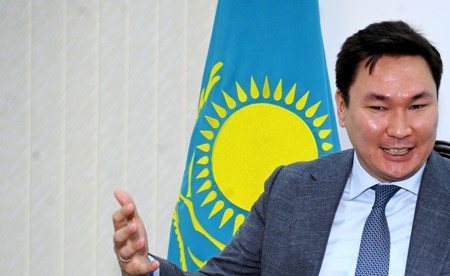
The Kazakh Ambassador to Kuwait, Yergan Ilyasikov, described Kuwait-Kazakhstan relations as excellent and dynamic, witnessing a noticeable momentum and a gradual shift from traditional political dialogue based on friendship to deeper and more substantive economic and investment cooperation. He emphasized that Kuwait holds an important place in his country’s foreign policy toward the Gulf region, representing a trusted partner with which Kazakhstan seeks to build a long-term partnership extending beyond the energy sector into food, industry, logistics, and technology.
He expressed his country’s aspiration to convert the accumulated political trust between the two nations into joint projects and investments that benefit both sides, noting Kazakhstan’s readiness to contribute to supporting Kuwait’s food security, particularly through cooperation in production and storage, and by leveraging promising investment opportunities in the energy, manufacturing, agriculture, digital infrastructure, and logistics sectors.
The ambassador stressed that Kazakhstan is opening its doors to Kuwaiti investors, backed by an economy experiencing rapid growth, with a growth rate of 6.5 percent in 2025, and targeting an economy worth approximately $450 billion by 2029. He pointed out that his country has succeeded over the past two decades in attracting foreign investments totaling around $400 billion.
He also underscored the importance of enhancing air connectivity between the two countries as a key driver for tourism, trade, and investment development, revealing discussions on increasing flights and expanding air cargo services between Kuwait and Kazakhstan with Jazeera Airways. On regional matters, he called for de-escalation, respect for international law, and the protection of civilians in the Middle East. He described the “Kurultai” elections as a historic milestone in the political and institutional modernization process underway in Kazakhstan. For details:
How do you assess the current state of relations between Kazakhstan and Kuwait, and what are the key achievements realized over the past year?
The current phase of Kazakhstan-Kuwait relations is witnessing notable momentum, marking a gradual transition from traditional political dialogue based on friendship to deeper and more substantive economic and investment cooperation. Over the past year, we significantly expanded our engagement with key governmental, financial, and commercial institutions in Kuwait. Cooperation has become clearly more active in the fields of investment, trade, food security, and tourism. Enhancing the institutional foundation of our bilateral relations has been a major priority for us. We are continuously working to create the necessary conditions to further expand trade, investments, and direct business-to-business links between the two countries’ business communities. Consequently, we can say that Kazakhstan-Kuwait relations have become more pragmatic and results-oriented. Our goal is to translate the high level of political trust between our two nations into tangible investment projects, commercial contracts, and long-term partnerships.
Kuwait holds a distinguished political status
What role does Kuwait play within the framework of Kazakhstan’s broader engagement with Gulf states?
Kuwait holds an important position in Kazakhstan’s foreign policy in the Gulf region. It is a country with a distinguished political status, significant financial potential, and a well-established tradition of balanced diplomacy. We place great importance on the role of leading Kuwaiti financial institutions. Both the Public Authority for Investment and the Kuwait Fund for Arab Economic Development possess extensive international experience and can become key partners in implementing infrastructure and investment projects. Recently, during the official visit of the Chairman of the Samruk-Kazyna Sovereign Wealth Fund, Bagdat Muminov, to Kuwait, meetings were held with the leadership of the Public Authority for Investment and the Kuwait Fund for Arab Economic Development. The parties discussed opportunities for joint financing of infrastructure and other priority projects. The Samruk-Kazyna Fund and the Kuwait Fund for Arab Economic Development agreed to prepare a memorandum of cooperation. At the same time, our relations with Kuwait are not limited to the financial sector; we view Kuwait as an important partner at the political, economic, and investment levels, and we highly value its active role in international diplomacy and development assistance. For Kazakhstan, it is important to develop independent and objective relations with each Gulf state, and in this context, Kuwait undoubtedly holds an important position.
The largest economy in Central Asia
Kazakhstan is seeking to attract more investments from Gulf states. What opportunities does the country offer to Kuwaiti investors, and what distinguishes it from other investment destinations in Central Asia?
Kazakhstan offers investors a unique combination of advantages. It has the largest economy in Central Asia, abundant natural resources, a developed industrial base, extensive agricultural potential, and a strategic geographical location connecting major markets in Europe and Asia. Kazakhstan’s economic figures and growth rate speak for themselves. In 2025, the country’s GDP reached approximately $306 billion, with real economic growth recorded at 6.5 percent. Sectors such as transport, logistics, construction, and industry also showed strong growth, reflecting the ongoing process of economic diversification. Notably, Kazakhstan accounts for about 89 percent of new “Greenfield” foreign investment projects in Central Asia, having attracted over $400 billion in foreign direct investment over the past two decades. For Kuwaiti investors, we see promising opportunities in the agricultural and food industries, infrastructure, industry, energy, digital infrastructure, as well as projects related to the comprehensive development of new urban areas.
We pay special attention to developing sectors not linked to natural resources. Kazakhstan is not only seeking to export raw materials but also to establish high value-added industries, expand manufacturing, and build new export value chains.
Agriculture and Food Security
Which sectors do you believe hold the most promise for economic cooperation in the near future?
I would like to highlight several key areas. The first is the agricultural sector, agribusiness, and food security. This is currently one of the most significant and substantive areas of dialogue between Kazakhstan and Kuwait. We see opportunities not only in the supply of agricultural products but also in Kuwaiti investments in food production, processing, and storage in Kazakhstan. The second area is energy, where we see great potential for cooperation in the oil and gas sector, including exploration and production, hydrocarbon processing, and petrochemical industries. The Kuwaiti side has already expressed interest in exploring investment opportunities in Kazakhstan’s energy sector, and dialogue is underway to identify promising areas for further practical cooperation.
The third area is transport and logistics. Kazakhstan is transforming into one of the most important transit and transport hubs in Eurasia. We are paying special attention to the development of the International North-South Transport Corridor and its potential connection to the Gulf railway network, which is currently under development. This could, in the future, contribute to establishing more efficient logistics routes between Central Asia and Gulf states, including the delivery of Kazakh products to the Kuwaiti market. Finally, I see significant potential in the field of digital technologies and artificial intelligence.
The Kuwaiti side has already expressed interest in Kazakhstan’s experience in e-government and digital transformation. Generally speaking, the potential for cooperation far exceeds the traditional energy sector, and diversifying the areas of our collaboration is precisely what can make the economic relations between our two countries more sustainable and long-term.
Kazakhstan is a major producer in the agricultural sector. How can it become a more significant and reliable supplier of food products to the Kuwaiti market? To understand the scale of Kazakhstan’s agricultural potential, it suffices to look at some figures: in 2025, the country’s grain production reached 25.9 million tons, including 19.3 million tons of wheat. Kazakhstan ranks among the top ten largest grain-exporting countries in the world, and it is the second-largest exporter of flour globally. By the end of 2025, Kazakhstan had also risen to sixth place worldwide in sunflower oil exports.
Overall, the value of Kazakhstan’s agricultural exports reached $7 billion, with its products being exported to more than 70 countries. Thus, food security represents one of the most promising areas of cooperation between Kazakhstan and Kuwait. Based on these production and export capacities, we are prepared to increase supplies of wheat, vegetable oils, beef, lamb, poultry, and other agricultural products.
In the current circumstances, where food security is becoming increasingly important, Kazakhstan can make a practical contribution to ensuring reliable and diversified food supplies to Kuwait. However, we wish to move beyond a traditional buyer-seller relationship. Our goal is to build a sustainable, long-term partnership in the field of food security. This could include concluding long-term supply contracts, establishing strategic food reserves, and, in the future, joint investments in food production, processing, and storage, whether in Kazakhstan or Kuwait. The Kuwaiti side has repeatedly affirmed its interest in expanding cooperation with Kazakhstan in the area of food security and developing joint projects in the agricultural industry sector. I am convinced that Kazakhstan can become, not just an additional source of imports for Kuwait, but a reliable and long-term partner, and one of the additional production bases supporting Kuwaiti food security.
Strengthening the Institutional Framework
What practical mechanisms are required to increase the volume of bilateral trade and investments, and to elevate economic cooperation to a new level?
First and foremost, we need to strengthen the institutional framework for our cooperation. The Fourth Meeting of the Kazakhstan-Kuwait Joint Intergovernmental Commission for Trade, Economic, Cultural, and Humanitarian Cooperation plays an important role in this regard. We expect to hold its fourth session in the first quarter of 2027, using this platform to identify specific projects, timelines, and responsible entities for their implementation. The second important issue lies in creating more favorable conditions for the business sector. In this context, ongoing efforts regarding the agreement on the avoidance of double taxation between our two countries are of particular importance.
The third element involves strengthening direct communication between companies and financial institutions. The embassy is actively working to connect Kazakhstani companies and development institutions with Kuwaiti investors, banks, importers, and investment funds. We also pay special attention to direct communications in the field of food security. Our plans include organizing a specialized roundtable in Kuwait, with the participation of relevant government authorities and the business sectors of both countries, holding an exhibition of Kazakhstani food products, and sending a delegation to Kuwait comprising a select group of leading Kazakhstani companies in the agricultural and food industries. We want our Kuwaiti partners not only to become aware of Kazakhstan’s potential but also to meet producers directly, discuss product requirements, potential supply volumes, and the prospects for concluding long-term contracts and joint ventures. Of course, we also need to improve connectivity in the transport sector and continue developing air routes and logistics services. Economic cooperation must be facilitated not only at the political level but also at the practical level.
Air Connectivity: What is the importance of direct air connectivity in developing tourism and trade relations, and do you see the possibility of increasing the number of flights between Kazakhstan and Kuwait?
Direct air connectivity is of fundamental importance to the development of our relations. When countries are linked by direct and accessible flights, the benefits extend beyond the tourism sector to include business travel, investment communications, trade, and people-to-people ties between the two nations. The direct Kuwait-Almaty route has already played a significant role in increasing interest in Kazakhstan. We are certainly keen to continue enhancing air connectivity between our two countries. During our discussions with Jazeera Airways, we explored the possibility of increasing the number of flights, expanding air cargo capacity, and studying potential new routes between Kazakhstan and Kuwait.
In particular, the development of air cargo services can contribute to increasing exports of Kazakh products, including foodstuffs. Of course, final decisions depend on airlines’ commercial assessments, flight demand volumes, and the regional situation; however, there are clear potentials for further developing air connectivity between our two countries.
Kazakhstan has long pursued a policy based on dialogue and multilateral diplomacy. What role can it play in helping to address current regional and international crises?
Kazakhstan’s foreign policy has always been based on the principles of realism, balance, respect for international law, and commitment to the UN Charter. We firmly believe that even the most difficult international conflicts ultimately require diplomatic solutions. Kazakhstan supports the peaceful settlement of disputes, calls for de-escalation, encourages dialogue among states, and, thanks to its constructive relations with various power centers and its non-confrontational foreign policy, can provide platforms for negotiation, facilitate communications, and support international initiatives aimed at finding consensus-based solutions. Multilateral diplomacy and strengthening the role of the United Nations are of particular importance at present. Modern crises, whether related to security, food, energy, water resources, or climate change, cannot be effectively addressed by a single state alone. Kazakhstan’s core principle is the necessity of continuing dialogue even under the most difficult circumstances.
How does Kazakhstan view the rapid geopolitical developments in the Middle East, particularly from the perspective of regional stability and dialogue?
Kazakhstan closely follows developments in the Middle East, a region of significant political and economic importance to us. Recent international crises have once again demonstrated the interconnectedness that characterizes our contemporary world. Any serious escalation in the region quickly impacts energy markets, trade routes, logistics, food security, and the global economy as a whole. Kazakhstan’s position remains firm: we call for de-escalation, diplomatic settlement of conflicts, respect for international law, and the protection of civilians.
Kazakhstan and Kuwait share a firm belief in the value of diplomacy and peaceful dialogue. I believe that countries committed to this approach should cooperate particularly closely on the international stage at present.
**Kazakhstan’s Transformations**
President Kassym-Jomart Tokayev has particularly emphasized economic diversification and modernization. What major reforms is Kazakhstan currently undergoing?
Kazakhstan is currently undergoing a broad phase of comprehensive modernization. Economic modernization is based on clear, measurable goals. The President has set a target to raise Kazakhstan’s GDP to $450 billion by 2029. To achieve this, emphasis is placed on growing non-resource-based sectors, developing high value-added industries, and attracting at least $150 billion in foreign investment. Our key economic objectives include continuing to diversify the economy and reducing reliance on raw material exports. The government is focusing on developing manufacturing, the agricultural industry, transport and logistics infrastructure, energy, the digital economy, and human capital. We aim to attract more investment into projects that generate high value-added, create new jobs, and develop export-oriented production.
Digital transformation also holds an important place in the modernization process, encompassing both public administration and key economic sectors. Meanwhile, Kazakhstan continues to implement wide-ranging institutional and political reforms based on the country’s new constitutional model.
**A Leading Technological Hub**
How can cooperation in technology and digital transformation open new horizons for relations between Kazakhstan and Kuwait?
Developing the “North-South” corridor is of particular interest in cooperation with Gulf countries, as it can provide more efficient connectivity between Central Asia and Middle Eastern markets. At the same time, Kazakhstan aspires to become one of the leading technological hubs in the region. In 2026, digital transformation and artificial intelligence were designated as national priorities. The country is developing data center infrastructure, national computing capabilities, digital government services, and an integrated AI system.
By the end of 2025, Kazakhstan’s exports of IT services reached approximately $1 billion. Kazakhstan has also accumulated significant expertise in e-government; today, about 90 percent of government services are available online. In 2025 alone, Kazakh citizens received over 51.5 million government services in digital format. To give a simple example from daily life, parents can use the e-government system after the birth of a child to register the newborn, obtain the child’s Individual Identification Number (IIN), apply for relevant state benefits, and enroll the child in the kindergarten waiting list—all through a single integrated digital service. This practical approach makes digital transformation tangible in citizens’ daily lives. Kazakhstan’s experience has attracted the interest of our Kuwaiti partners, and we see good opportunities for exchanging technological expertise and enhancing practical cooperation in this field.
Kazakhstan recently held “Qurultai” elections. How do you assess their importance in the context of broader political reforms and institutional modernization in the country?
The elections held on August 23 marked a historic stage in Kazakhstan’s political development. These were the first elections for deputies of the new unicameral parliament, the “Qurultai of the Republic of Kazakhstan,” established under the new constitutional model. According to official results from the Central Election Commission, more than 9.35 million citizens participated in the voting, with a turnout of 74.08 percent.
**4,000 Kuwaiti Tourists to Kazakhstan in 2024**
The Ambassador of Kazakhstan stated that his country is already witnessing a steady increase in Kuwaiti citizens’ interest in Kazakhstan. In 2024, approximately 4,000 Kuwaiti tourists visited our country, nearly five times the number recorded in 2022. Kazakhstan offers Kuwaiti visitors a highly diverse tourism experience, including the mountains and lakes of Almaty and the Almaty region, modern architecture in Astana, and the historical heritage of Turkestan city, as well as unique landscapes and a completely different climate, which represents a special attraction for visitors from Gulf countries during the summer months. He added that another important advantage is the simplified visa system, as Kuwaiti citizens can stay in Kazakhstan without a visa for up to 30 days. Direct air connectivity between our two countries also plays a positive role, making travel easier and more comfortable, and undoubtedly contributing to an increase in tourist numbers. We wish to promote Kazakhstan more actively in the Kuwaiti market, strengthen connections between tour operators in both countries, and develop tourism programs specifically tailored to the preferences of Kuwaiti visitors.
**A Unique Blend of Nature and Modern Urban Life**
The Kazakh Ambassador delivered two messages. The first was addressed to the Kuwaiti business community, stating that “Kazakhstan is open to Kuwait, and we want to see Kuwait as one of our trusted long-term partners. Kazakhstan offers significant opportunities for the Kuwaiti business community, ranging from the agricultural, manufacturing, and industrial sectors to energy, mining, transport, logistics, construction, digital technologies, and artificial intelligence. We are not interested merely in attracting capital; we want to build long-term partnerships, establish joint production projects, and develop technology together.”
His second message was addressed to Kuwaiti citizens: “I would like to extend a personal invitation to discover Kazakhstan. Our country offers a unique blend of nature and modern urban life, including mountains, lakes, vast steppes, pleasant summer weather, and traditional Kazakh hospitality. Most importantly, our peoples share genuine mutual respect and a firm commitment to goodwill. Kazakhstan and Kuwait have everything needed to build the next stage of our relations on this foundation, making them closer, more practical, deeper economically, and more forward-looking.”
