Reduction of Promotion Periods in the Judiciary
&cropxunits=300&cropyunits=450&w=150)
The Official Gazette, “Kuwait Today,” published Decree No. 136 of 2026, reducing the minimum required tenure for remaining in the ranks of judges and members of the Public Prosecution. Article One stipulates that the table of minimum required tenures for remaining in the ranks of judges and members of the Public Prosecution, attached to the new decree, replaces the table attached to Decree No. 126 of 2018, without prejudice to the salaries, allowances, and increments allocated for each rank.
The decree specified the minimum required tenure for remaining in each rank, setting three years for the following positions: Counselor at the Court of Appeal and the Public Prosecutor, Court Agent at the Court of First Instance – Chief Prosecutor (A), First-Class Judge – Chief Prosecutor (B), Second-Class Judge – Deputy Prosecutor (A), and Third-Class Judge – Deputy Prosecutor (B). Meanwhile, the decree set four years as the minimum required tenure for remaining in the rank of Deputy Prosecutor (C).
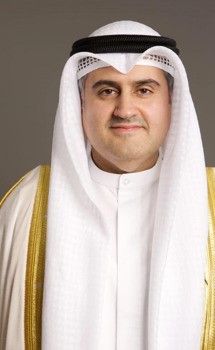
For his part, Minister of Justice and Advisor Nasser Al-Samit stated that the issuance of the decree represents one of the initial executive steps accompanying the entry into force of the Law on the Organization of the Judiciary.
Advisor Al-Samit added that the implementation of the law opens a new phase in which efforts shift from legislation to execution, emphasizing that the success of the reform is not measured by the number of provisions that have changed, but by what people experience in terms of reduced litigation duration, stability of legal principles, and limitation of conflicting judgments. He noted that the decree shortens the time frame for promoting national talents and advancing them to senior judicial positions, in accordance with high directives to expedite the full Kuwaitization of the judiciary and the Public Prosecution, without compromising standards of seniority, eligibility, competence, inspection reports, and legal regulations governing promotions.
For further details: Four years for Deputy Prosecutor (C) without prejudice to the salaries, allowances, and increments allocated for each rank. Decree reducing the minimum required tenures for remaining in the ranks of judges and members of the Public Prosecution: Three years from Counselor at the Court of Appeal up to Deputy Prosecutor (B).
Decree No. 136 of 2026 was published in the Official Gazette, “Kuwait Today,” replacing the schedule attached to Decree No. 126 of 2018 concerning the minimum periods required to remain in the ranks of judges and members of the Public Prosecution. The articles of the decree stipulate the following:
Article One: The schedule of minimum periods required to remain in the ranks of judges and members of the Public Prosecution attached to this decree replaces the schedule attached to Decree No. 126 of 2018, without prejudice to the salaries, allowances, and bonuses allocated to each rank.
Article Two: The ministers, each within their respective competence, shall implement this decree. It shall be published in the Official Gazette and shall take effect from the date of its publication.
Justice Minister, Advisor Nasser Al-Samit, stated that the issuance of Decree No. 136 of 2026, which reduces the minimum periods required to remain in the ranks of judges and members of the Public Prosecution, represents one of the first executive steps accompanying the entry into force of the Law on the Organization of the Judiciary.
Advisor Al-Samit told KUNA that the implementation of the law opens a new phase in which efforts shift from legislation to execution, emphasizing that the success of reform is not measured by the number of provisions that have changed, but by what people experience: a reduction in the duration of litigation, stability of legal principles, limitation of conflicting judgments, enhanced performance efficiency, strengthened oversight and accountability, and the delivery of rights to their rightful owners with greater efficiency and speed.
He clarified that the law comes within the framework of the comprehensive reform process outlined by the high directives of His Highness the Amir, Sheikh Meshal Al-Ahmad Al-Jaber Al-Sabah, and reflects his special attention to developing the justice sector, addressing shortcomings, preparing national cadres, accelerating the Kuwaitization of the judiciary and support functions, and enhancing the stability of judgments and justice.
He noted that the decree set the tenure at three years for most judicial ranks and four years for the rank of Deputy Public Prosecutor (C), thereby shortening the timeline for promoting national talents to senior judicial positions, in line with the High Directives to expedite achieving full qualification for the judiciary and public prosecution, without compromising standards of seniority, eligibility, competence, inspection reports, and the legal regulations governing promotions.
He explained that the law’s implementation entails reshaping the Supreme Council of Justice in accordance with the new organization of senior judicial positions and their tenures, to consolidate orderly rotation and provide opportunities for qualified talents to participate in managing the judicial service. Incumbents in these positions will continue their duties until appointment decrees are issued.
Assistant Al-Sameet pointed out that the explanatory memorandum clarified the philosophy behind this reorganization, stipulating that “holding these positions is a duty assigned due to the needs of the service, not a personal entitlement or a permanent right to remain in them.” Those whose terms expire will return to performing their judicial functions according to their rank and seniority, as adjudicating disputes is the core function of a judge, while administrative posts are merely temporary stages in their career.
He added that the new organization also extends to several leadership positions in the Public Prosecution, most notably the position of Attorney General and several senior prosecution leadership roles, in accordance with the conditions and regulations set by the law. Its implementation will lead to the reorganization of some of these positions and the return of those whose terms expire to judicial work according to their ranks and seniority.
He emphasized that the next phase will witness institutional cooperation and coordination with the Supreme Council of Justice, each within its jurisdiction, to translate legislative reforms into practical application within courts and the Public Prosecution, thereby enhancing the quality, speed, and stability of justice.
Assistant Al-Sameet stated, “The law has been issued and entered into force, but the real work begins now. Our goal is not for people to feel that a new law has been enacted, but to feel that justice itself has become more efficient and stable, and that their rights reach them faster. This is the benchmark by which we will judge the success of the reform.”
Earlier today, the Official Gazette “Kuwait Al-Yaum” published Law Decree No. 80 of 2026 issuing the Law on the Organization of the Judiciary, and Decree No. 136 of 2026 replacing the schedule attached to Decree No. 126 of 2018 concerning the minimum durations required for staying in the ranks of judges and members of the Public Prosecution.
