Whales Speak... and Artificial Intelligence Attempts to Decipher the Secrets of Their Language
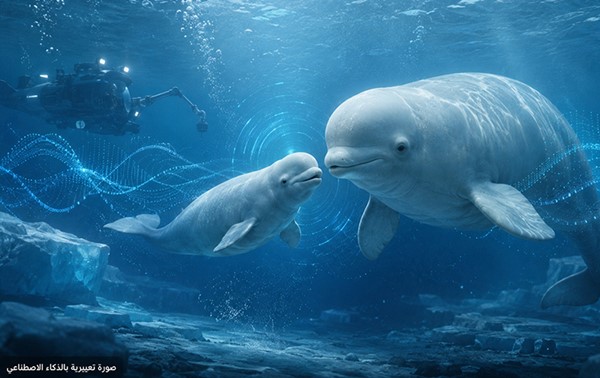
In the dark, murky waters of the Arctic, white beluga whales rely less on what they see and more on an entire world of sounds—clicks, whistles, screams, and vibrations that keep members of the pod connected even when they cannot see one another.
Recent research reveals that this “chatter” is more complex than it appears.
According to researcher Valeria Vergara, beluga calves take approximately two to three years to master the repertoire of sounds used by adults, initially going through a stage resembling infant babbling, where they play with sounds before learning to use them precisely.
One of the first skills calves master is a distinctive vocal call that functions like a “name tag,” helping them identify themselves. However, these calls are much shorter in calves than in adults, making boat noise a real threat if a calf becomes separated from its mother.
Scientists are now using underwater recordings, drones, and machine learning to try to link specific sounds to particular behaviors. In an independent study of beluga whales in Cook Inlet, Alaska, researchers analyzed more than 1,700 calls and found that call rates varied depending on the group’s movement, size, and tidal conditions.
The goal is not to create an instant “whale dictionary,” but to understand when and why whales communicate, and how human noise disrupts these conversations—knowledge that could directly inform measures to protect their marine habitats.
