Al-Afasi Revives the Suspended with a Voice That Touches the Hearts
&cropxunits=450&cropyunits=253&w=770)
In a striking artistic and cultural endeavor, renowned reciter and singer Mishary Rashid Alafasy continues to present the most famous pre-Islamic Arabic odes, the Mu’allaqat, in his own voice. The project aims to bring this great literary heritage back into the spotlight, presenting it to contemporary generations through a style that blends textual authenticity, vocal brilliance, and modern visual aesthetics.
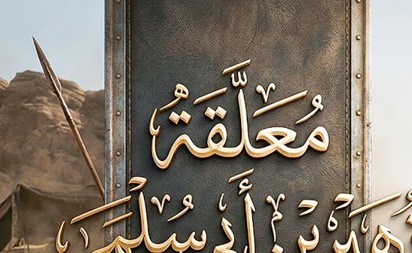
The latest installment in this project is the ode of Zuhayr ibn Abi Sulma, verified by Dr. Faisal Al-Mansour and directed by Rami Mar’i, marking the fifth ode in Alafasy’s series to date, following those of Imru’ al-Qays, al-Tarafa ibn al-Abd, Amr ibn Kulthum, and Labid ibn Rabi’ah.
Alafasy affirms through this experience that he belongs to a unique school of recitation and chanting, possessing rare vocal capabilities and a remarkable ability to navigate between musical maqamat (modes), utilizing his melodious and warm vocal layers to serve the meaning and imbue the text with new emotional dimensions. He does not present the poem merely as verses preserved in the pages of books, but treats it as a living text capable of being re-experienced. He transports the listener through atmospheres of wisdom, pride, enthusiasm, nostalgia, and nature description, creating an experience that allows the audience to live with the words and interact with them. Who could have imagined listening to the masterpieces of Imru’ al-Qays, Zuhayr, and other great Arab poets with such captivating vocal performance that enchants hearts and breathes new life into the poetry?
The uniqueness of Alafasy’s project lies in its ability to combine classical Arabic text with modern reception media, without compromising the eloquence or authenticity of the text. The ode, which remained confined to books and study circles for centuries, now finds a new path to the public through digital platforms, smartphones, and earbuds. This experience is particularly significant, especially in an era where a large segment of youth is accustomed to fast-paced content. It presents one of the greatest treasures of Arabic poetry in an artistic language closer to the sensibilities of the new generation, transforming the traditional text from rigid academic material into a contemporary audio-visual experience.
Thus, Alafasy’s project is not merely about “reviving” old texts, but retesting their ability to reach a new audience, affirming that the beauty and power of Arabic poetry are not bound by time, and that great words can always transcend centuries when presented with sincere spirit and genuine artistry.
The ode of Zuhayr ibn Abi Sulma holds a special place due to the high status of its author in the history of Arabic poetry. Zuhayr is considered one of the greatest poets of the pre-Islamic era, renowned for his wisdom and gravitas. His poetry is associated with calls for peace and reconciliation, and he was among the most prominent voices praising those who sought to end the long and exhausting war of Dhahis and al-Ghabra’ between Arab tribes. Zuhayr was not a passing poet; he belonged to a family known for literature and poetry. He was the father of the poets Ka’b and Bajir ibn Zuhayr. His poetry was distinguished by wisdom, depth of experience, and mature vision, leading many critics and literary figures to place him at the forefront of Arab poets.
Herein lies the value of what Mishary Alafasy presents: he does not only return the poems of the past to us, but also their emotions, wisdom, and spirit. He proves that our literary heritage remains capable of speaking to our hearts today, perhaps with a voice closer and more impactful than ever before.
