US Economy Grows 1.5% in the Second Quarter
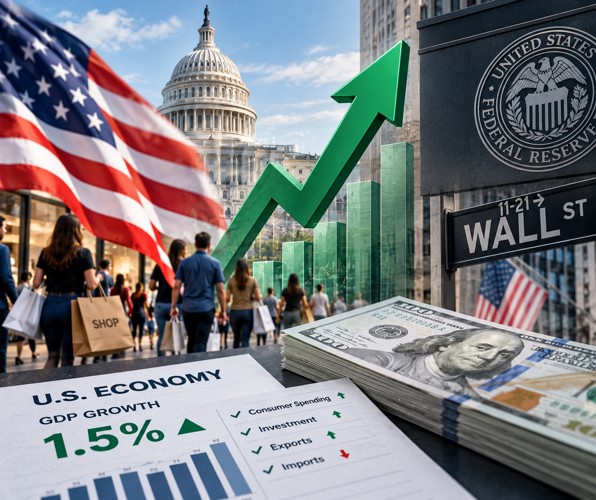
The US economy maintained its growth trajectory during the second quarter of 2026, albeit at a slower pace than earlier in the year, as real gross domestic product (GDP) rose at an annualized rate of 1.5% from April to June, compared with 2.1% growth in the first quarter. Consumer spending remained one of the key drivers of economic activity.
Estimates from the US Bureau of Economic Analysis showed that second-quarter growth was driven by increases in consumer spending, investment, and exports, offset by a decline in government spending, while imports rose, which is deducted when calculating GDP.
Consumer spending emerged as a strength in the economy’s performance, with its growth accelerating to an annualized rate of 3.2% in the second quarter, up from just 0.5% in the first three months of the year. This reflects the continued ability of domestic demand to support economic activity despite pressures facing households and businesses.
The persistence of strong consumption is particularly significant for the US economy, given the pivotal role of domestic demand in driving activity. Official data showed that real final sales to domestic purchasers, which combine consumer spending and fixed private investment, rose by 3.9% in the second quarter, compared with 1.7% in the first quarter.
On the other hand, price developments remain one of the key challenges for the economy and monetary policy. The Personal Consumption Expenditures (PCE) price index rose at an annualized quarterly rate of 5.1% in the second quarter, while the core index, which excludes food and energy, increased by 3.4%, keeping the inflation file under close scrutiny by the Federal Reserve.
