Hala Al-Badr: Stamps and Postcards Are Documents That Preserve Kuwait's Architectural Memory
&cropxunits=450&cropyunits=300&w=770)
Osama Diab: Sheikha Hala Al-Bader, an honorary member of the Kuwait Philatelic and Numismatic Society, affirmed that stamps and postal cards serve as important historical documents that preserve Kuwait’s architectural and heritage memory, given their depiction of buildings, places, and events that shaped part of the country’s history. She called for the preservation of heritage buildings, the restoration of those that can be saved, and the adaptive reuse of some as museums, historical sites, and tourist attractions.
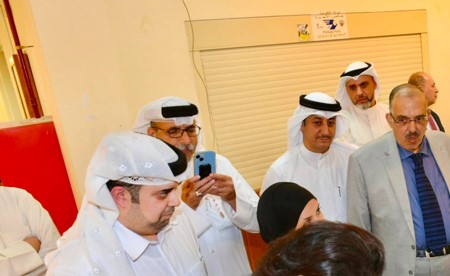
This statement was made during the opening of the exhibition “Urban Renaissance in Kuwait through Stamps and Postal Cards,” organized by the Kuwait Philatelic and Numismatic Society. The exhibition features a personal collection from Hisham Qasim Al-Balam, deputy chairman of the society’s board of directors, documenting more than 130 Kuwaiti buildings, streets, and landmarks, and highlighting key stages of the country’s urban development.
Sheikha Hala noted that the exhibition underscores the role stamps have played in preserving a significant aspect of Kuwait’s history by documenting old buildings, events, and landmarks. She pointed out that postal cards have retained images of sites that no longer exist today. Stamps, she added, “have proven the existence of these buildings,” urging relevant authorities to search for them and care for what remains, as they constitute an integral part of Kuwait’s history. She noted that while some have been demolished, others still stand but require restoration.
Emphasizing the importance of revitalizing and rehabilitating heritage buildings, she proposed converting some into museums and historical sites that attract tourists and those interested in Kuwait’s history, describing them as living testimonies to key phases of the nation’s progress. She expressed regret over the loss of several old buildings that were once part of Kuwaitis’ daily lives, noting that the exhibition revived her childhood memories through images of structures no longer standing, including Al-Shuwaikh Secondary School and its associated landmarks, such as the globe.
She explained that buildings constructed during the early stages of Kuwait’s renaissance stand as testimony to the country’s development trajectory, particularly given that Kuwait initially relied on limited resources, leaving its people with only “land and sea” to draw upon. She stressed the need for greater attention from relevant authorities to old buildings, especially those suitable for restoration and rehabilitation, due to their historical and cultural value and their potential to educate new generations about Kuwait’s history and enhance the presence of national heritage as a cultural and tourist destination.
For his part, Hisham Qasim Al-Balam, deputy chairman of the Kuwait Philatelic and Numismatic Society, affirmed that a postage stamp represents “the identity and symbol of every country” and serves as a historical document through which one can trace the urban, cultural, and tourist development stages the country has undergone. He said his solo exhibition highlights, through stamps and postal cards, the urban renaissance Kuwait experienced from the late 1950s to the early 1960s, along with the accompanying development in buildings, streets, and various landmarks.
He added that the exhibition documents buildings that were demolished in later stages, but stamps and postal cards preserved their images and proved their existence for future generations. He emphasized that the postage stamp has transcended its traditional role as a mailing medium to become a historical record documenting the state’s progress and development.
Al-Balam explained that stamps reveal multiple aspects of a country’s history, whether in urban planning, heritage, culture, national occasions, or tourist landmarks, noting that the images and symbols they carry provide valuable material for researchers and those interested in history and heritage. He confirmed that private collections of stamps and postal cards constitute an important documentary source, particularly in preserving images of landmarks and buildings that have disappeared, thereby contributing to safeguarding national memory and highlighting the urban renaissance phases Kuwait has experienced.
