6,540 students benefited from educational club programs across 12 centers during the summer vacation
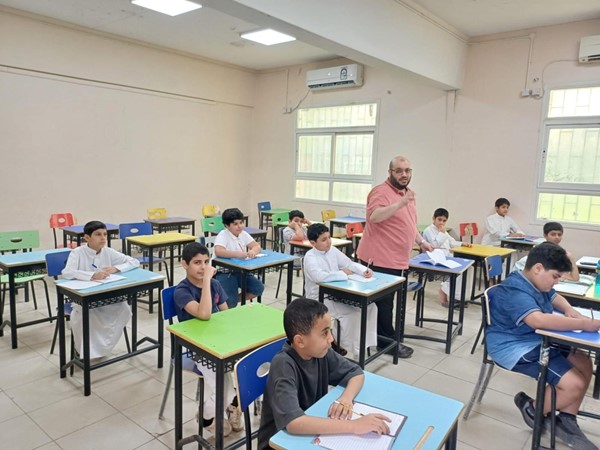
The Ministry of Education has concluded its educational cultural clubs programs, which were implemented during the summer vacation with the aim of supporting academic achievement, reinforcing fundamental skills and concepts among learners, consolidating their educational gains, addressing areas of weakness, and preparing them for their upcoming grades with a higher level of readiness.
The Ministry clarified that 6,555 students benefited from the educational cultural clubs programs, spanning from the first grade of primary school to the ninth grade, through 12 educational cultural centers distributed across the six educational regions. A total of 338 members of the teaching and administrative staff participated in implementing and organizing the programs, contributing to providing an organized and supportive educational environment for students during the summer vacation.
The Ministry noted that the centers offered free foundational programs in Arabic, English, and mathematics, according to educational plans prepared under the supervision of technical guidance departments. These programs focused on reviewing and reinforcing the fundamental concepts and skills that students had acquired in their previous academic stages, thereby helping to consolidate their educational gains, address areas of weakness, and enhance their readiness for the new academic year.
It was pointed out that the programs did not rely on traditional remedial teaching methods but instead employed a range of interactive educational approaches that combined active learning with play-based learning. This approach enhanced students’ motivation toward learning, made the review of fundamental skills and concepts more engaging and attractive, and accommodated their diverse needs and abilities.
The Ministry highlighted that the implementation of the educational cultural clubs was integrated with school summer clubs and held at the same centers, allowing students to combine learning with play and engage in various hobbies and activities. This provided a comprehensive educational and recreational benefit from the summer vacation in an attractive environment that encouraged participation and interaction.
Furthermore, the Ministry added that due to the high demand for the educational cultural centers, His Excellency Minister of Education, Engineer Sayed Jalal Al-Tabatabaei, directed extending the operation period of the educational cultural clubs by an additional week until the 27th of the current month. This extension provides students with a greater opportunity to continue benefiting from the educational programs offered and to take advantage of the services and activities provided by the centers.
In its efforts to facilitate participation and maximize the benefits of the programs, the Ministry announced that it had enabled electronic registration for students and staff, which helped organize the registration process, ease students’ access to the centers, and enhance their opportunities to benefit from the offered programs and services.
The Ministry emphasized that the educational cultural clubs experience received praise from parents, who appreciated the opportunity to positively utilize the summer vacation to review and reinforce their children’s academic skills, alongside providing them with the chance to engage in various activities and hobbies in an attractive educational environment. This contributed to preparing them to return to school with greater readiness and confidence.
The Ministry also affirmed that the educational cultural clubs experience aligns with its strategy to optimize the use of the summer vacation and enhance students’ readiness for the new academic year by offering supportive educational programs that combine knowledge with enjoyment. These programs provide students with diverse opportunities for learning, practice, and interaction. The Ministry commended the efforts of all teaching, administrative, and supervisory staff who contributed to the successful implementation of the programs and the achievement of their objectives.
Finally, the Ministry noted that the conclusion of the experience marks an important step toward leveraging its outcomes to evaluate and develop supportive educational programs in the future. This will enhance the quality of educational services provided to students, expand learning and benefit opportunities during vacation periods, and support their transition into the new academic year with stronger skills and greater readiness.
