Sudanese Foreign Minister: Kuwait is our largest supporter, and we cannot repay its kindness
&cropxunits=329&cropyunits=450&w=770)
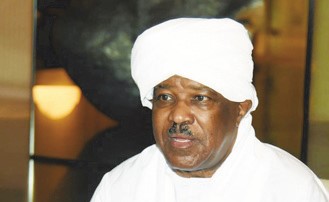
Sudanese Foreign Minister Mohiuddin Salem affirmed the depth of the historical ties between Sudan and Kuwait, praising Kuwait’s continuous support for his country across political, economic, and humanitarian levels, and emphasizing that Kuwait has always been, and remains, one of Sudan’s most prominent supporters under all circumstances.
Speaking at a press conference with media representatives, Salem stated that his visit to Kuwait aims to strengthen bilateral cooperation and open new avenues for partnership in various fields. He explained that the Sudanese delegation came to present the challenges and difficulties faced by Sudan in recent years, amid the war, the repercussions of the coronavirus pandemic, and difficult economic conditions, and to consult with their Kuwaiti brothers on ways to overcome these hurdles.
He added that the delegation observed a high level of Kuwaiti understanding and appreciation of the situation in Sudan, alongside a readiness to provide assistance, expressing his country’s profound gratitude for this stance.
Salem stressed the importance of Kuwait’s role in supporting regional stability and cooperation, highlighting its position and influence within the Gulf Cooperation Council (GCC) framework and its strategic relations with the Kingdom of Saudi Arabia. He clarified that the Strategic Coordination and Cooperation Agreement between Sudan and Saudi Arabia provides a broad framework for cooperation across four main tracks: political and diplomatic, security and military, economic, and social, involving relevant authorities and institutions in both countries.
Salem outlined examples of Kuwait’s historical presence in Sudan, citing several projects and investments he described as living testimonies to the depth of Kuwaiti support. These include the Kenana Sugar Company, one of Africa’s largest sugar projects; the road connecting Port Sudan to Khartoum; Kuwaiti-style architecture; the Hilton and Meridian hotels; and numerous other Kuwaiti companies and investments.
He affirmed that this presence has made Kuwait the “largest supporter of Sudan,” noting that Kuwaiti support has not wavered even in the most difficult circumstances. He pointed out that Kuwait continued to back Sudan in sectors such as water, electricity, and health, even during periods when Sudan struggled to meet certain financial obligations.
“We cannot repay Kuwait, whether the government, businessmen, or philanthropists, for what it has done for us,” Salem said, adding that this appreciation is not mere flattery but stems from his personal experience during his tenure as Sudan’s ambassador to Kuwait.
Salem revealed that his current visit was directed by a written message from Sudanese President Abdel Fattah al-Burhan. He explained that among its key objectives is to enhance communication with Kuwait and ensure that Kuwait is at the forefront of countries contributing to Sudan’s recovery and restoration of stability.
“I am now a minister, and I have a duty, and Kuwait has a right upon me,” he said, expressing his appreciation for Kuwait’s historical role toward Sudan and affirming his country’s desire to benefit from Kuwaiti expertise in investment and development.
On food security, the Sudanese Foreign Minister proposed reviving joint initiatives and projects between Kuwaiti and Sudanese youth, focusing on investing in Sudan’s land, water, and agricultural and livestock resources to produce healthy, high-quality food for the Kuwaiti market. He explained that the proposed projects could combine the expertise of Sudanese youth—such as farmers and veterinarians—with the contributions of Kuwaiti youth in financing and marketing, thereby achieving mutual benefits for both countries.
He emphasized that Sudan possesses vast areas of fertile land, water sources, and significant livestock wealth, as well as mineral resources and climatic and geographical diversity, qualifying it to play a vital role in the Arab food security system.
Salem also disclosed opportunities for cooperation in the aviation sector, highlighting the historical experience and competencies of Sudan Airways (“Sudan Air”), despite the difficult conditions it faced in recent years. He suggested the possibility of a partnership between Sudan Airways and Kuwait Airways or Jazeera Airways, which would allow Sudan to leverage its air rights and open access to markets in Africa and Europe that Kuwaiti companies currently cannot reach. He noted that financing and updating Sudan Airways’ fleet and forming partnerships with Kuwaiti companies could open wide horizons for economic and commercial cooperation, expressing his hope that this idea would bear fruit.
The Sudanese Foreign Minister affirmed that his country is working to develop laws and procedures and to create an investment-friendly environment, including agreements on the avoidance of double taxation and investment protection, with the aim of attracting investors and encouraging the private sector.
Regarding Sudanese-Egyptian relations, Salem confirmed that coordination between Khartoum and Cairo is ongoing around the clock, under the direct guidance of the leaderships of both countries. He stressed that relations between Sudan and Egypt transcend geographical proximity, rooted instead in deep historical and human ties. He noted that millions of Sudanese displaced to Egypt during the war were welcomed by Egyptian families and society, with many living integrated into Egyptian society rather than in camps, which he viewed as evidence of the profound human bonds between the two peoples.
Salem called for refraining from politicizing the Nile water issue in statements that could heighten tensions among regional countries. He affirmed that water issues are governed by agreements, principles, and legal frameworks. He clarified that Sudan, Egypt, and Ethiopia constitute the Eastern Nile states and stressed the necessity of addressing water issues from technical and legal perspectives, removing them from political fray. He reiterated Sudan’s clear position that politics must be kept out of technical files related to Nile waters.
On prospects for ending the Sudanese crisis, Salem stated that genuine breakthrough begins with an agreement among Sudanese civil forces, political parties, and trends on a unified national vision that aligns with developments and forces on the ground. He pointed to field developments, including the return of some fighters from the Rapid Support Forces (RSF) ranks, noting that authorities receive returning individuals daily, with more than 380 people returning to the armed forces ranks on one occasion. He believed these developments could accelerate events but emphasized the need for serious political steps by civil forces to prepare transitional institutions.
Regarding cooperation with the Arab Planning Institute, Salem explained that the institute is an important Arab institution supporting decision-making through expertise, studies, and research. He noted that the institute is working with Sudan to assess war-related losses in collaboration with the Ministry of Finance and relevant authorities, considering this step a crucial foundation for preparing for the recovery and reconstruction phase. He added that cooperation also includes “development observatories,” which enable experts to work with state and regional governments to identify priorities and organize needs, ensuring that available resources are directed toward the most important projects and included in the national plan.
On organizing joint conferences to explore investment opportunities with Kuwait, the Sudanese Foreign Minister indicated the possibility of holding joint conferences and meetings bringing together chambers of commerce and the public and private sectors of both countries to discuss available investment opportunities in Sudan. He stressed that investment and development are directly linked to security and stability, affirming that economic activity cannot achieve its goals without a safe and stable environment.
Salem expressed his feelings toward Kuwait, recalling his time as his country’s ambassador there and the solid relationships and friendships formed. He said, “Kuwait has engraved itself in my heart and mind with golden ink,” expressing his gratitude for the warm sentiments he received during his current visit and affirming that his relationship with Kuwait transcends the official framework to include deep human and personal ties.
