Ceramic cubes reduce temperature by nearly 7 degrees... without air conditioners
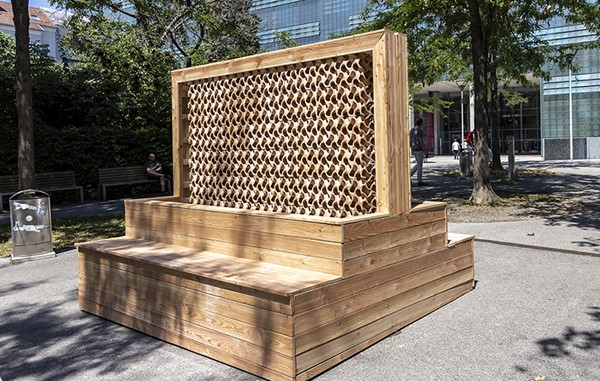
They may look like strange ceramic pieces just out of a 3D printer, but they were designed for a very practical purpose: cooling air using almost exclusively water.
Researchers at Austria’s Graz University of Technology (TU Graz) have developed highly porous ceramic cubes, each with a side length of about 23 centimeters, that absorb water and distribute it throughout a complex network of micro-channels.
As the water evaporates, it draws heat from the surrounding air, in the same way that clay pots and wind towers have been used for centuries.
In a test conducted in a very hot attic at the university, researchers recorded a temperature drop of nearly 7 degrees Celsius in the area near a water-filled cube. The team said the cooling effect was also noticeable in the rest of the room.
The secret of the innovation lies not in evaporation itself, but in the internal structure of the cubes. 3D printing allows for the design of complex geometries that provide a huge surface area with minimal material, thereby increasing the water evaporation area.
Researchers are also experimenting with adding sawdust and fungal mycelium to the clay before firing; these materials burn away later, leaving behind additional pores that help water spread throughout the ceramic.
However, the technology is not yet a ready-made substitute for air conditioners. The 7-degree drop was achieved close to the cube and in a specific test environment. Moreover, evaporative cooling is more effective in hot and dry climates, and, of course, requires a water supply.
