Al-Saif: Salman and Al-Saqr opposed Shaim's location
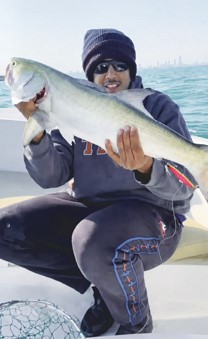&cropxunits=208&cropyunits=450&w=770)
He accompanied his father on fishing trips to Al-Roksa Al-Janoubia and Al-Wanana at the age of 10, and the snapper and balool fish sparked his initial passion for fishing line. He learned swordfish fishing from his uncle, and those memories remain vivid to this day. The “Bahri” page met today with Hadaq Rashid Al-Saif, who shared with us the beginnings of swordfish fishing and his passion for it, the best fishing spots for most fish species, the current catch of the season, and the fishing seasons in the Kuwaiti Gulf. He explained why the Jaber Al-Ahmad Bridge has become a habitat and attraction for most fish species, and discussed the techniques and lines used for Spanish mackerel. Al-Saif also showed us the location of groupers, his preferred line size and leader for them, where to find the red snapper during October and November, when snapper fishing peaks and what bait—using two hooks and “samari” bait—he uses for it, where to find the king mackerel and his preferred line for it, and the greatest concerns of the fishing community. Here are the details:
At the outset, Hadaq Rashid Al-Saif says: “I became passionate about fishing from a young age, at around ten years old. Back then, my father would take me along on his fishing trips to Al-Raksa and Al-Wanana in October and November to catch Nawayib and Balool. The catch was abundant, and as the cold set in, we would head to Ad-Dafan to enjoy fishing for Shaim and Nawayib, as they are plentiful during that season. I also went with my uncle to fish for Seif (swordfish). I learned a great deal of valuable maritime knowledge from these experienced fishermen, which has remained etched in my memory to this day and has been of great benefit to me. As I grew older, I relied on my own knowledge and experience, while also accompanying friends on various sea excursions. Each of us benefits from the other’s expertise, and fellow fishermen are always generous in sharing their knowledge.”
On Al-Wanana, the catch is excellent, adds Saif: “Currently, the best fishing spot is the Jabir Bridge, where you can catch Shaim, Nawayib, Sabooti, and Naghrour. This is due to the presence of sea currents and an excellent environment rich in small fish and shrimp. The concrete structures have fostered the growth of seaweed, attracting small fish and creating a fertile grazing ground. Al-Wanana and Al-Raksa also offer excellent fishing for ray rays.”
Sabooti loves live bait, continues Saif: “The catch of Sabooti and Mzeezi depends on the location and grazing area. Sabooti favors live salsal (small fish), live zooriya (small bait fish), and midah (small fish). Use a line of 50–60 pounds with a long leader and midar sizes 0.5 and 0.6. For Mzeezi, use smaller midar sizes 0.3 and 0.4, depending on the location—preferably in areas with Sajee water or near the first shoal. If you are targeting Seif, use chicken entrails, salsal, zooriya, manjoos, and naqaqa as bait. Ensure there is some rocky bottom.”
Large Naghrour in Al-Raksa, says Saif: “You can catch Hamour (grouper) on banks and rocky reefs. Use a line of 120–160 pounds with a khurwash midar. For bait, use small live shrimp, whole yuwafa (a type of small fish), sometimes small Nawayib, or live yameema. Naghrour is found in Al-Raksa during October and November. We catch it on the first shoal using al-khathaq. In December, you can catch it off the Salmiya breakwater at a depth of 80 feet, striking on al-jaq, which is an excellent fishing technique. There are other spots for Naghrour, such as Tab’ana in Um Al-Fahm in April, but the larger specimens are found in Al-Raksa.”
Continuing, Saif says: “Nawayib become abundant with the rising of the star Suhail, and also from October to December. They are found between Northern and Central Al-Raksa and Al-Wanana in areas with Fasad water. Use the ‘alala’ method with two midars and al-jaq, with a samari boat. In January and February, Nawayib are plentiful in Ad-Dafan near the ferry crossing and off the Research Buoy at depths of 45–50 feet. As for Shaim, when the cold intensifies in early January, the best spot is near the Sabea chimneys at depths of 5 feet or less. They strike on Sajee water, using a Saudi-salted ribbana bait, small midar sizes 2 and 4, and a line of 26–35 pounds. The thinner the line, the higher your chances of catching them with a rod.”
Nearby spots Salman and Saqr, adds Saif: “In recent years, some fishermen have started targeting distant reefs such as 60, 25, and 90, enjoying the fishing experience. My preference is for closer spots, like those near Salman’s and Saqr’s reefs, which are among the most famous fishing areas close to Owa Island. These are primary destinations for fish enthusiasts, especially for Hamour, Balool, and Shaim. Shamaahi also become abundant starting in May. For these, use a very long rod, a 70-pound line, khathaq bait, and midar size 0.6.”
In conclusion, Saif says: “What bothers me most is the presence of trash in the sea and the accidental disposal of plastic waste, which harms the marine environment. Additionally, some brothers drive at high speeds when returning to the marinas. We fishermen are committed to keeping our sea clean. I advise all young anglers to perform regular maintenance on their boats and trailers, and to pay attention to fire extinguishers, first aid kits, and life jackets. May God protect everyone.”
