Lebanon: Targeting archaeological sites in the south is an assault on the people's memory and the country's history
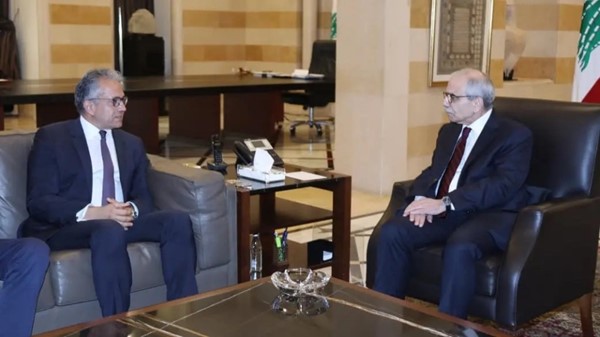
Lebanese Prime Minister Nawaf Salam affirmed that attacks targeting historical and archaeological sites in the south of the country constitute a blatant assault on “the people’s memory and the nation’s history.” This statement came in a press release from the Prime Minister’s Office on Wednesday, during Salam’s meeting with Dr. Khaled al-Anani, Director-General of the United Nations Educational, Scientific and Cultural Organization (UNESCO). During the visit, Lebanon, represented by Minister of Culture Dr. Ghassan Salameh, and the international organization signed a memorandum of understanding “to establish a comprehensive institutional framework for cultural cooperation.”
Speaking at the meeting, Salam noted that “the UNESCO General Conference convened in Beirut in 1948, during which Arabic was adopted as the conference’s working language, a historic step that cemented its global presence.” He pointed to the participation of the late Egyptian writer Taha Hussein at the time, who delivered a lecture on the Arabic language.
He added that “Beirut’s selection in 2019 as a Creative City of Literature within the UNESCO Creative Cities Network reflects its dynamic and evolving cultural character,” emphasizing the importance of listing the castles of Jabal Amel and Sidon on the list of World Heritage Sites in Danger.
The Lebanese Prime Minister stressed that despite wars and explosions, particularly the 2020 Beirut port blast, the Lebanese capital “remains vibrant and carries the banner of renewal and heritage in the Arab world.” He called for support for Lebanon’s efforts to protect its archaeological sites and rehabilitate those damaged by ongoing Israeli occupation attacks.
