The "Nobel Prize of Mathematics" for Youth: The Story Behind the Fields Medal and Why It Is Not Awarded to Those Over Forty
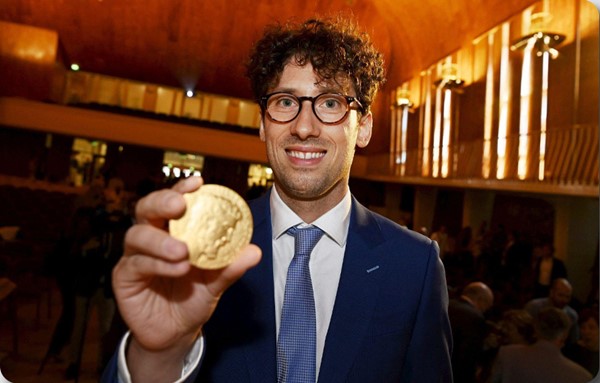
The Fields Medal is one of the world’s most prestigious scientific awards, often described as the “Nobel Prize of Mathematics.” It is distinguished by an exceptional criterion that ties it to young scientists: it is awarded every four years to two to four mathematicians under the age of 40, in accordance with established eligibility rules.
The International Mathematical Union presents the medal concurrently with the International Congress of Mathematicians, recognizing outstanding research achievements and encouraging recipients to continue their scientific contributions.
The idea for the award originated with Canadian mathematician John Charles Fields, who proposed the creation of an international honor for mathematicians before the medal was first awarded in 1936. Although he wished for the award not to bear his name, it later became known as the “Fields Medal” in his honor.
The medal was designed by Canadian sculptor Robert Tait McKenzie and features the image of the mathematician Archimedes. In the 2026 cycle, the medal was awarded to four scientists: Yu Deng, June Huh, Jacob Tsimerman, and Hong Wang, in recognition of their distinguished contributions to various fields of mathematics.
