Japanese Bond Yields Hit 30-Year High
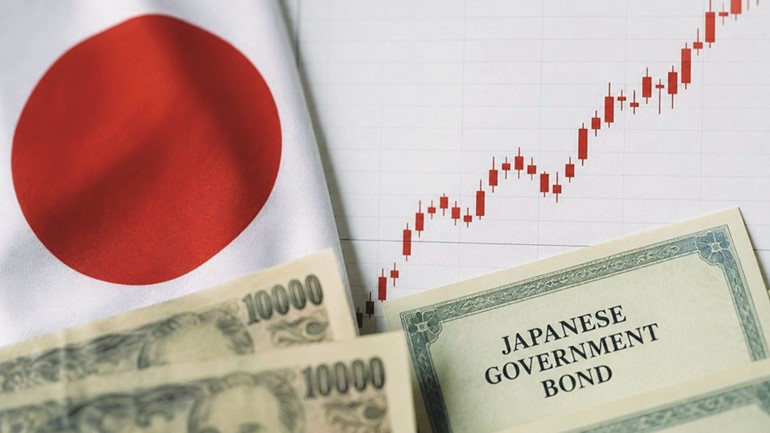
Agencies: Japanese markets entered a more complex dynamic yesterday, as government bond yields surged to levels unseen in three decades, even as gross domestic product data revealed weaker-than-expected growth. Amid conc
Translated by Qiyas from الأنباء — Original source
Agencies: Japanese markets entered a more complex dynamic yesterday, as government bond yields surged to levels unseen in three decades, even as gross domestic product data revealed weaker-than-expected growth. Amid concerns over inflation linked to the Middle East crisis and expectations of further monetary tightening by the Bank of Japan, most equities came under pressure, although the Nikkei index managed to close the session higher, buoyed by technology stocks linked to artificial intelligence.
The yield on the benchmark 10-year government bond jumped 5 basis points to 2.925%, marking its highest level since September 1996 and recording a sixth consecutive session of gains, the longest upward streak in over a year. Pressure extended across various maturities. The yield on two-year bonds, which are most sensitive to monetary policy expectations, rose 3.5 basis points to 1.685%, the highest since May 1995, while the five-year bond yield hit a record high of 2.155%.
On the longer end of the yield curve, the 30-year bond yield climbed to 4.06%, and the 40-year bond yield rose to 4.115%.
Kesuke Tsuruta, chief bond strategist at Mitsubishi UFJ Morgan Stanley Securities, said negative sentiment toward government bonds is spreading globally as the upward trend in yields accelerates, noting that uncertainty regarding the pace at which the Bank of Japan will raise interest rates and the ultimate level they may reach remains a primary domestic concern.
Markets are becoming increasingly sensitive, as rising borrowing costs coincide with an economy that shows no strong momentum. The Japanese economy grew at an annualized rate of 1.1% in the April-June quarter, compared to expectations of 2%. The details were even more worrying regarding domestic demand, as private consumption stagnated without growth, while capital expenditure fell by 1.2% during the quarter.
Meanwhile, Middle East disruptions, including interruptions in tanker traffic through the Strait of Hormuz, are driving up energy prices and increasing inflation risks for Japan, which relies heavily on imports. This equation presents the Bank of Japan with a delicate challenge: inflation and bond yields support the rationale for continuing to raise interest rates, while weak consumption and investment indicate the economy’s limited capacity to withstand rapid tightening.
