Kuwait absent from 'Test 33' exhibitions for the fourth year
&cropxunits=300&cropyunits=450&w=600)
Kuwaiti amateur theater troupes are absent from the performances of the Cairo International Experimental Theater Festival for the fourth consecutive year. The 33rd edition, scheduled to run from September 1 to 8, will feature 16 plays in the official competition representing 14 countries, including the UAE, Saudi Arabia, Jordan, and Tunisia, alongside Egyptian and international productions. No Kuwaiti play appears in either the official competition or the fringe festival.
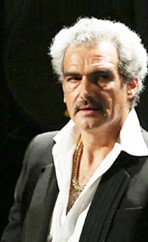
Kuwait’s presence at this edition is marked by the honoring of playwright and theater director Sulaiman Al-Bassam, in recognition of his theatrical career that has transcended local boundaries to reach international stages and festivals. He will also participate in the training program through the workshop “From Text to Actor.” Additionally, Dr. Sulaiman Arti will take part in the festival’s intellectual program, joining seminars that discuss experimental theater. Thus, Kuwait’s presence remains in the form of honors, seminars, and training, while the troupe and its productions are absent from the stage.
The last participation of Kuwaiti amateur theater troupes was in 2022, through the Popular Theater Troupe and the play “The Sixth Line,” which made a notable impact. Actor Abdullah Al-Humoud shared the Best Actor award with Tunisian actor Osama Kechkar, while Fatima Al-Amir and Falool Al-Filakawi received certificates of appreciation for writing and dramaturgy. The play and its director, Ali Al-Balushi, were also nominated for the final list for Best Play and Best Direction.
Before “The Sixth Line,” the Kuwaiti Theater Troupe made a distinctive presence at the festival, setting a record among Kuwaiti, Gulf, and Arab theater troupes with eight participations. The journey began in 1989 with the play “Al-Shaffaf” (The Transparent), written by Fawzi Gharib and directed by Abdulameer Matar, followed by “Al-Setar” (The Curtain) in 1990, “Al-Hareeq” (The Fire) in 1992, “Sa’ra ma’ Al-Kilab” (An Evening with Dogs) in 2000, and “The Fourth Scene – William Shakespeare’s Hamlet” in 2001. The troupe returned in recent years with “Sada Al-Samt” (Echo of Silence) in 2017, “Al-Rahma” (Mercy) in 2018, and “Juz’ Min Al-Faniya” (Part of the Ephemeral) in 2019.
These participations reveal a Kuwaiti presence that was not fleeting at a festival considered one of the most prominent international theater events, which Arab and foreign troupes sought to reach. Today, after four years of absence from the performances, the picture has changed. Kuwait is present through important names, but its collective theatrical experience is absent from the stage.
This absence requires internal review within the Kuwaiti theater movement, especially given Kuwait’s long history at the festival, with troupes, names, and experiences that have proven their presence and competitive ability. The problem is not the absence of Kuwait’s name from the festival, as the name is present; rather, it is the absence of a Kuwaiti production bearing that name on the stage. This is where the flaw lies, requiring remediation to restore Kuwaiti theater’s presence that the “Experimental” festival has known for decades.
It is worth noting that the jury for the 33rd edition includes veteran artist Riyadh Al-Khuli as president, with members including set designer Mohamed Al-Gharbawi from Egypt, Tunisian director Mohamed Monir Al-Arqi, Khalid Al-Ruwaihi from Bahrain, Patricia Lombardi Akira from the United States, Hassan Kassi Kowati from France and Burkina Faso, and Sasho Ognanovski from North Macedonia.
