Deputy Director of the Coast Guard: Enhancing Arab Cooperation in Border and Airport Security
&cropxunits=450&cropyunits=294&w=770)
The Assistant Director General of the General Administration of Maritime Coast Guard Operations, Naval Colonel Khaled Al-Burbaie, emphasized the importance of enhancing joint Arab cooperation in the field of border and a
Translated by Qiyas from الأنباء — Original source
The Assistant Director General of the General Administration of Maritime Coast Guard Operations, Naval Colonel Khaled Al-Burbaie, emphasized the importance of enhancing joint Arab cooperation in the field of border and airport security.
Al-Burbaie stressed, in a statement to KUNA during his participation in the 18th Arab Conference of Heads of Border, Airport, and Port Security Agencies, held at the headquarters of the Secretariat General of the Arab Ministers of Interior Council in Tunisia, the need to strengthen coordination among Arab border security agencies to confront emerging challenges, particularly waves of illegal immigration, migrant smuggling, human trafficking, and the trafficking of narcotics.
He considered that enhancing the use of technology at airports and Arab border crossings, along with the exchange of information, contributes effectively to combating crimes that threaten border security, expressing the Kuwaiti Ministry of Interior’s commitment to strengthening joint Arab work to serve security in our Arab region.
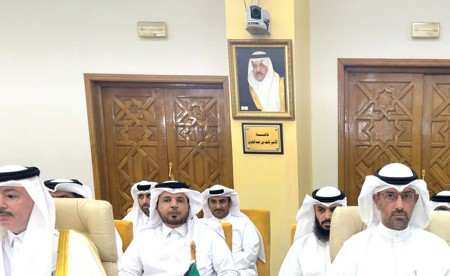
The 18th Arab Conference of Heads of Border, Airport, and Port Security Agencies kicked off in the Tunisian capital, with the participation of heads of border, airport, and port security agencies from Arab countries, including the State of Kuwait, the Arab Organization for Civil Aviation, the United Nations Office on Drugs and Crime, and the European Border and Coast Guard Agency.
During the opening session, the Secretary General of the Arab Ministers of Interior Council, Mohamed Kouman, emphasized that border security in Arab countries faces diverse and emerging challenges, including waves of illegal immigration due to the displacement of thousands of civilians from their homelands fleeing the ravages of wars and armed conflicts, and escaping environments where living conditions are no longer available due to various factors, foremost among them climate fluctuations that threaten traditional development models based on agriculture and animal husbandry.
He pointed out that the geographical location of Arab countries makes them vulnerable to challenges related to migrant smuggling, human trafficking, and narcotics trafficking, as they serve as a transit zone between source and destination countries. This places a significant responsibility on border crossing security agencies and border guards to confront all these challenges.
He considered that the decisive factor in confronting these challenges is enhancing the exchange of information and full coordination among all agencies working in the border field. The conference is examining the experiences of member states in linking border crossings within a country and the systems and means used for this purpose, allowing for a reliable assessment of those systems and means based on the practical experience of some countries. This will help other countries make sound decisions regarding the acquisition of linking systems and means for border crossings.
