Abdul-Hussein Abdul-Razzaq: The Artist Who Embody the Entire Society
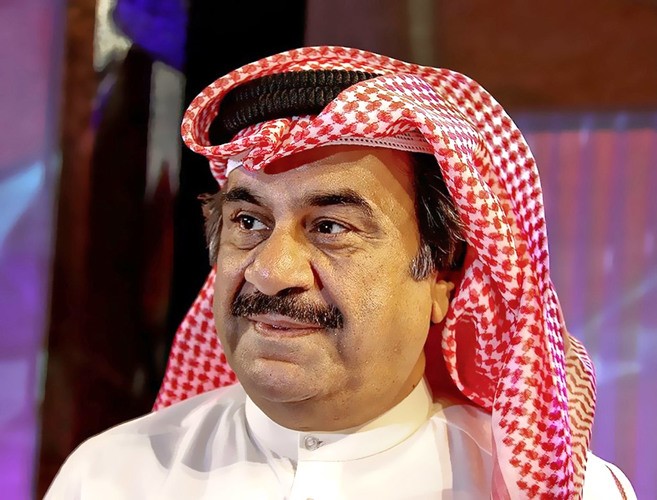
Yesterday marked the ninth anniversary of the passing of the esteemed artist Abdulhussain Abdulredha. We do not remember him merely as an artist who has left the scene, nor do we regard his works as just bright milestones in the history of Kuwaiti drama and theater. Rather, we revive many characters who lived among us, leaving behind on screen and stage witnesses to their era, its people, and the details of their lives.
Abdulhussain Abdulredha, who passed away on August 11, 2017, was not an artist who simply sought characters that made the audience laugh. Instead, he turned to society itself, opened its doors, and delved into its minute details, emerging with characters we recognize as if they were one of our own. He portrayed the poor and the wealthy, the simple and the influential, the oppressed and the oppressor, the employee and the unemployed, the merchant and the shopkeeper, the father and the husband, the official and the citizen, the self-made man and the opportunist. These were not merely roles performed before the camera or on the theater stage; they were human and social models captured from reality and presented to the public with considerable honesty and an ability to read society. Even when he embodied the role of an addict in the television series “Al-Inhidar” (The Decline), it was not just about presenting a character for a fleeting dramatic situation. Rather, he presented a human model with his own circumstances and contradictions, placing the viewer before a social problem that could exist in a home, a street, or a familiar environment.
His characters were never distant from people. One could laugh at a character he portrayed, only to discover that one was laughing at a situation one had experienced, a person one knew, or a social habit we had grown accustomed to until it became part of our lives. “Bu Adnan” – may God have mercy on him – placed himself above the characters he portrayed in his works, living them with all their contradictions. Sometimes he was the simple man seeking his livelihood, sometimes the man who rose from the bottom to the top, sometimes the citizen who clashed with reality, sometimes the man of power whose true nature was revealed by events, and sometimes the human being facing weakness, crisis, or deviation. These characters reflected society’s problems, perhaps so that solutions could be found. This is where the value of his experience lies: he did not laugh for the sake of laughter, but used laughter to reach a deeper realm: the human being, his problems, and his contradictions. Thus, his goal remained constant until his death, and his passing moved all people to tears.
The late Abdulhussain Abdulredha did not leave us with just one role to remember; he left us with an entire society embodied in his characters. We laughed with him, suffered with him, and saw ourselves in him.
Nine years after his absence, Abdulhussain Abdulredha does not appear entirely gone. The artist who lived among the people and drew his characters from their reality remains present as long as people remember themselves in his works. May God have mercy on you, Bu Adnan.
