Extreme heat and recurring floods threaten red pepper production
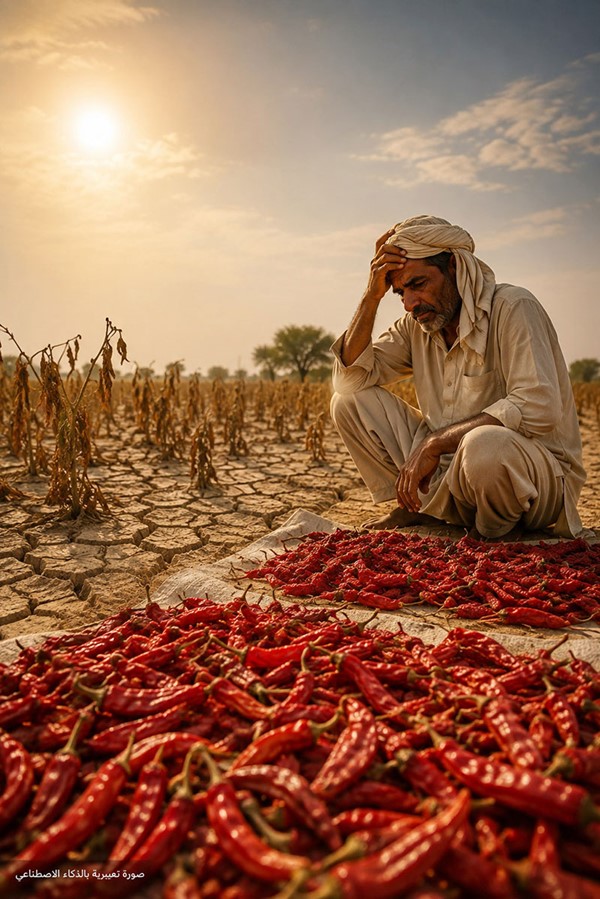
Red pepper farming in Pakistan is facing mounting pressure as heatwaves intensify, rainfall becomes erratic, and floods and droughts recur, while farmers struggle to adapt their practices to preserve a crop that serves a
Translated by Qiyas from الأنباء — Original source
Red pepper farming in Pakistan is facing mounting pressure as heatwaves intensify, rainfall becomes erratic, and floods and droughts recur, while farmers struggle to adapt their practices to preserve a crop that serves as a vital source of income for thousands of families.
A report by The New York Times highlighted the reality of agriculture in Konari, a town in southeastern Pakistan locally known as the “Red Pepper Capital,” describing it as a clear example of how harsh climatic conditions are affecting farming. The region has experienced temperatures exceeding 49 degrees Celsius, coinciding with delayed rains and rising costs for fertilizers, irrigation, and production.
Farmers say they are now adjusting planting schedules to help crops withstand summer heat, with some beginning to sow seeds in March instead of May.
Konari holds significant importance in this sector, as its area accounts for more than 85% of Pakistan’s total red pepper production. During the post-harvest season, its market sees an average daily turnover of more than 200 metric tons, making ongoing climate volatility a major economic and agricultural challenge.
