Upcoming Solar Eclipse Offers Scientists Rare Opportunity to Study Secrets of the Star Closest to Earth
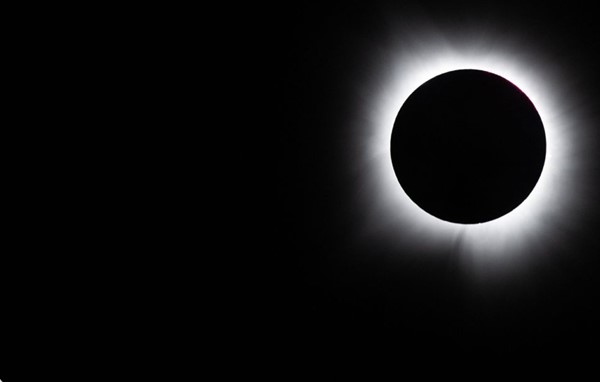
Astronomers are preparing to take advantage of the solar eclipse scheduled for August 12 to conduct scientific studies that could deepen their understanding of the Sun’s nature and the mechanisms driving its activity, leveraging one of the most prominent astronomical phenomena that allows direct observation of its outer layers.
Agence France-Presse explained that the eclipse will be total in parts of Spain and partial in France, providing researchers with a valuable window of time to collect data on the solar corona, chromosphere, solar wind, and magnetic field.
Scientists hope to use these observations to test current scientific models and improve the ability to understand and predict solar storms, which could potentially impact satellites, communication networks, and space technologies.
Teams from the European Space Agency will also participate in monitoring the phenomenon by coordinating ground-based observations with data collected by the Solar Orbiter probe, aiming to develop more accurate models of the Sun’s behavior during its various phases of activity and to leverage these findings to support future research on space weather.
