Gold and Silver Prices Climb Again: Will They Regain Their Historical Peaks?
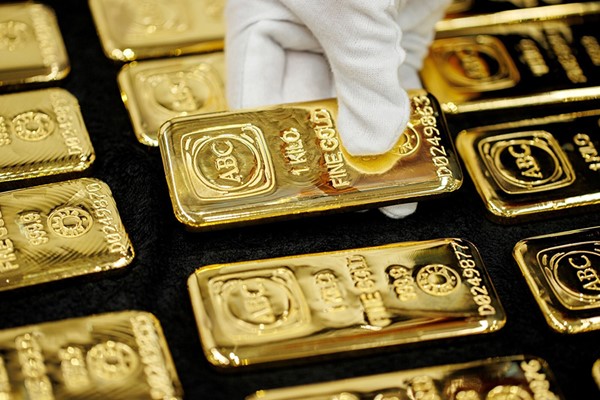
Gold and silver staged a strong rebound last week, driven by falling bond yields and a weaker US dollar, following economic data that bolstered market expectations for an interest rate cut.
Gold prices ended the week with gains exceeding 7%, closing near $4,340 per ounce, marking its best weekly performance since January. Wednesday’s session was the standout, as gold surged more than 5% in a single day, representing one of its strongest sessions this year. Silver prices also rose by approximately 6% over the week.
Despite these strong gains, both metals remain distant from the historical peaks they recorded in January. Gold started 2026 near $4,300 per ounce, meaning it is currently trading close to its year-start levels. However, it remains roughly 22% below its historical peak of approximately $5,600 per ounce set in January.
Silver, meanwhile, was more volatile. It ended the week near $63.30 per ounce but remains down about 11% since the beginning of the year, compared to levels around $71 at the start of 2026.
The gap widens when comparing prices to historical peaks. Silver recorded a peak near $118 per ounce in January, meaning it is still approximately 46% below that high.
In other words, while gold is close to its year-start levels, it needs to rise by about 29% from current levels to reclaim its historical peak. Silver, on the other hand, requires a gain of nearly 86% to return to its previous high.
Why did the metals rebound?
The primary driver came from the United States, where jobs data showed the US economy lost approximately 23,000 jobs in July, contrary to market expectations of adding around 80,000 jobs.
This surprise caused US Treasury bond yields and the dollar to fall, coinciding with a drop in market expectations for a US interest rate hike in September from over 50% to around 40%.
Falling yields typically support gold and silver, as the opportunity cost of holding non-yielding assets like gold decreases. Silver benefits from an additional support factor: industrial demand, particularly from the solar energy, electric vehicle, data center, and artificial intelligence-related infrastructure sectors.
Major Banks’ Forecasts
Regarding gold, Commerzbank and Citigroup have forecast prices reaching approximately $4,500 per ounce by the end of 2026, before rising to around $5,000 by the end of next year.
Bank of America adopts a more conservative view, expecting gold to reach $4,250 by the end of this year, and around $4,500 by the end of next year.
For silver, these banks’ forecasts range between $55 and $80 per ounce by the end of this year, and between $60 and $80 by the end of next year.
Gold is closer; Silver has more room to rise
Despite the strength of the recent rebound, markets remain far from the euphoria of January’s price peaks. Gold needs to rise by approximately 29% to return to its historical high, while silver requires a gain of nearly 86%.
Gold is closer to reclaiming its historical peak, but silver has significantly more upside potential if investment and speculative momentum returns to the market.
Consequently, the trajectory of both metals in the coming period will remain closely tied to US interest rate expectations, dollar and yield movements, as well as factors specific to each metal, with industrial demand being paramount for silver.
