Al-Fuqan: Converting 'Kuwaiti' to a joint-stock company enhances performance efficiency
&cropxunits=382&cropyunits=450&w=150)
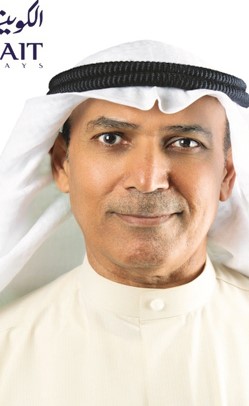
The Chairman of the Board of Directors of Kuwait Airways Company, Abdulmohsen Al-Faqhan, affirmed that the transformation of “Kuwait Airways” into a wholly state-owned joint-stock company constitutes an important regulat
Translated by Qiyas from الأنباء — Original source
The Chairman of the Board of Directors of Kuwait Airways Company, Abdulmohsen Al-Faqhan, affirmed that the transformation of “Kuwait Airways” into a wholly state-owned joint-stock company constitutes an important regulatory and legislative step that contributes to enhancing performance efficiency and providing greater flexibility in business management.
Al-Faqhan stated that this transformation supports the implementation of the company’s strategy by operating within a legal framework aligned with the provisions of the Companies Law, as well as strengthening governance in line with the state’s direction toward updating the legal system and enhancing institutional efficiency.
He added that this transformation consolidates a more sustainable institutional model for managing the company, granting it better tools for long-term planning to help execute its strategic plans more efficiently, and achieving a balance between preserving its role as a national carrier and continuing institutional and operational development in accordance with the requirements of the modern aviation sector.
Al-Faqhan clarified that Decree-Law No. 77 of 2026 concerning the conversion of Kuwait Airways into a wholly state-owned joint-stock company represents a significant milestone in the history of Kuwait Airways. It reflects the state’s commitment to developing the national carrier in line with best institutional and legislative practices, and enhances the company’s ability to continue evolving in a sector witnessing rapid regional and international changes.
He noted that the coming phase requires continuing to implement strategic plans, enhancing operational efficiency, improving service quality, and investing in human resources and modern technologies, thereby contributing to strengthening the company’s position and consolidating its role as a national carrier that aligns with the aspirations of the State of Kuwait and its future vision for the air transport sector.
Regarding granting the company unrestricted authority to conduct its operations, Al-Faqhan pointed out that this aims to provide greater flexibility in managing its business and executing its operational and investment requirements within approved legal frameworks. This will help the company respond more efficiently to the demands of the air transport sector and support the implementation of its current and future projects.
He emphasized that aviation is one of the sectors that requires swift responses to operational and commercial developments. He explained that enhancing administrative flexibility supports the company’s ability to execute its plans with higher efficiency and respond to opportunities and challenges more effectively.
He clarified that unrestricted authority provides greater flexibility in managing the company’s business and may support the implementation of future plans, such as purchasing or leasing new aircraft or opening new destinations, which are approved by the Board of Directors and executive management based on operational needs and economic studies, in accordance with the company’s strategy and market developments.
He indicated that future expansions, whether in increasing the number of fleet aircraft or the network of destinations, will be subject to technical and economic studies and operational requirements, aiming to achieve the best returns for the company and enhance its competitiveness and sustainable growth.
Regarding the impact of converting the company into a wholly state-owned joint-stock company on reducing accumulated losses, Al-Faqhan stated that reducing losses is linked to several operational, financial, and administrative factors, as well as external factors such as travel movements, fuel prices, and economic, regional, and global developments.
He added that this transformation provides an institutional and regulatory framework that supports improving efficiency and raising performance levels, which may positively reflect on financial results in the medium and long term, alongside the plans and procedures implemented by the company to achieve its strategic objectives.
He clarified that the state’s continued full ownership of Kuwait Airways Company confirms the preservation of its role as a national carrier, while developing its institutional business model to serve the public interest.
