China Harvests First Rice Crop on Its Space Station in New Step Toward Extraterrestrial Agriculture
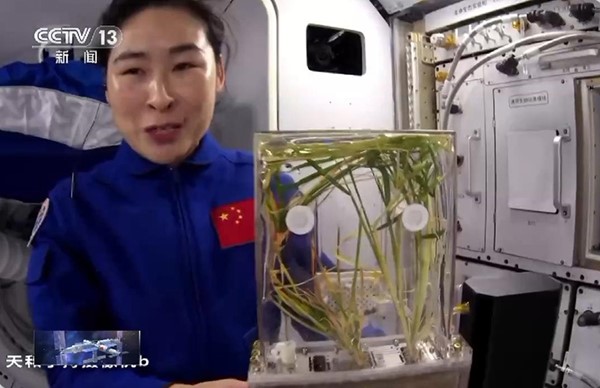
China’s space program has made new progress in space agriculture research after astronauts aboard the Tiangong space station successfully harvested a crop of rice grown inside the station from seeds sent there last May. The Russian news agency TASS reported that the Central Chinese Television stated the experiment is part of a project aimed at completing the full life cycle of rice “from seed to seed” in a microgravity environment, to study the effects of long-term space habitation on plant growth and genetic traits.
The experimental system includes independent agricultural modules to test two different rice propagation methods: one via seeds and the other through vegetative reproduction, with the goal of evaluating which is more suitable for space farming. The astronauts also preserved samples of stems, leaves, and seeds at low temperatures for return to Earth, where they will undergo detailed scientific analysis. These samples are scheduled to be returned next November, a move expected to contribute to the development of food production technologies for long-duration space missions and support future plans for human settlement beyond Earth.
