Saudi Arabia: Al-Sha'bi appointed commander of the multinational maritime defense coalition
&cropxunits=450&cropyunits=321&w=770)
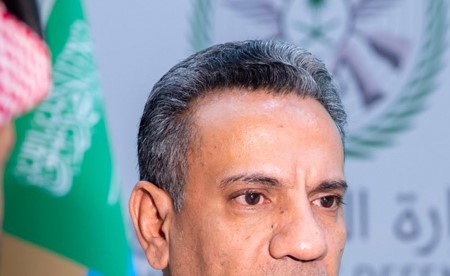
The Saudi Arabian Ministry of Defense announced the appointment of Rear Admiral Abdullah bin Salem Al-Shahrani as commander of the multinational defensive maritime coalition, as well as the holding of a meeting on the 12
Translated by Qiyas from الأنباء — Original source
The Saudi Arabian Ministry of Defense announced the appointment of Rear Admiral Abdullah bin Salem Al-Shahrani as commander of the multinational defensive maritime coalition, as well as the holding of a meeting on the 12th and 13th of the current month to complete institutional building requirements. Coalition Commander Rear Admiral Abdullah Al-Shahrani affirmed that the coalition, established and led by Riyadh, possesses a strategic plan to address challenges, noting that the protection of maritime navigation is among the coalition’s plans. In his first comments since his appointment as commander of the defensive coalition, Al-Shahrani told Al Arabiya channel that the coalition’s establishment was a response to current challenges and threats, aimed at enhancing maritime security. He pointed out that confronting maritime threats and strengthening multilateral defense cooperation are among the coalition’s core objectives. The coalition commander stressed that the security of international sea lanes is a collective responsibility requiring joint action, noting that “defense cooperation is a cornerstone for protecting navigation and market stability.”
For his part, Saudi Ministry of Defense official spokesperson Brigadier General Turki Al-Maliki affirmed that the announcement of the multinational defensive maritime coalition reflects a shared international recognition of the scale of threats facing maritime security and freedom of navigation, embodying a collective responsibility to protect sea lanes and global economic interests. In a statement to the media, General Al-Maliki explained that the region and the world face real and emerging threats, noting that every state has the right to take military or political measures it deems necessary to protect its interests and address those threats. He confirmed ongoing coordination among Red Sea littoral states to enhance the security of sea lanes and protect shared interests.
He noted that Saudi Arabia, through its experience in the coalition supporting legitimacy in Yemen, has achieved significant accomplishments in eliminating maritime threats, including confronting drones, fast boats, and naval mines. He emphasized that maintaining maritime security is a collective responsibility that extends beyond littoral states to include all countries benefiting from the security and stability of sea lanes. The official spokesperson for the Ministry of Defense stressed that protecting international shipping routes and oil tankers is a fundamental pillar of global economic stability, clarifying that any terrorist acts or threats targeting maritime security have repercussions on the entire international community, necessitating enhanced international cooperation and coordination to confront them, thereby contributing to the security and stability of sea lanes.
The Saudi Ministry of Defense stated in a statement published by the Saudi Press Agency (SPA) that “in the context of completing the foundational procedures for the multinational maritime defense alliance, the Ministry of Defense of the Kingdom of Saudi Arabia has appointed Rear Admiral Abdullah bin Salem Al-Shahri as the commander of the alliance, following the announcement made on July 30, 2026. This step marks a key milestone in advancing institutional building and enhancing the alliance’s operational readiness.”
The ministry emphasized that this appointment reflects “the commitment of the founding states to complete the alliance’s leadership structure, thereby strengthening its readiness to carry out its defensive missions to support maritime security, protect freedom of navigation, secure sea lanes and straits, and support international trade and global supply chains within the alliance’s area of responsibility, in accordance with its charter and international law provisions.”
According to the statement, “the alliance commander will assume joint maritime defense command responsibilities, oversee planning and coordination among member states and other maritime alliances, and implement joint activities and missions in line with the alliance’s charter, documents, and reference procedures.” The statement added that this appointment contributes to “completing the establishment of leadership bodies and joint staffs, enhancing the alliance’s readiness to receive member states and their contributed capabilities, and initiating the implementation of its programs and initiatives, while developing cooperation in maritime security, information sharing, capacity building, joint training, and exercises.”
The ministry noted the continuation of “procedures for additional countries to join since the alliance’s establishment announcement, with further states having completed signing the joint statement, while others are finalizing their national procedures to sign the joint statement and the alliance charter, paving the way for their official accession as founding states.”
It reaffirmed that the multinational maritime defense alliance is an international open alliance welcoming the accession of all countries that align with its objectives and principles, and that it continues to receive accession requests.
A supplementary statement will also be issued listing the countries that have completed their signing procedures, reflecting the broadening base of founding states, enhancing its defensive effectiveness, and laying the foundation for a multinational maritime partnership capable of accommodating more countries willing to support maritime security and stability, strengthen international cooperation, and address common maritime challenges, thereby serving the shared interests of all participating states, according to the statement.
The ministry announced that the alliance’s establishment phases “continue with the convening of planners’ meetings on August 12 and 13, 2026, to complete institutional building requirements and for additional countries to sign the joint statement and charter, in accordance with organizational arrangements, paving the way for their official accession to the alliance.”
The ministry concluded by emphasizing that “this appointment represents a pivotal milestone in the alliance’s establishment process, reflecting continuous progress in fulfilling its building requirements, and underscoring the founding states’ commitment to advancing the construction of a multinational maritime defense cooperation framework that effectively contributes to consolidating collective maritime security, enhancing regional and international stability, and serving the shared interests of the international community.”
