Saudi Cabinet Appreciates Growing International Support for the Multinational Maritime Defense Coalition Launched by the Kingdom
&cropxunits=450&cropyunits=299&w=770)
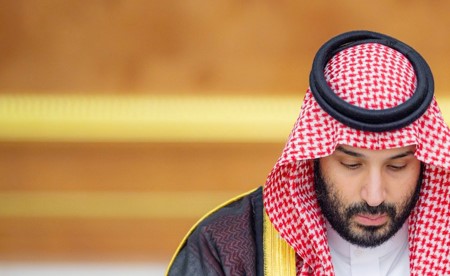
Crown Prince and Prime Minister Mohammed bin Salman presided over the Council of Ministers meeting held in Jeddah the day before yesterday evening. At the outset of the session, the Crown Prince briefed the ministers on
Translated by Qiyas from الأنباء — Original source
Crown Prince and Prime Minister Mohammed bin Salman presided over the Council of Ministers meeting held in Jeddah the day before yesterday evening. At the outset of the session, the Crown Prince briefed the ministers on the content of his telephone conversation with U.S. President Donald Trump, which included discussions on developments in the region and their repercussions across various levels. He emphasized the Kingdom’s insistence on prioritizing dialogue to de-escalate tensions and stressed the importance of exerting all efforts to achieve a ceasefire that paves the way for diplomatic solutions contributing to regional security and stability.
Crown Prince Mohammed bin Salman also updated the Council on a series of phone calls held with Bahrain’s King Hamad bin Isa Al Khalifa, Syrian President Ahmad al-Sharaa, Turkish President Recep Tayyip Erdogan, and Spanish Prime Minister Pedro Sanchez. These discussions reviewed prospects for cooperation between the Kingdom and these countries across various fields, as well as issues of mutual interest.
The Saudi Press Agency (SPA) quoted Minister of Education and Acting Minister of Media Youssef Al-Benyan in a statement noting that the Council appreciated the growing international support demonstrated by the alignment with and participation in the multinational maritime defense coalition launched by the Kingdom. This initiative stems from the Kingdom’s leading role in consolidating regional and international security and stability, and in strengthening multilateral cooperation among nations across various levels, including establishing a joint framework to protect international shipping routes, trade corridors, and energy supplies from escalating threats in the Red Sea, the Bab al-Mandab Strait, and the Gulf of Aden.
The Council expressed its hope that the historic agreement on disarmament in the Gaza Strip would serve as a starting point for a comprehensive political process leading to the full implementation of a comprehensive peace plan, ensuring the Palestinian people’s right to self-determination and the establishment of their independent state. It commended the efforts made by Egypt, Qatar, Turkey, the United States, and the Peace Council in achieving this milestone.
The Council reaffirmed the Kingdom’s commitment to supporting and expanding its humanitarian and relief work by organizing the fifth edition of the Riyadh International Humanitarian Forum in April next year. This forum has become a prominent global platform to enhance international cooperation in this field, build sustainable strategic partnerships, and facilitate the delivery of aid to vulnerable and affected populations worldwide.
On the domestic front, the Council reviewed reports and indicators for several national programs and strategies. In this context, it praised the achievements and successes of the “Service to Guests of Allah” program, highlighting how its various initiatives and projects have yielded continuous development that reflects the Kingdom’s and its leadership’s steadfast commitment to caring for the Two Holy Mosques and their visitors. It also noted the historical and continuous dedication to providing the highest quality services to pilgrims and Umrah performers, mobilizing all efforts, resources, and energies to ensure their comfort from arrival to departure.
The minister further stated that the Council welcomed the International Monetary Fund’s confirmation, in its 2026 Article IV Consultation Report, of the resilience and adaptability of the Saudi economy in the face of challenges. This assessment was based on solid economic foundations, diverse infrastructure, adequate long-term financial planning, financial and monetary stability, and structural reforms implemented under Vision 2030, which have driven a full decade of economic transformation. These efforts have strengthened institutional frameworks, improved performance and economic diversification, and enhanced healthcare and education indicators, achieving several targets ahead of schedule.
The Council then reviewed items on its agenda and concluded with a series of decisions.
