Partner to Al-Anbaa: Execution order issued during the invasion, but signature deficiencies prevented implementation
&cropxunits=450&cropyunits=300&w=600)
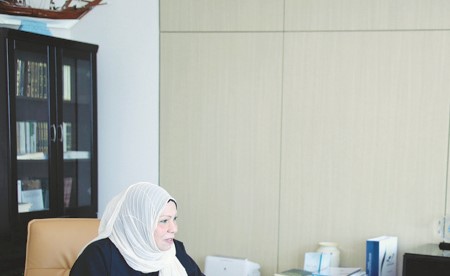
Dr. Abdullah Al-Sharika, director of the Center for Promoting Moderation at the Ministry of Awqaf (Endowments), recounted some of what he experienced during his captivity at the hands of Iraqi soldiers, how he was released, and what he did during that period until the country’s liberation.
He said these were unforgettable days that history would preserve, and he described how he narrowly escaped execution at the last moment. He also spoke about the hardships he endured during that difficult period. The following is the text of the interview.
Tell us about the beginning of your captivity by Iraqi forces.
On the second day of Saddam’s invasion, August 2, 1990, which was a Thursday, I was then serving as a military officer in the Ministry of Interior. Before leaving for work in the morning, while having breakfast with my mother—may God have mercy on her—we heard loud shelling. Our house was close to the Kuwaiti National Guard facility, but it never occurred to us that this was an attack on Kuwait.
I went to work, and on the way I saw vehicles and soldiers, but the vehicles did not belong to the Kuwaiti army. I continued to my workplace and learned that an invasion had taken place. I stayed at home for about a week, and the situation was unclear; no one knew what was happening, why, or who was behind it.
My father decided to leave for Saudi Arabia, and I accompanied him to bring our family. My father’s decision proved wise. There was no one else who could drive except my father and me. Upon arriving in Saudi Arabia, we settled in the Al-Mujamma’ area, in a village called Harmah. I stayed with my parents for two weeks, then returned to Kuwait after securing residency for our family, in order to join the resistance alongside Kuwaiti youth.
We believed we would succeed in the resistance, but we were shocked by reality. Later, directives came from the Kuwaiti political leadership abroad to scale down operations, because the outcomes would not be wise. The resistance would not be able to inflict significant damage on the enemy, while the enemy was destroying the country and cities and killing families. Therefore, unfortunately, it was prudent to halt the resistance.
Tell us about the period of your arrest and what you endured.
Upon returning from Saudi Arabia to Kuwait with Kuwaiti friends to participate in the resistance, our car broke down on the way. There were seven of us young men; some of them have since passed away—may God have mercy on them—and others are still alive. We were taken to the Jahra police station and held there for a period, then transferred to the 35th Brigade, then to the 6th Brigade. After questioning us, we were moved to Al-Zubair, where we stayed for three weeks. We were then transferred to Safwan prison. Of course, they did not know we were military personnel. From there, we were taken to the Basra area to be executed.
However, when we reached the deputy governor of Basra at the time, he found that there were deficiencies in the signatures on some of the documents. Inspired by God, the Exalted, he refused to enforce the ruling and ordered the Iraqi soldiers to return us so that we could complete the signatures with the authorities then in Kuwait, as they considered Kuwait to be a province of Iraq.
How did you manage to leave prison?
We were released after paying a financial bribe through an Iraqi lawyer who assisted us. He instructed us not to mention anything about entering the country clandestinely, and to claim that we were Bedouin herders who had lost our way while searching for our sheep that had strayed in the desert. The following day, we went to the judge and presented the story coached by the lawyer. We were released that same day and returned to Kuwait via the Iraqi border, walking at times and by car at others. At one point, we rode in a pickup truck for a while, then in a bus, only to discover that all the passengers were Iraqi soldiers. For the first time, I found many Iraqi soldiers sympathetic to us, until we reached Al-Jahra.
And how did you leave Kuwait?
We took a car belonging to our friends and began a journey in the dark, turning off both the headlights and taillights so that no one from Saddam’s soldiers would follow us. However, we realized we had lost our way in the desert, so we decided to return to Kuwait.
At that moment, powerful searchlights appeared before us, and we assumed they belonged to an Iraqi camp. With no other option, we surrendered to them once again. But by God’s grace and favor, we found ourselves in front of the Saudi Border Guards. They verified our identities, and we entered Saudi Arabia once more.
During the invasion period, how did you live?
We lived in harsh conditions, and communication means were very limited. We only learned the news by listening to radio stations from the UAE, Saudi Arabia, Bahrain, and Qatar. We heard appeals from Kuwaitis through these stations to connect with them and inquire about our families and sisters.
What did you do while you were in Saudi Arabia before returning to Kuwait?
We joined the Internal Forces in the Al-Maks area in Riyadh one day before liberation. We were then transferred to Dammam, where we were handed weapons, and subsequently moved to Kuwait with the Kuwaiti Internal Forces.
Upon entering Kuwait, we went to the Internal Affairs Department in southern Surra. I then went to my home to check on it. My feelings were mixed between great joy and sorrow at the devastation and destruction we witnessed, including burned cars and destroyed military machinery. The country appeared desolate after having been bright and prosperous, with its lights shining everywhere; it was like seeing a ghost town. We saw how they had destroyed roads and infrastructure, attempting to erase Kuwait’s landmarks. However, God cooled our burning emotions and transformed them into feelings of pride and longing to see the blessed land.
And what was your job after liberation?
I joined the Al-Nuwaybis Border Center two weeks after liberation. Things returned, praise be to God Almighty, and Kuwait regained its prosperity. Life resumed after the defeat of the invading occupiers.
Although during the first Ramadan after liberation we lived without electricity, lacked water in our homes, and broke our fast by candlelight, our happiness over Kuwait’s return was predominant. These are unforgettable days that history will immortalize. God Almighty said: “They plotted, and God plotted. And God is the best of plotters.”
Praise be to God, I received the Liberation Medal from His Highness Sheikh Jaber Al-Ahmad, may God have mercy on him. We were honored on several occasions and received salary increases and allowances.
