Saudi Crown Prince Emphasizes to U.S. President the Necessity of Prioritizing Dialogue to De-escalate Tensions
&cropxunits=450&cropyunits=435&w=150)
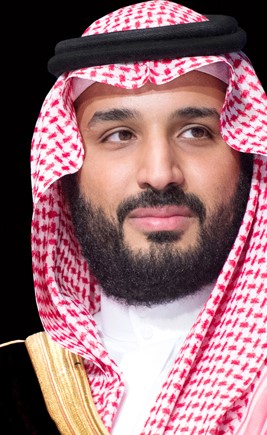
His Royal Highness Crown Prince and Prime Minister Mohammed bin Salman bin Abdulaziz Al Saud held a telephone conversation with U.S. President Donald Trump. During the call, the parties discussed developments in the regi
Translated by Qiyas from الأنباء — Original source
His Royal Highness Crown Prince and Prime Minister Mohammed bin Salman bin Abdulaziz Al Saud held a telephone conversation with U.S. President Donald Trump. During the call, the parties discussed developments in the region and their regional and international repercussions across various levels, according to the Saudi Press Agency (SPA).
Crown Prince Mohammed bin Salman emphasized the necessity of prioritizing dialogue to de-escalate tensions and stressed the importance of making every possible effort to achieve a truce that paves the way for diplomatic solutions yielding positive results to preserve the region’s security and stability, while preventing escalation into a broader conflict whose repercussions would extend to regional and international security and stability. The call also reviewed existing areas of cooperation between the two countries and ways to enhance them.
For his part, Trump announced the suspension of an attack on Iran, which American media had predicted would take place at the end of the previous week. The U.S. President wrote in a post on his platform, Truth Social, that “the United States is at full combat readiness and prepared to move against Iran, with levels of power and military capability unseen since World War II.” He added, “Nevertheless, we have just received a request from Iran and other countries in the Middle East to postpone any attack, given that an agreement has been reached on the broad outlines of a deal. This would include the immediate, full, and comprehensive opening of the Strait of Hormuz, and the end of Iran’s nuclear threat. Based on this request, and in order to serve the interests of the world in the future, as well as to ensure that Iran remains a successful and prosperous state, I have agreed to cancel the attack, provided that a rapid agreement is reached. Israel shares this commitment. Let us all work together and get the job done.”
Meanwhile, a telephone call took place between Sheikh Mohammed bin Abdulrahman Al Thani, Qatar’s Prime Minister and Minister of Foreign Affairs, and Saudi Foreign Minister Prince Faisal bin Farhan, as well as Jordan’s Deputy Prime Minister and Foreign Minister Ayman Safadi. According to the Qatar News Agency (QNA), the parties reviewed cooperation relations between Qatar and both Saudi Arabia and Jordan, and ways to support and strengthen them, along with the latest regional developments, particularly diplomatic efforts and joint coordination to de-escalate tensions and enhance security and stability in the region.
QNA stated that the Prime Minister and Foreign Minister emphasized, during the calls, the necessity for all parties to commit to dialogue and diplomacy, and to implement what was agreed upon within the framework of the memorandum of understanding between the United States and Iran, including ensuring freedom of navigation in the Strait of Hormuz, to preserve regional security, safeguard achieved gains, and enhance regional stability. Bin Abdulrahman reiterated Qatar’s full support for all efforts aimed at defusing tensions and reaching a comprehensive agreement that achieves sustainable peace in the region.
In a related development, Prince Faisal bin Farhan held a telephone conversation with Turkish Foreign Minister Hakan Fidan. During the call, regional developments were discussed, views were exchanged, and the importance of enhancing and supporting all diplomatic efforts aimed at de-escalating tensions and containing the crisis in the region was reaffirmed, according to SPA.
In a related context, U.S. Secretary of State Marco Rubio told Fox News that the world is witnessing a rapid phase of transformation and a clear geopolitical realignment occurring at an unprecedented pace. He added, “We cannot allow Iran to possess a nuclear program, and President Trump was clear on this matter, considering the Iranian nuclear threat a legacy danger that cannot be allowed to materialize.” He affirmed that Tehran had been seeking to acquire a nuclear weapon and build a conventional missile shield to protect its program.
Rubio noted that Iran still possesses missiles and drones but has lost its conventional defensive shield, and has “become more willing to conclude an agreement on nuclear disarmament and the straits because Washington is negotiating from a position of strength.”
Rubio accused Iran of adopting an expansionist approach, stating that Iran not only seeks to rule Iran but also the region. He believed that the only way to compel Iran to change its expansionist behavior is to raise the cost of its policies to a level it cannot bear. He said that countries in the region have been subjected to attacks by Iranian drones and missiles targeting their cities and energy infrastructure.
Separately, U.S. Central Command (CENTCOM) announced that U.S. forces had altered the course of 35 commercial vessels, halted two, and inspected two others since the resumption of the naval blockade imposed on Iran. CENTCOM stated in a post on the platform X that its forces, as of August 2, had redirected 35 commercial vessels, halted two, and inspected two others.
