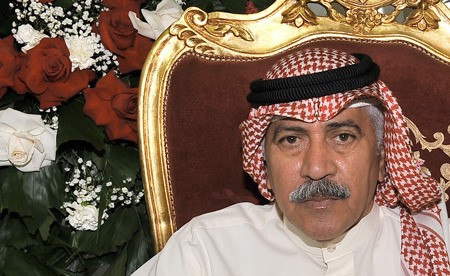
Brigadier General M. Mahmoud Al-Dosari to Al-Anbaa: We formed secret cells to resist the Iraqi occupation, endured the bitterness of captivity and torture, and experienced the joy of liberation
&cropxunits=450&cropyunits=300&w=770)
Ahmed Khamis
“The dawn of August 2, 1990, was not merely the day Iraq invaded Kuwait, but the day that tested the conscience, patriotism, love, and loyalty of every Kuwaiti, young or old, to the soil of their homeland. At that time, we were in our positions of responsibility. In the first hours of the invasion, we proceeded to our duties, with our primary concern being the protection of lives and the evacuation of employees and travelers, while Iraqi forces advanced rapidly to seize control of the state’s key institutions.”
This is how retired Field Marshal Mahmoud Al-Dosari began his conversation with Al-Anbaa, recounting his memories from the early days of the Iraqi invasion of the country, describing the arrest, captivity, and torture he endured in Iraqi prisons, which ultimately led to a death sentence. At the time, he held the rank of colonel and served as the Director of Kuwait International Airport Security.
Al-Dosari began his account by saying: “By the end of the first day of the invasion, we, like many others, realized that the occupation would not be temporary. Kuwait was entering a phase that required its sons to shoulder their responsibilities in their respective positions. We did not consider leaving the country, even though Iraqi forces began searching for security and military leaders, and the names of several of us were on wanted lists. After a few days, we met, and our decision was clear: to organize a resistance that operated with strategy, not merely as a reactive impulse. Our goal was not adventure, but to build an organization capable of enduring, relying on secrecy and the division of tasks, so that the capture of one member would not expose the rest of the groups. We began forming cells, linking them through limited communication channels, and distributing responsibilities among intelligence gathering, securing communications, transporting weapons, and executing operations against occupying forces.
Al-Dosari added: “Resistance did not mean bearing arms alone; it was a comprehensive system. We monitored Iraqi army movements, transmitted information, provided safe houses for wanted individuals, secured communication means, and supported cells dispersed across various regions. With each successful operation, Iraqi intelligence tightened its grip, expanded raid campaigns, and hunted down resistance members, to the point where photos of several resistance fighters were displayed at their headquarters and checkpoints. Despite security precautions, the noose gradually tightened, arrests increased, and several brothers fell into captivity. Yet, this only strengthened our resolve to continue.
Secret Meetings
He continued: “We did not have much time. The occupation was entrenching itself, and institutions were falling one after another, while arrest campaigns targeted military and security leaders and anyone suspected of organizing opposition to the occupation. We understood that individual efforts would change nothing, and that any resistance not based on organization and discipline would end quickly. Therefore, the decision was made to establish an organized national effort, free from impulsiveness and chaos. Our meetings began in absolute secrecy, in safe houses that we changed locations for multiple times to avoid drawing attention. We arrived separately and stayed only for the necessary duration, as Iraqi intelligence eyes were everywhere, and even a minor mistake could cost the entire organization. During these meetings, we laid the initial foundations of the resistance. We divided Kuwait into sectors, defined the responsibility of each group, and adopted the principle of small cells, so that each individual knew only what pertained to their mission, protecting the rest of the men if one were captured. The goal was not to create names, but to build an organization that would endure regardless of losses.
He noted that the resistance was not just about rifles; it was a mind directing the battle in silence. There were groups for gathering information, others for monitoring Iraqi troop movements, groups to secure communications, and others to provide shelter for wanted individuals. Additionally, teams handled the transport of weapons and ammunition and the concealment of equipment, while execution tasks were entrusted to men known for their courage and discipline. Among the resistance fighters were those with technical and military expertise, which they dedicated to serving the country. Every man had a role no less important than another’s, because the success of any operation did not depend solely on the executor, but on a long chain of men working in silence, many of whom did not even know each other.
As days passed, resistance operations began to bear fruit. Occupying forces’ movements came under surveillance, and painful strikes reached them in multiple locations, confusing Iraqi command and prompting them to mobilize their security apparatus. From that moment, the battle was no longer just between an army occupying land and a people rejecting occupation; it became a battle of wits between an organization operating in the shadows and intelligence agencies possessing all resources and striving to reach its members at any cost.
A More Impactful Phase
He explained that as the scope of operations widened, the resistance no longer confined itself to gathering or transmitting information, but moved to a more impactful phase. We believed that the occupation must feel that, no matter how tightly it gripped the ground, it would never enjoy security there. Thus, we began planning operations targeting its military presence, striving as much as possible to ensure civilians suffered no harm. Each operation was preceded by days of surveillance and follow-up. We monitored patrol movements, vehicle assembly points, guard rotation schedules, and the nature of sites used by the Iraqi army. Decisions were not made hastily, as any error could mean the loss of men who had spent weeks preparing, or the exposure of an entire cell.
Several resistance fighters carried out field operations, leveraging their technical and military expertise. Operations targeted Iraqi military gatherings and vehicles in multiple locations, aiming to disorient occupying forces and make them feel they were facing an organized resistance that knew its objectives, rather than scattered individual acts.
He pointed out that with each successful strike, the occupation became more convinced that a professionally managed security apparatus stood behind these operations. Iraqi intelligence agencies began re-evaluating every incident, linking them together, and searching for the thread leading to resistance members. Consequently, their tactics changed completely. Checkpoints spread across various regions, raid campaigns intensified, and homes were searched house by house. Arrests were no longer limited to those bearing arms; they extended to anyone suspected of assisting the resistance or harboring its members. They believed torture would lead to the exposure of the organization, but what they failed to realize was that the resistance was built from the start on a system of separate cells, so that each man knew only his specific mission, protecting his brothers.
He added: “Nevertheless, none of us lived under the illusion that we would remain forever beyond the occupation’s grasp. We left our homes each day knowing that returning was not guaranteed. Yet, no one retreated, because we were convinced that the price we paid, however high, remained lower than the cost of surrendering an occupied homeland. Iraqi intelligence gradually tightened the noose, acquiring names and photos of some resistance members, initiating a real manhunt—a phase where the gap between freedom and captivity was reduced to a single mistake, an informant, or an unforeseen coincidence.
It did not take long for Iraqi command to realize that what it faced was not individual movements or scattered reactions, but an organization operating according to a clear plan. Strikes came from different places and at unpredictable times, with traces of perpetrators disappearing before patrols could arrive. At that point, intelligence agencies issued orders to form special units to pursue resistance members, recruiting intelligence, security, and army personnel, relying on mass arrests and harsh interrogations in hopes of reaching the organization’s leadership. We constantly changed our meeting locations, switched communication methods, and avoided any movement that could link resistance members. However, we knew that a confrontation with a full security apparatus could not last indefinitely. The occupation had time and resources, while we had faith in the justice of our cause and the capacity for sacrifice.
The Circle of Arrests
As the circle of arrests widened, several resistance members fell into the occupation’s hands. Some were arrested at checkpoints, others while carrying out missions, and others after raids on their homes. News reached us sequentially, and it pained us most to hear that a comrade had been captured while we were unable to reach or rescue him, as any hasty attempt could expose the rest of the organization. Each man knew that if arrested, he must bear alone what he would face, and not become the cause of his brothers’ downfall. Thus, the organization was built from the start so that each individual knew only a limited amount of information, unable to reveal the full structure of the resistance under any circumstances, even under the severest torture. We moved cautiously, constantly changing our locations, but we did not live with the obsession of escape. We were convinced that anyone choosing the path of resistance must be prepared to pay the price of that choice, whether through martyrdom or imprisonment. Our fear was not for ourselves, but that Iraqi intelligence would reach the rest of the men and the organization we had spent so much time and effort building would collapse.
The Beginning of the Captivity Phase
Al-Dosari further stated: “In a single moment, I found myself surrounded by occupying forces, with no room for confrontation or escape. I knew that for them, arrest was not the end of the road, but its beginning, and that what awaited me in interrogation rooms would be far harder than the moment of capture itself. Nevertheless, I held one certainty: ‘They may be able to bind the body, but they will not extract from me what I believe in, nor will I make my arrest the cause of the downfall of men who are still resisting inside Kuwait.’
I knew this moment would come, but I did not know when. From the first days of the resistance, we lived with the conviction that our path would end either in victory, martyrdom, or captivity. Therefore, arrest was not a surprise, but a station we all anticipated, preparing for it from the moment we decided to stay in Kuwait.
After the resistance strikes intensified, the occupation’s tactics changed completely. Search campaigns were no longer random; they relied on information gathered from investigations and the tracking of every lead that could guide them to resistance members. Iraqi intelligence moved day and night, raiding homes, monitoring phones, and tracking vehicles, until Kuwait itself turned into an open hunting ground.
He added: “When the moment of my arrest came, I thought of myself less than of the men still outside prison. My only concern was that they would not be reached because of me, and that the organization we had been building since the first days of the occupation would not collapse.
Regarding the Hardest Interrogation Journey
Al-Dosari said: “The interrogation journey began from the first moment. They believed torture could extract everything, and that pain would make a man abandon his country and comrades. I moved between interrogation rooms, and the same questions were repeated in different forms: Who is with you? Who leads the resistance? Where do you meet? Who funds you? Where do you store weapons? They wanted names, while I saw every name as a trust that must not leave my lips. I knew that a single word could open the doors of safe houses and lead to men still fighting silently inside Kuwait. Thus, silence was sometimes stronger than any answer.
Interrogation days were not easy. Torture was part of a daily routine, and the threat of execution was present at every moment. What eased my burden most was knowing I was not alone. There were resistance men enduring the same ordeal, each carrying the same conviction that the homeland is greater than pain, and freedom is bought only through sacrifice.
After the investigations ended, we were transferred to Iraq along with several of our brothers. There, a new phase of suffering began inside prisons, far from our families. However, our hearts remained attached to them. We followed the news by any means possible, living in hope that the day would come when we would hear that the Kuwaiti flag was flying again over its land.
The Tragedy of Abu Ghraib
He continued: “After the investigations ended, we were transferred to Iraq with several of our resistance brothers, leaving behind a Kuwait groaning under occupation. We had nothing but prayers and hope. We knew our families were unaware of our fate, just as we knew nothing of what was happening in our homeland except for fragments of news reaching us secretly, or whispers from new prisoners entering the prison.
In Abu Ghraib prison, a person lost their name and became a number among hundreds of prisoners. The prison sought to break the will before the body. But what connected us to Kuwait was stronger than the walls of the cells. We shared bread, supported each other, and repeated that this ordeal would end, no matter how long it took.
Days passed heavily, each resembling the last, until the day everything changed. News reached us that coalition forces were advancing and the occupation was beginning to collapse. We had no means to verify the truth, but we clung to any news reaching us, because Kuwait was present in every beat of our hearts.
Liberation of Kuwait
He added: “In that moment, I did not feel the prison doors had disappeared, but I felt the homeland had returned to freedom. We prostrated in gratitude to God, and men we had not seen cry throughout the months of interrogation and torture wept. These were not tears of weakness, but the tears of men who had lived the hardest days of their lives dreaming of this moment.
After a few days, we were notified of our release. We left prison with bodies exhausted by captivity, but with a resolve that the prison could not touch. Our steps toward freedom carried with them the faces of prisoners and everyone who sacrificed so that Kuwait would remain a free homeland.
When I returned to Kuwait, I did not feel I was returning to a place I had been absent from, but to a part of my soul. I saw the Kuwaiti flag flying again, and in that moment, I recalled everyone who sacrificed for this nation, and everyone who offered their life or freedom so that Kuwait would remain dignified and free.
He concluded: “Today, after the passage of years, whenever someone asks me about the resistance, I say that its true heroism was not in a single operation, nor in a single name, nor in a single stance. The resistance was an entire people who refused to break. Men and women, youth and elders, military and civilians, united on one goal: that Kuwait would remain for Kuwaitis, and that its flag would rise high, no matter how long the occupation lasted. If time were to return to the dawn of betrayal, I would make the same decision, remain in Kuwait, and follow the same path, whatever the cost.”
