Israeli Army Carries Out Massive Bombings in the South Using 700 Tons of Explosives; Echoes Heard at the Outskirts of Beirut
Beirut – Mansour Shaaban: Days ahead of the seventh round of Lebanese-Israeli negotiations, sponsored by the United States in Rome, and on the sixth anniversary of the Beirut port explosion, the Israeli military carried
Translated by Qiyas from الأنباء — Original source
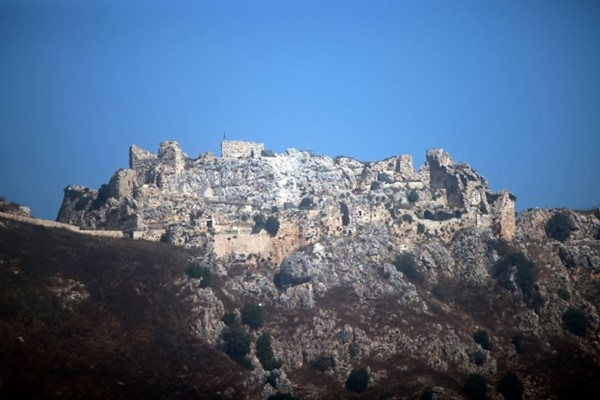
Beirut – Mansour Shaaban: Days ahead of the seventh round of Lebanese-Israeli negotiations, sponsored by the United States in Rome, and on the sixth anniversary of the Beirut port explosion, the Israeli military carried out bombings targeting the area around Al-Shaqif Castle and the towns of Arnoon, Kafrteen, Yahmar Al-Shaqif, and Haddatha in southern Lebanon. The blasts triggered strong repercussions, with their echoes spreading from coast to mountain, reaching even the outskirts of Beirut.
The Ministry of Culture announced that the explosions affected the “area opposite the castle,” affirming that the castle itself “was not destroyed.” However, it noted that “the tremors resulting from these explosions may have caused damage in the vicinity of the castle,” adding that assessing the extent of this damage “is only possible through direct on-site inspection,” which is currently impossible due to the presence of Israeli forces.
The National News Agency reported that the explosions echoed “on a massive and unprecedented scale” across southern Lebanon, shattering the windows of several homes in nearby towns.
Speaker of the Parliament Nabih Berri condemned the attacks, stating: “The repercussions of these terrorist explosions, caused by 700 tons of explosives and registering 3.8 on seismograph scales, were felt by Lebanese citizens from the South and the Mount to the edges of the capital. If these repercussions do not awaken national and human awareness regarding the destruction wrought by the Israeli war machine against humanity, heritage, culture, and infrastructure, then humanity and its future are undoubtedly at risk.” Berri concluded his statement: “What happened is condemnable; silence and complicity must not be maintained, nor should we surrender to its realities.”
For his part, MP Melhem Khalaf said: “In light of this reality, any move to end the UNIFIL mandate or weaken its role would create a highly dangerous vacuum, exposing the implementation of the Framework Agreement and Security Council Resolution 1701 to the gravest risks. UNIFIL represents a fundamental international umbrella essential for protecting stability and limiting the likelihood of sliding into a broader escalation.”
Israeli Prime Minister Benjamin Netanyahu, in a joint statement with Defense Minister Yoav Gallant, announced that the army had destroyed tunnels in southern Lebanon, describing them as underground infrastructure that constituted a crucial element of Hezbollah’s plan to invade residential settlements in the Galilee region.
Meanwhile, President of the Republic General Joseph Aoun received the Special Representative of Palestinian President Mahmoud Abbas, Yasser Abbas, a member of the Fatah Central Committee, and his accompanying delegation at Baabda Palace. The delegation emphasized to President Aoun the necessity of completing the implementation of the Lebanese-Palestinian understanding regarding the transfer of weapons inside camps to the Lebanese Army, stressing the “importance of adhering to the Arab Peace Initiative” and praising “the Lebanese position in this regard.”
For his part, Aoun affirmed “the importance of the Palestinian side’s commitment to the decision on the exclusivity of weapons, cooperation with Lebanese security agencies, and the implementation of steps taken by the Council of Ministers in this context.” He spoke of “the importance of prioritizing the diplomatic option and completing the Lebanese-Palestinian dialogue through the committee formed by the Council of Ministers.”
On the occasion of the 81st anniversary of the establishment of the army, led by Major General Fouad Chehab, who was elected president in 1958, six years after his military service, General Aoun said: “The martyrs of the Lebanese Army are not numbers forgotten with the passage of time; rather, they are a living symbol of loyalty and sacrifice, and an example for every soldier wearing the military uniform today in defense of the country’s borders, institutions, and citizens’ security. Their memory is a trust upon our shoulders, and our gratitude to them is incomplete unless we preserve the values for which they sacrificed: a free, sovereign, and independent Lebanon.”
In another development, Army Commander General Rodolphe Oueidat held discussions with US Ambassador to Lebanon Michael Weiss on the latest developments in Lebanon and the regional situation. Ambassador Weiss, during his visit to General Oueidat’s office, emphasized “the importance of the army’s continuous efforts to maintain Lebanon’s stability.” The discussion also covered the army’s role within the implementation mechanism of the Framework Agreement, as well as issues related to the Rome negotiations.
