Jaber Al-Sabah, the "Beloved of Children," Has Passed Away
&cropxunits=450&cropyunits=444&w=770)
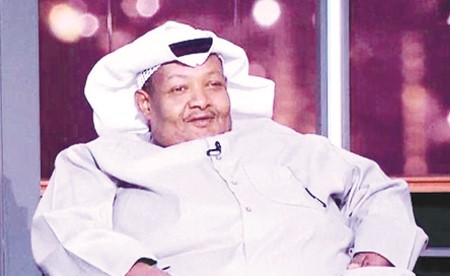
Mufreh Al-Shammari: There are artists whose presence is not measured by the number of awards or the frequency of appearances, but by the impact they leave in people’s hearts. This was the case with the artist Jaber Sadiq Sabah, who left us yesterday quietly after a struggle with illness. He was calm in his presence, great in his contributions, loved theater, and believed in its message. He drew smiles on the faces of both children and adults, earning him the well-deserved title of “Children’s Beloved.” With his passing, the Kuwaiti artistic scene does not bid farewell to an actor alone, but to a man known by all for his morals, humility, and dedication to his art.
His journey with theater began in the late 1980s, launching through several works that gained public recognition, most notably the plays “The Three Devils” and “The Ball is Round” in 1988, followed by “Checks Without Funds,” “Luwali,” and “Little Luluwa” in 1989, and “The Lost Sword” in 1992. He continued participating in numerous works that solidified his status among his peers, in addition to appearing in various variety programs.
The late artist’s contributions were not limited to the theater stage; he also moved into television drama, participating in the 1989 series “The Greedies,” and later appearing in other works, including “Saleh Under Training” in 1995, alongside diverse roles in social and comedic productions. His last cinematic work was the comedy film “Al-Masra’iq.”
The late artist was known as “Children’s Beloved” after forming a successful duo with his brother Taher. He believed that bringing joy to a child is a humanitarian mission before it is an artistic endeavor. Therefore, he was keen on presenting theatrical shows filled with joy and beautiful values, with his last such production being “Planet of Happiness,” through which he continued to bring delight to his young audience, despite the health conditions he was enduring.
Away from the spotlight outside of his work, the late artist was not known to have entered into any disputes within the artistic community, which earned him the affection and respect of his colleagues, as well as the high regard of his audience.
Despite the health troubles he faced in recent times, he remained confident in Kuwait’s medical system and preferred to continue his treatment within his homeland, emphasizing that medical care was available and seeing no need to travel abroad as long as he could receive medical attention in his country, among his family and people.
May God have mercy on the artist Jaber Sadiq Sabah, grant him a spacious place in Paradise, and inspire his family and loved ones with patience and solace.
